

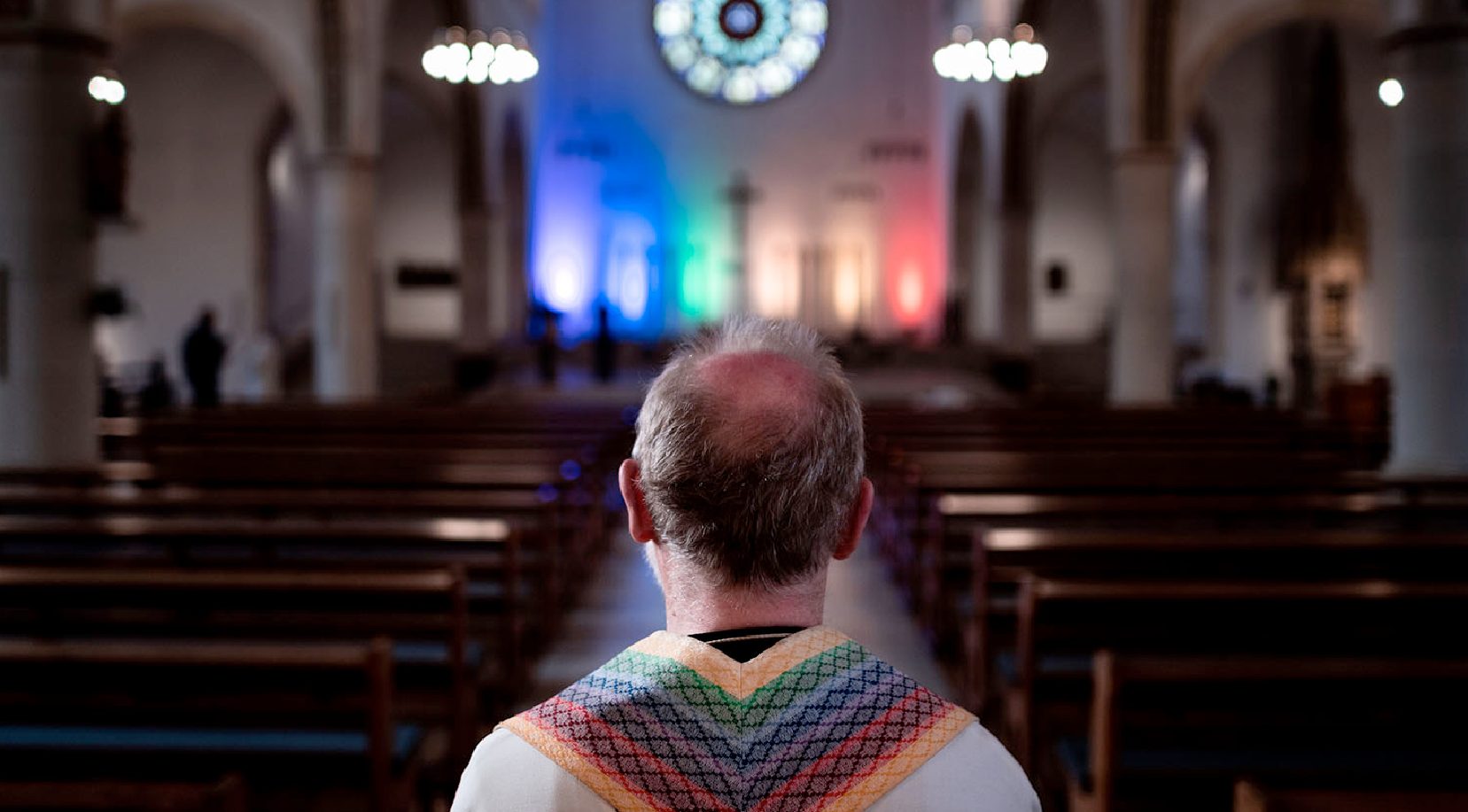
(ZENIT News / Berlin, 08.09.2025).- Three months after Germany’s bishops unveiled their own pastoral guidelines for blessing same-sex couples, the country’s Catholic landscape is showing deep fractures, with positions ranging from full embrace to outright rejection. A survey conducted by katholisch.de across all 27 dioceses paints a picture of a Church wrestling with its identity in the shadow of the Vatican’s Fiducia Supplicans.
While eleven dioceses have welcomed the German booklet — titled “Segen gibt der Liebe Kraft” (“Blessings Give Love Strength”) — either by integrating it into pastoral practice or publicly endorsing it, five others have flatly refused to implement it. These hold firmly to the Vatican’s instructions, which call for brief, spontaneous blessings without liturgical structure or promotional fanfare. The remaining eleven dioceses occupy a broad middle ground, marked by hesitation, selective adoption, or leaving decisions to individual pastors.
The Bavarian diocese of Augsburg stands out among the dissenters. Bishop Bertram Meier has criticized the German text for clashing with Rome’s emphasis on restraint. Where the Vatican warns against ritualizing such blessings, the German version openly speaks of “celebration services,” even encouraging careful aesthetic design, complete with music and song. For Meier, this is a deliberate divergence from what Rome envisages.
The pushback is not limited to episcopal offices. The lay reform group Neuer Anfang (“New Beginnings”) has accused the German bishops of promoting the opposite of Pope Francis’ intentions, arguing that the new guidelines encourage practices far beyond the scope of Fiducia Supplicans. The group contends that some bishops have failed to defend traditional Catholic sexual ethics and are instead normalizing irregular unions in the name of pastoral care.
Adding a sharper edge to the debate, Cardinal Gerhard Ludwig Müller, former prefect of the Congregation for the Doctrine of the Faith, compared the current situation to the medieval trade in indulgences — a practice that, he warned, endangered souls and fractured Christian unity for centuries. In a July 18 commentary, Müller argued that blessings for same-sex couples or others in “irregular” situations are spiritually meaningless, calling them a “pious fraud” that deceives participants. He has previously criticized Fiducia Supplicans itself as confusing and doctrinally inconsistent.
Yet in other corners of Germany, bishops are moving ahead without hesitation. In the northern dioceses of Limburg, Osnabrück, and Trier, the guidelines have been formally published in diocesan bulletins. Würzburg has gone even further, promoting blessing services for same-sex couples at wedding fairs — a gesture unimaginable in many other parts of the Catholic world.
Bishop Georg Bätzing of Limburg, who also heads the German Bishops’ Conference, has defended the initiative as a means to strengthen those “living together in love and responsibility.” In Mainz, Bishop Peter Kohlgraf has instructed his pastoral staff to apply the booklet in practice, while the Diocese of Fulda has hailed it as “an important step toward a Church that engages with people’s real-life situations and respects love in all its expressions.”
What emerges is not simply a theological disagreement, but a contest over the very tone and direction of German Catholicism — whether it will move toward a localized pastoral model that risks conflict with Rome, or pull back toward a stricter reading of Vatican authority. For now, the German Church appears to be living with an uneasy mix of both.
Thank you for reading our content. If you would like to receive ZENIT’s daily e-mail news, you can subscribe for free through this link.

Publicaciones relacionadas:
 German bishops establish new position: bishop in charge of queer pastoral care
 Ireland Rejects Change in the Constitution and Continues Protection of Women and the Family
 England and Wales Catholic Bishops release statement on gender, criticize gender ideology and sex-change operations
 Woman Wins Lawsuit Against Two Bishops in Belgium for Refusing to Accept Her for Diaconal Formation
