

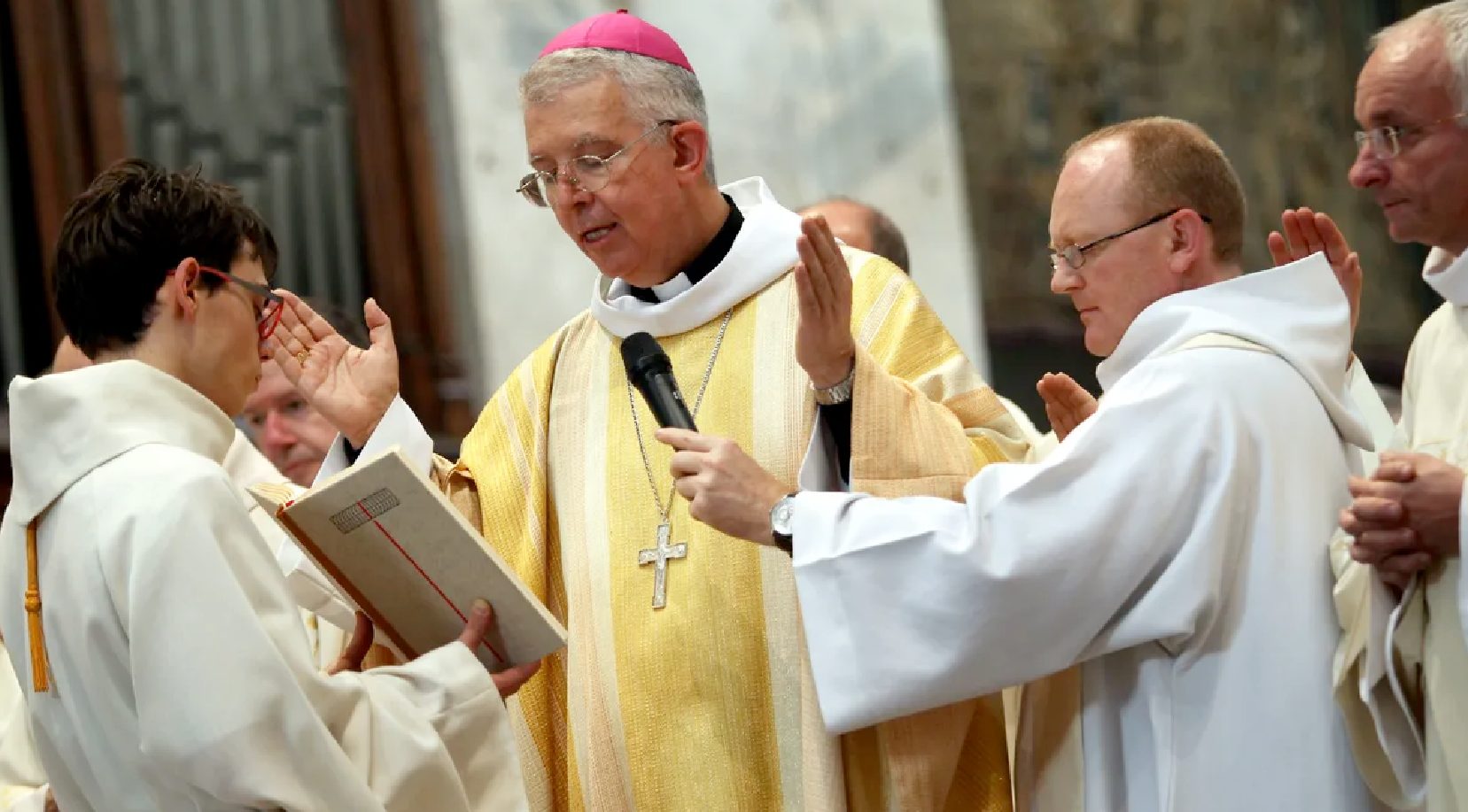
(ZENIT News / Toulouse, 08.19.2025).- The Archdiocese of Toulouse has reversed a controversial appointment that had threatened to deepen wounds within the French Church’s ongoing struggle with the legacy of clerical sexual abuse. Archbishop Guy de Kerimel announced on August 16 that he had rescinded the nomination of Father Dominique Spina as chancellor of the archdiocese, only days after strong appeals from the French bishops urged him to reconsider.
Spina, who served a prison sentence after being convicted in 2006 of raping a 16-year-old in the early 1990s, was named earlier this month to one of the archdiocese’s most visible administrative roles. The decision sparked immediate criticism, with survivors’ advocates and episcopal leaders warning that such an appointment would reopen old wounds and undermine years of hard-fought efforts to rebuild trust.
In a written statement, Archbishop de Kerimel acknowledged the outcry, apologized to victims who interpreted the appointment as a dismissal of their suffering, and confirmed the selection of Father Léopold Biyoki as the new chancellor, effective September 1.
“Many saw my decision as a disregard for victims of sexual abuse,” he wrote. “That was never my intention. I ask forgiveness from those wounded by this decision.”
The archbishop also admitted the pastoral and moral tension at the heart of his initial choice: the desire to recognize that offenders, once punished, should not be cast into permanent exile, while also affirming that victims must remain the Church’s first concern. “How can we hold both perspectives without falling into injustice on one side or the other?” he asked.
The bishops of France had been explicit in their intervention. In a collective statement issued August 11, they warned that the appointment of a convicted abuser to a post of such significance “could only reopen wounds, provoke suspicion, and unsettle the People of God.” The statement highlighted the Church’s shift in perspective over recent years, insisting that the victims’ experience must be the starting point for all decisions in confronting the scourge of abuse.
Archbishop de Kerimel’s lengthy explanation did more than announce a change in personnel. It opened a window onto the unresolved debate that continues to trouble Catholic communities worldwide: how to reconcile the evangelical call to mercy and forgiveness with the demand for justice, accountability, and safeguarding.
The archbishop drew on Gospel examples to illustrate that tension. He recalled how Jesus entrusted leadership to figures with compromised pasts—Matthew the tax collector, Peter who denied him, Paul the persecutor, Mary Magdalene once scorned for her past—and suggested that Christian mercy can never be severed from the conviction that sinners are capable of change. Yet, he admitted, when the crime is sexual abuse, the harm is both “irreparable” and uniquely devastating.
France’s bishops have made the question of restorative justice a theme in their response to the abuse crisis, but Archbishop de Kerimel’s intervention has shown how fraught the discussion remains. His reversal acknowledges that, for now, symbolic acts of rehabilitation carry too heavy a cost for victims who are still struggling to believe that the Church is on their side.
The episode has laid bare a deeper challenge for the Catholic Church in France: whether it can maintain credibility in its commitment to survivors while also upholding the Christian imperative of forgiveness. The archbishop’s apology, and his candid recognition of the dilemma, suggest that this balance is far from settled.
Thank you for reading our content. If you would like to receive ZENIT’s daily e-mail news, you can subscribe for free through this link.

Publicaciones relacionadas:
 U.S. and abuse: church conducted nearly 2 million background checks on priests and employees in 2021 alone
 Cardinal Jean-Pierre Ricard’s Statement Acknowledging His Abuse of a Young Girl When He Was a Parish Priest
 Catholic Church in USA presents annual report against sexual abuse: these are the advances and pitfalls
 Archdiocese of Los Angeles Reaches $880 Million Settlement Over Child Abuse Claims
