

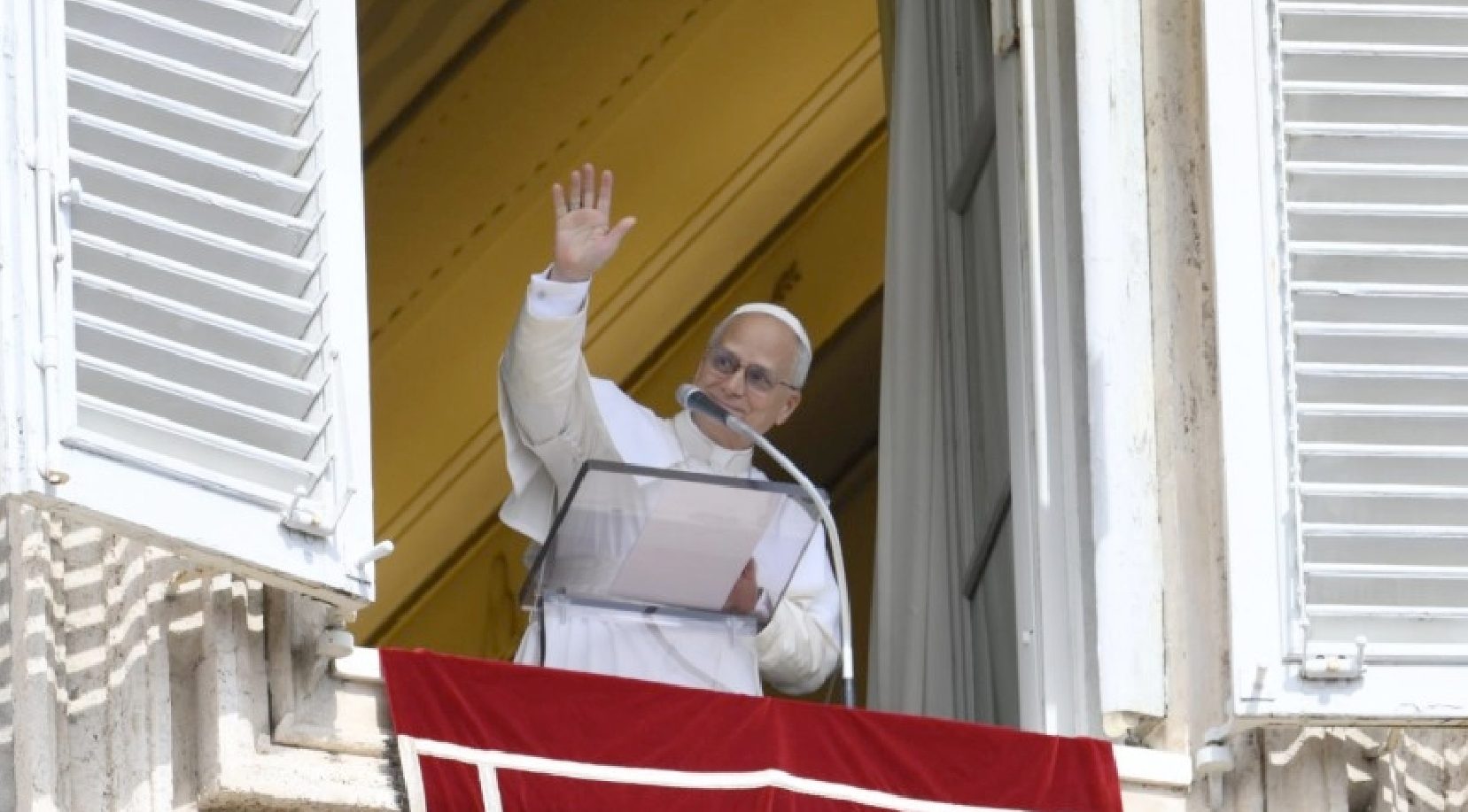
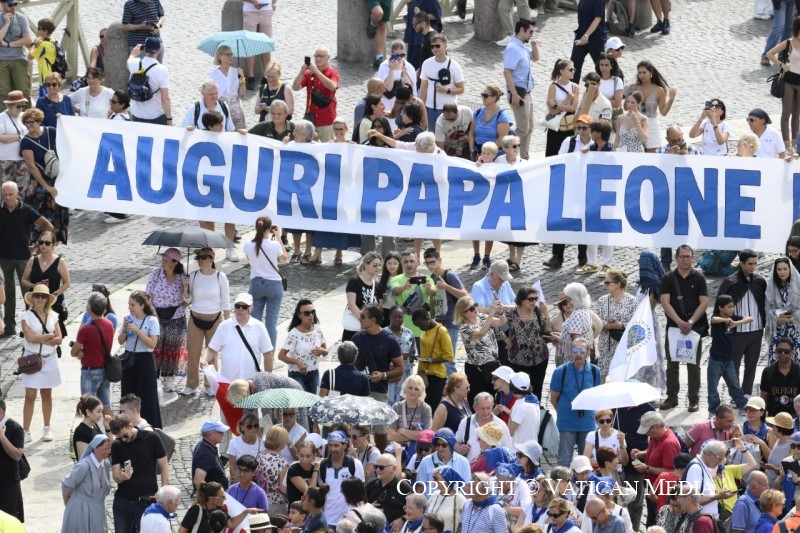
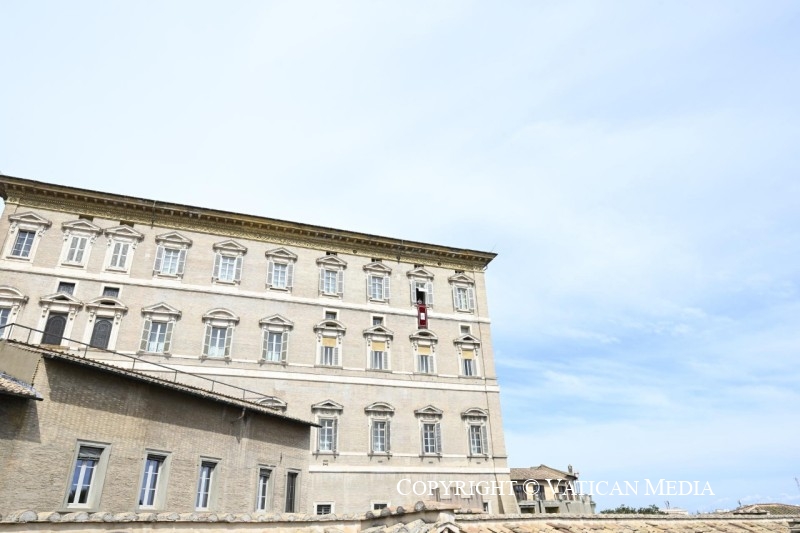
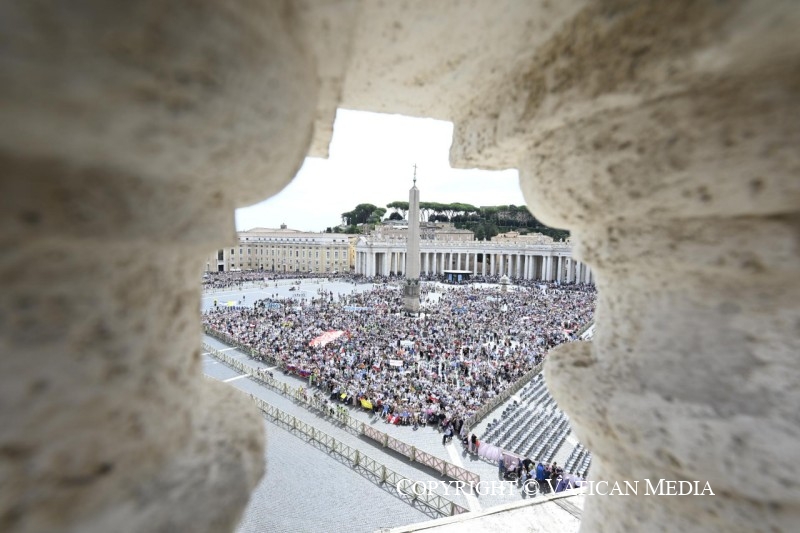
(ZENIT News / Vatican City, 09.14.2025).- At noon on Sunday, September 14, Pope Leo XIV appeared at the window of the papal apartment overlooking St. Peter’s Square to pray the Angelus with thousands of people gathered outside the Vatican basilica. Many of them were there because they wanted to show their affection for the Pope, as Leo XIV turned 70 that day. Below is the text of the Holy Father’s address, which focused on the Exaltation of the Holy Cross.
***
Dear brothers and sisters, Happy Sunday!
Today the Church celebrates the Feast of the Exultation of the Holy Cross, commemorating the discovery of the Cross by Saint Helen in Jerusalem in the fourth century, and the return of the precious relic to the Holy City by the Emperor Heraclius.
But what does celebrating this feast mean for us today? The Gospel reading that the liturgy places before us (cf. Jn 3:13-17) helps us to understand it. The scene unfolds at night: Nicodemus, one of the leaders of the Jews, a righteous and open-minded person (cf. Jn 7:50-51), comes to meet Jesus. He needs light and guidance: he seeks God and asks the Teacher of Nazareth for help because he recognizes him as a prophet, a man who performs extraordinary signs.
The Lord welcomes him, listens to him, and eventually reveals to him that the Son of Man must be lifted up, “so that whoever believes in him may have eternal life” (Jn 3:15), adding: “For God so loved the world that he gave his only Son, so that everyone who believes in him might not perish but might have eternal life” (v. 16). Nicodemus, who perhaps does not fully comprehend the meaning of these words in the moment, will certainly do so when he helps to bury the Savior’s body after the crucifixion (cf. Jn 19:39). It is then that he will understand that God, in order to redeem humanity, became man and died on the cross.
Jesus speaks of this to Nicodemus, recalling an episode in the Old Testament, when the Israelites were bitten by venomous snakes in the desert and were healed by looking upon the bronze serpent that Moses had fashioned and mounted on a pole in obedience to God’s command (cf. Num 21:4-9).
God saves us by showing himself to us, offering himself as our companion, teacher, doctor, friend, to the point of becoming bread broken for us in the Eucharist. In order to accomplish this task, he used one of the cruelest instruments that human beings have ever invented: the cross.
That is why today we celebrate the “exultation”: for the immense love with which God has transformed the means to death into an instrument of life, embracing it for our salvation, teaching us that nothing can separate us from him (cf. Rom 8:35-39) and that his love is greater than our own sin (cf. Francis, Catechesis, 30 March 2016).
Let us then ask, through the intercession of Mary, the Mother who was present at Calvary near her Son, that the saving love of her Son may take root in us and grow, and that we too may know how to give ourselves to each other, as he gave himself completely to all.
Thank you for reading our content. If you would like to receive ZENIT’s daily e-mail news, you can subscribe for free through this link.

Publicaciones relacionadas:
 Corpus Christi explained by Leo XIV with the miracle of the multiplication of loaves
 This is how the Pope explains the hospitality of vacations and warns against the vacation industry that sells all kinds of experiences
 What does it mean to be a “sign of contradiction”? Pope Leo XIV explains it
 The Transfiguration of Jesus explained by Pope Leo XIV
