

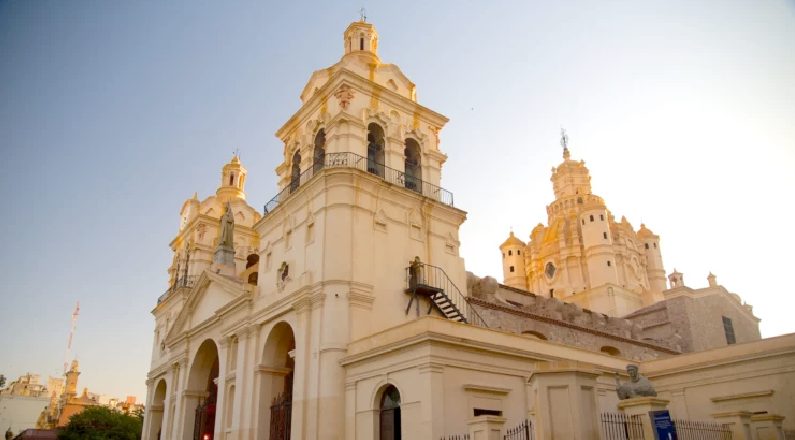
(ZENIT News / Córdoba, 09.19.2025).- The Cathedral of Córdoba, one of Spain’s most iconic religious monuments, faced an unsettling episode last month when repeated bomb threats forced police to sweep the site and activate emergency protocols. Authorities later arrested a man in Palencia, hundreds of kilometers away, accusing him of public disorder and hate crimes linked to the incident.
On August 12, the cathedral’s security staff received nearly twenty threatening phone calls over several hours, warning of explosives in the building. For more than an hour, the vast medieval complex—visited daily by thousands of tourists and pilgrims—was combed by officers and evacuated in parts, until investigators determined the alarm was false.
While no explosives were found, the caller, according to Spain’s National Police, used racist and xenophobic language alongside his threats. Tracing the calls eventually led officers to the north of the country, where the suspect was taken into custody.
The scare came only days after a small fire in the cathedral, reportedly caused by the overheating of a cleaning machine’s battery, had already raised questions about preparedness in safeguarding the UNESCO World Heritage Site.
Beyond the immediate police operation, the incident has reignited broader discussions in Spain about how a place of worship that is also a magnet for cultural tourism can remain both open and secure. In recent years, the cathedral has also stood at the center of political and legal debates over ownership. While critics in local government argued that the Catholic Church lacked rightful claim to the property, historians and jurists confirmed the legitimacy of the title.
The building itself embodies the layered history of the Iberian Peninsula. First a Visigothic church in the eighth century, it became one of the great mosques of Al-Andalus before King Ferdinand III of Castile consecrated it as a Christian cathedral in the thirteenth century. Subsequent centuries saw the addition of chapels, altars, and Christian iconography, weaving together Islamic and Christian artistry in a single structure that has long been described as a symbol of Spain’s complex religious past.
That legacy is precisely what heightens concern over the recent threats. The site is not merely a tourist attraction but also a living place of worship for the Catholic community of Córdoba. Each disruption—whether a fire, a bomb scare, or political dispute—touches both the faithful and those who view the cathedral as a shared cultural treasure.
Police insist that the suspect acted alone, but the investigation has underscored the vulnerability of monuments that carry both religious and historical weight.
Thank you for reading our content. If you would like to receive ZENIT’s daily e-mail news, you can subscribe for free through this link.

Publicaciones relacionadas:
 Municipal government buys house where Pope Leo XIV grew up: unanimous decision
 Laywoman Appointed Chancellor of Mexico City Archdiocese in Historic First
 Opus Dei Denies Accusation of «Trafficking» and Considers It Necessary to Grant the Accused Individuals the Right to Give Their Version of the Facts
 Inspiring: More Than 400 Iraqi Children Make Their First Communion
