

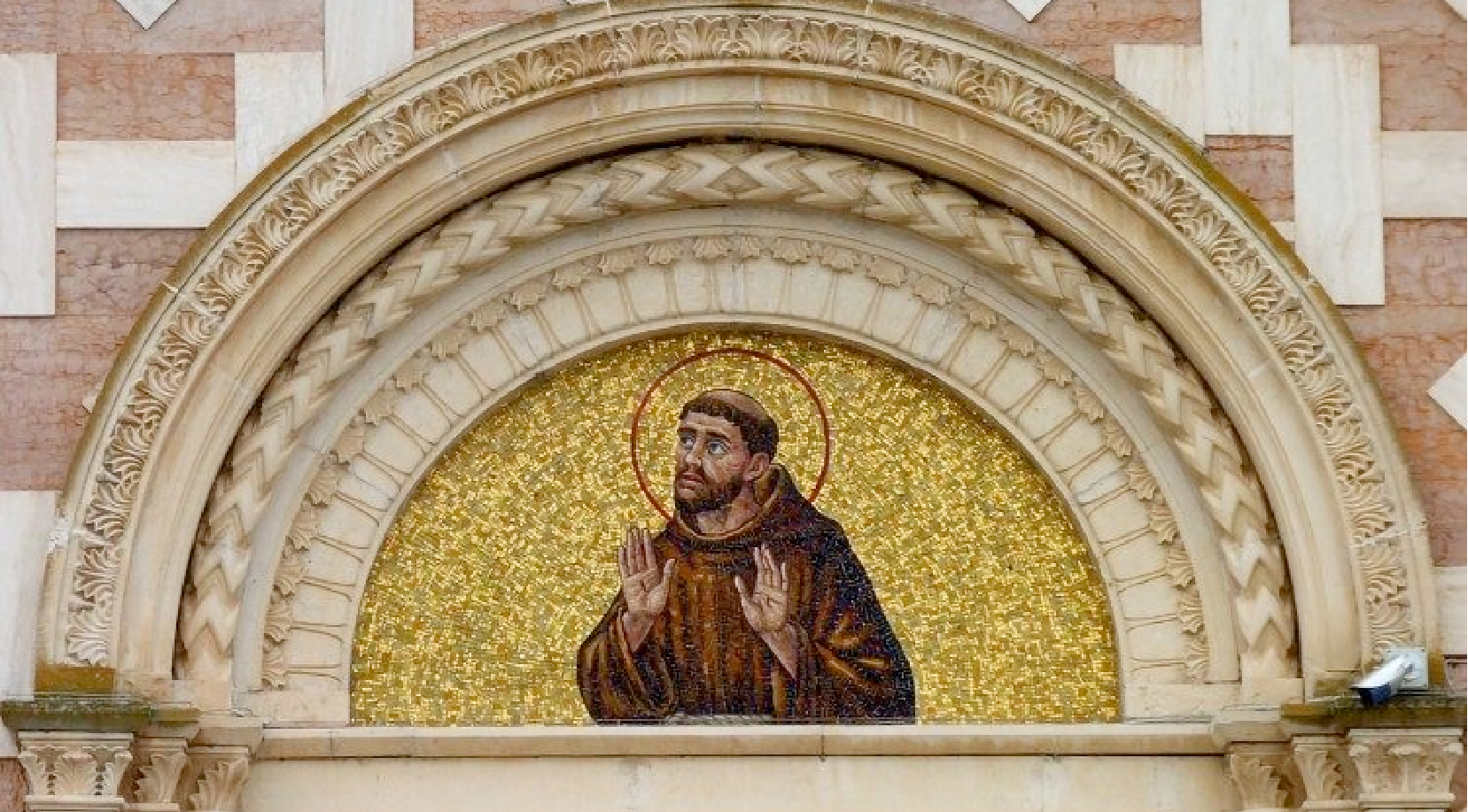
(ZENIT News / Rome, 09.22.2025).- Italy is moving closer to reinstating October 4 as a national holiday in honor of St. Francis of Assisi—and, symbolically, of the late Pope Francis who bore his name. The proposal, now scheduled for debate in the final week of September, has drawn cross-party support from Prime Minister Giorgia Meloni’s coalition.
If approved, the holiday would return nearly half a century after its removal in 1977, when austerity measures swept away several feast days. Advocates hope to see it restored in time for 2026, the 800th anniversary of the saint’s death, turning a date long cherished in Christian memory into a civic expression of peace and solidarity.
Maurizio Lupi, leader of the centrist «Noi Moderati» party and chief sponsor of the legislation, described the measure as more than a matter of symbolism. “This is a call to peace, to cohesion, to the value of nature, and to the lesson of faith and spirituality that Francis offered the world,” he told AFP.
A saint and a pope bound by name and vision
The timing is poignant. Pope Francis, who died in April at the age of 88, was the first pontiff to take the name of the medieval saint from Assisi, signaling from the outset of his papacy a desire for a Church that is poorer, humbler, and closer to the marginalized. Restoring the holiday would link two figures separated by centuries but united in their rejection of power and wealth in favor of service to the poor and care for creation.
Between finances and identity
Italy currently recognizes 12 national holidays, fewer than some of its Mediterranean neighbors but more than countries such as France or Sweden. Lawmakers must balance the cultural and spiritual weight of a new feast day against concerns about economic productivity. Critics of the plan warn that another public holiday could place strain on state finances, particularly at a time when Italy faces pressure to keep spending under control.
Yet the debate comes as a striking contrast to recent developments in France. There, an attempt by former Prime Minister François Bayrou to scrap two holidays in the name of fiscal discipline provoked widespread outrage and was quickly abandoned. The Italian proposal, by contrast, reflects a mood less of subtraction than of restoration, appealing to national memory rather than budgetary arithmetic.
Other feast day campaigns
The push to honor St. Francis is not the only attempt to shape Italy’s civic calendar through the saints. Some legislators have campaigned for March 19, the feast of St. Joseph—also celebrated as Father’s Day—to be recognized as a public holiday. So far, those efforts have fallen short.
But St. Francis, already designated the country’s patron saint, carries unmatched resonance. To enshrine his feast day again, especially in a jubilee year of sorts for the Franciscan family, would be to anchor Italy’s modern identity in a figure who continues to inspire across religious and political divides.
Thank you for reading our content. If you would like to receive ZENIT’s daily e-mail news, you can subscribe for free through this link.

Publicaciones relacionadas:
 Prelate of Opus Dei reports on the work of adapting its Statutes
 After Pope’s letter that prevented schism in Germany, date announced for meeting between Rome and German bishops
 Jubilee 2025: Italian police seize more than 100,000 counterfeit items
 New Light for the Dome of Saint Peter’s Basilica: Light Intensity Tests Are Underway
