

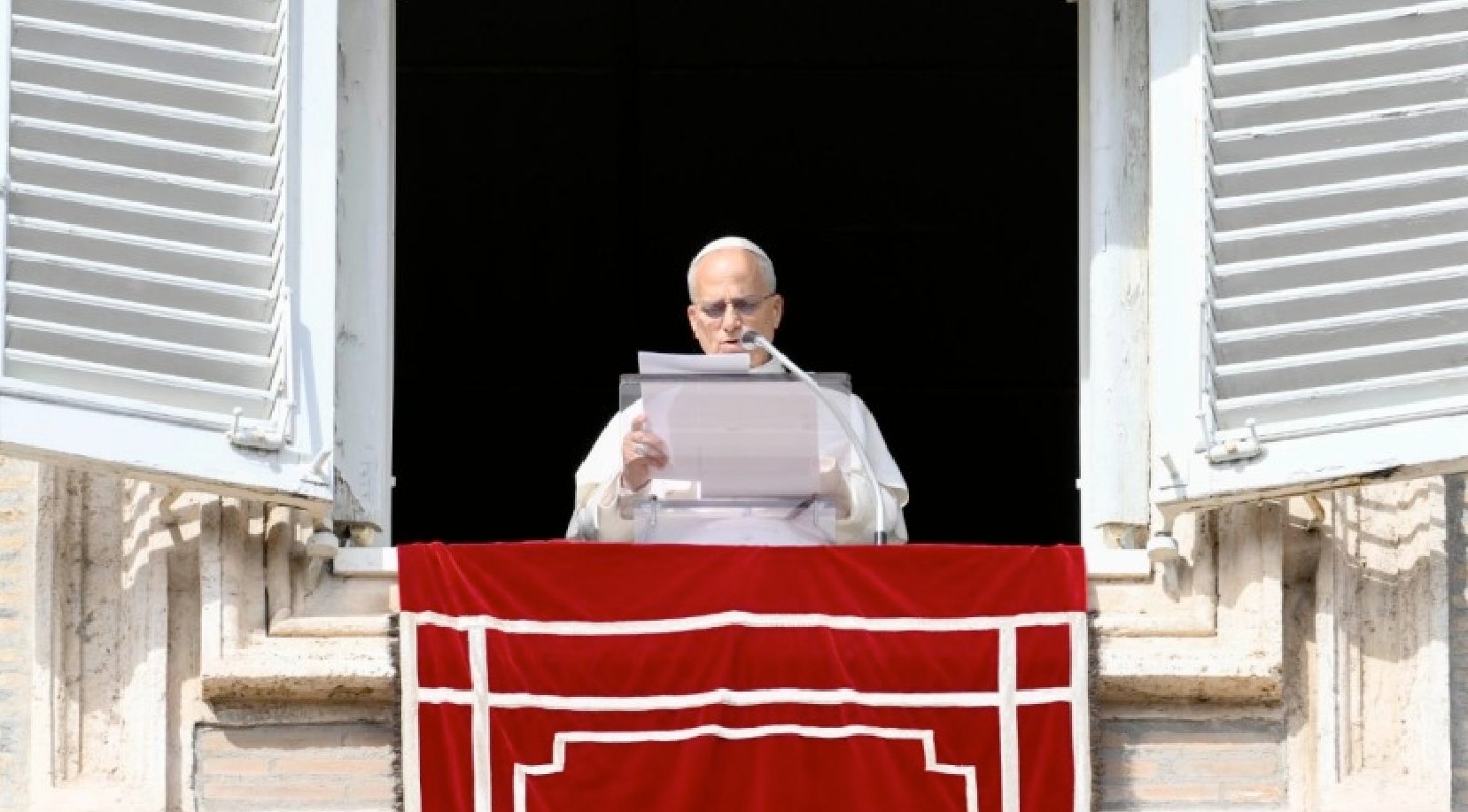
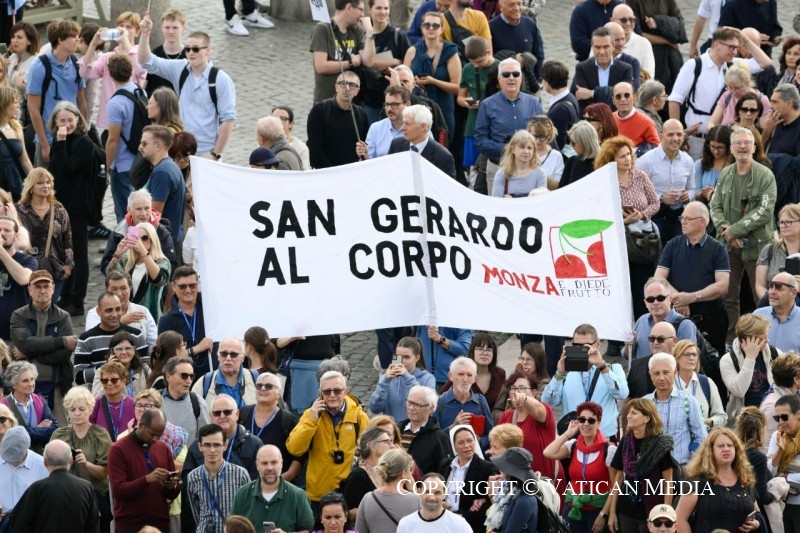
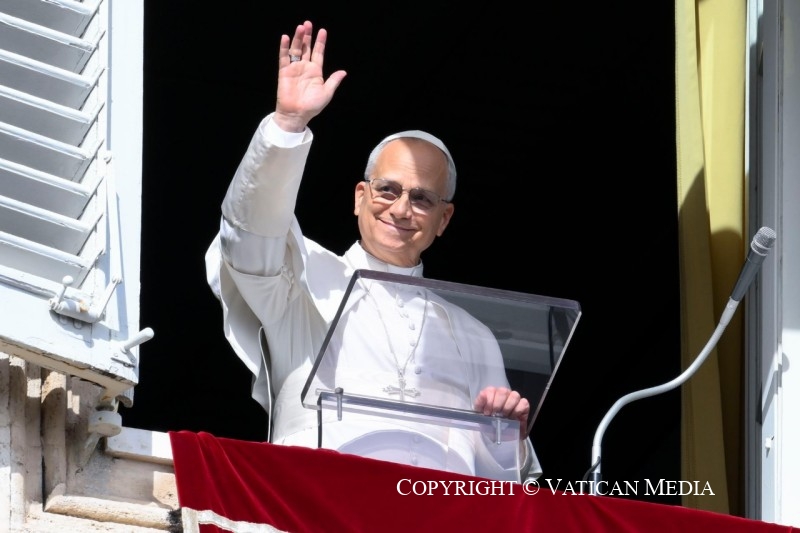
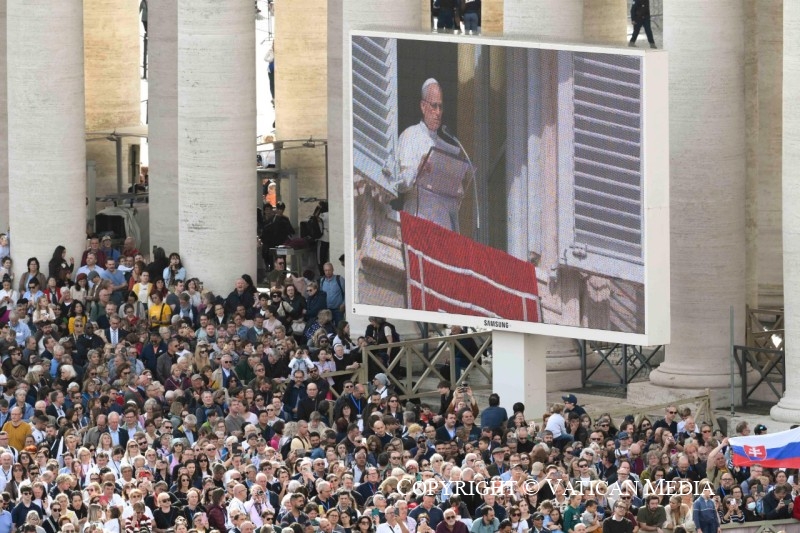
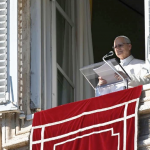
(ZENIT News / Vatican City, 10.26.2025).- At noon on Sunday, October 26, Pope Leo XIV appeared on the balcony of the papal apartment overlooking St. Peter’s Square to pray the Marian prayer of the Angelus with thousands of faithful. In his previous address, the Pope delved into the Gospel offered by the liturgy of that same Sunday, thus offering a precious and brief reflection, which we offer below, translated into English.
***
Dear brothers and sisters, happy Sunday!
Today’s Gospel (cf. Lk 18:9-14) presents two individuals, a Pharisee and a tax collector, who are praying in the Temple.
The first boasts a long list of merits. He has done many good works, and for this reason he feels superior to others, whom he judges contemptuously. He stands with his head held high. His attitude is clearly presumptuous, denoting a strict observance of the law, but one that is poor in love, made up of “giving” and “taking,” of debts and credits, devoid of mercy.
The tax collector is also praying, but in a very different way. He is in great need of forgiveness: he is a tax collector paid by the Roman Empire, and he works under a contract that allows him to speculate on the proceeds to the detriment of his own countrymen. Yet, at the end of the parable, Jesus tells us that it is the tax collector who returns home “justified,” that is, forgiven and renewed by his encounter with God. Why?
First, the tax collector had the courage and humility to present himself before God. He did not close himself off in his own world or resign himself to the evil he has done. He left the places where he was feared, safe and protected by the power he wielded over others. He went to the Temple alone, without an escort, even at the cost of facing harsh glances and sharp judgments, and he stood before the Lord, at the back, with his head bowed, uttering a few words: “God, be merciful to me a sinner” (v. 13).
Jesus gives us a powerful message: it is not by flaunting our merits that we are saved, nor by hiding our mistakes, but by presenting ourselves honestly, just as we are, before God, ourselves and others, asking for forgiveness and entrusting ourselves to the Lord’s grace.
Commenting on this passage, Saint Augustine compares the Pharisee to a sick man who, out of shame and pride, hides his wounds from the doctor. The tax collector is compared to another who, with humility and wisdom, lays bare his wounds before the doctor, however unpleasant they may be to look at, and asks for help. The saint concludes: “It is not surprising that it was the tax-collector… who went away cured, since he had not been ashamed of showing where he felt pain” (Sermo 351,1).
Dear brothers and sisters, let us do the same. Let us not be afraid to acknowledge our mistakes, lay them bare, take responsibility for them and entrust them to God’s mercy. That way, his Kingdom — which belongs not to the proud but to the humble and is built through prayer and action, by practicing honesty, forgiveness and gratitude — can grow in us and around us.
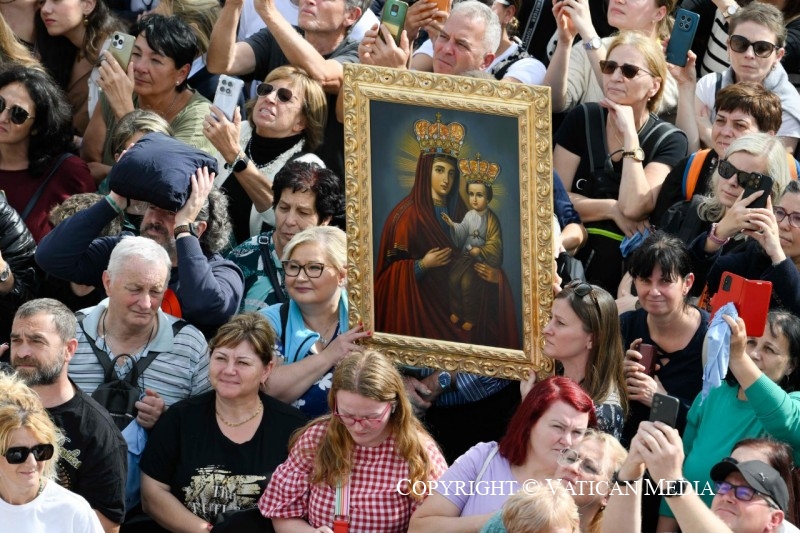
Let us ask Mary, the model of holiness, to help us grow in these virtues.
Thank you for reading our content. If you would like to receive ZENIT’s daily e-mail news, you can subscribe for free through this link.

Publicaciones relacionadas:
 Why Does Jesus Say the Door of Salvation Is Narrow? Pope Leo XIV Responds
 This is how the Pope explains how we are called to unite our waiting for the Savior with attention to what God is doing in the world
 To enter into Christmas: Pope Leo XIV’s beautiful, short, timely, and appropriate meditation on Saint Joseph
 Ordinary time, our baptism, and the memory of a gift received: a simple reflection by Leo XIV
