

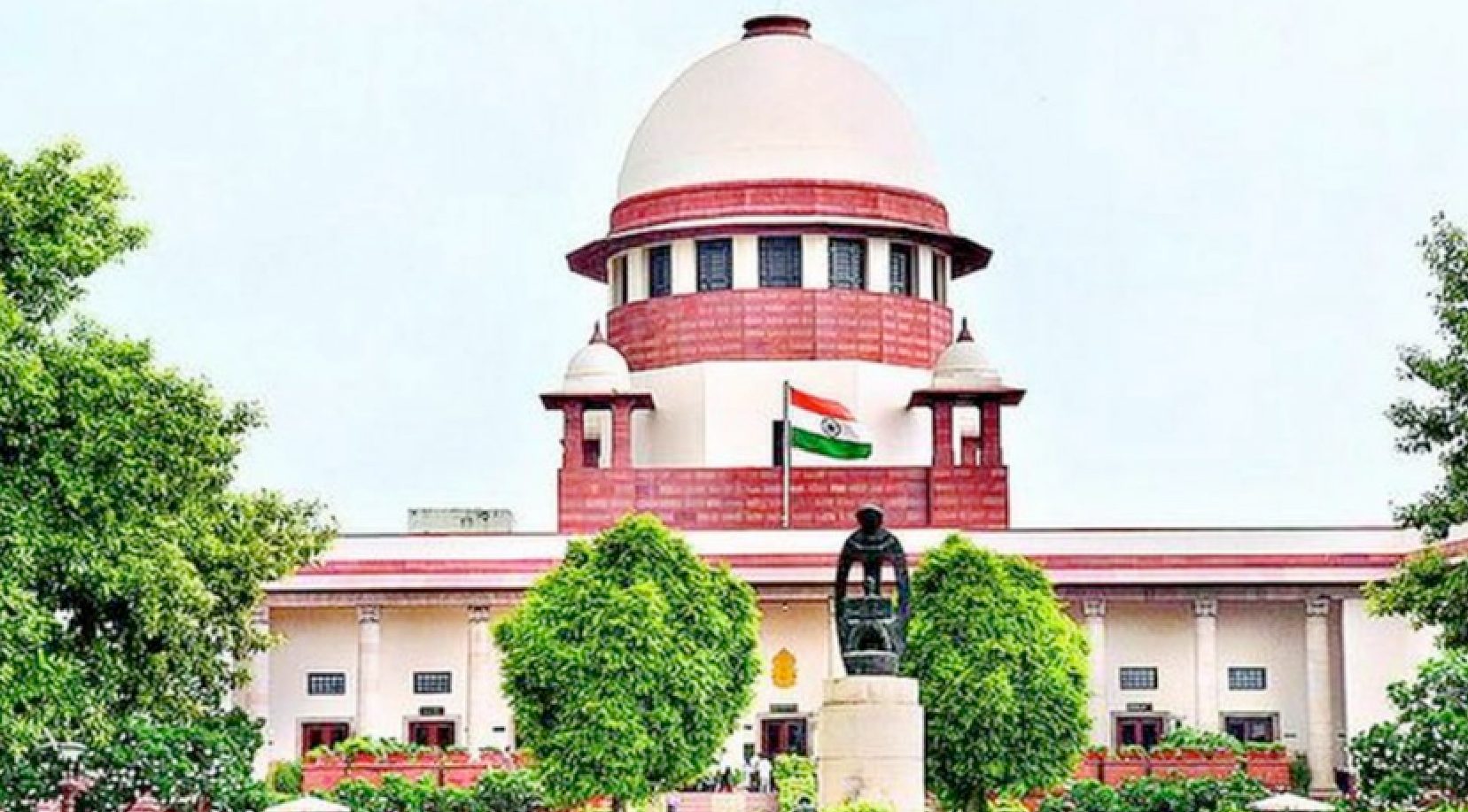
(ZENIT News / Uttar Pradesh, 11.01.2025).- When India’s Supreme Court paused to reflect on the meaning of faith, freedom, and law on October 17, the discussion went far beyond the boundaries of a courtroom. It struck at the heart of a national dilemma: how to balance the country’s officially secular identity with laws that seem to police the personal act of belief itself.
The country’s highest court has raised serious concerns about Uttar Pradesh’s 2021 anti-conversion law, calling parts of it “onerous,” “intrusive,” and potentially inconsistent with the fundamental freedoms guaranteed by the Indian Constitution. Though the bench clarified that it was not yet ruling on the law’s constitutional validity, its observations marked a decisive moment in a long-running debate about religion, coercion, and the limits of state power in the world’s largest democracy.
At issue is the Uttar Pradesh Prohibition of Unlawful Conversion of Religion Act, introduced by Chief Minister Yogi Adityanath’s Hindu nationalist government. Framed as a safeguard against forced or fraudulent religious conversions, the law has in practice been used disproportionately against Christians and Muslims, often on the basis of complaints filed by individuals or groups unconnected to the supposed “victims.”
The Court reviewed a series of criminal cases in which the police had invoked the Act alongside provisions of the Indian Penal Code. In its remarks, the bench voiced concern about the law’s procedural demands, which require anyone intending to convert to submit a written declaration to the local magistrate before and after changing faith. This process, the judges noted, grants the state “significant visibility and control over personal decisions,” undermining the principle that religion belongs to the private sphere of conscience.
More troubling still, the law mandates the publication of personal information about those seeking to convert—a measure the justices suggested might violate the constitutional right to privacy. “Such requirements,” one of the judges observed, “may not sit well with the constitutional regime of privacy that now permeates our legal framework.”
The case that brought the issue to national attention involved the vice-chancellor and staff of Sam Higginbottom University of Agriculture, Technology and Sciences (SHUATS) in Prayagraj, accused of orchestrating mass conversions to Christianity. The Supreme Court dismissed the charges, finding no evidence of coercion and no legitimate basis for prosecution under the anti-conversion law.
For Bishop Ignatius D’Souza of Bareilly, a Catholic leader in the same state, the ruling represents more than a procedural correction—it is a moral and constitutional milestone. Speaking to Crux, D’Souza called the judgment “a moment of great consequence for our democracy,” affirming that “faith is a matter of personal choice, not of public control.”
He praised the Court for clarifying that only the alleged victim or their immediate relatives may file a complaint in cases of forced conversion. “This decision draws a necessary line between genuine protection of individual rights and the misuse of law to harass or intimidate communities,” he said.
Uttar Pradesh, home to nearly 200 million people, includes fewer than 350,000 Christians—less than two-tenths of one percent of the population. Yet the state has been a focal point of what rights groups describe as a rising tide of Hindu nationalism and religious polarization. Under the Bharatiya Janata Party (BJP), closely allied with the Rashtriya Swayamsevak Sangh (RSS), local authorities have often accused Christian pastors and congregations of “forced conversions,” sometimes accompanied by public “reconversion” ceremonies in which believers are pressured to perform Hindu rituals.
These incidents have become emblematic of a wider phenomenon critics call the “saffronization” of India—the gradual infusion of religious majoritarianism into civic institutions and national identity under Prime Minister Narendra Modi.
The Supreme Court’s comments, therefore, carry weight far beyond Uttar Pradesh. By reaffirming the secular foundations of the republic, the justices implicitly challenged the notion that the state can monitor or regulate matters of conscience. “The people of India enjoy freedom of thought, belief, and worship,” the Court reminded, calling this principle “an embodiment and expression of the secular character of the nation.”
In Bishop D’Souza’s words, the judgment restores “the sacred space of conscience” that Article 25 of the Constitution promises to every citizen—the right to profess, practice, and propagate one’s faith, without fear or interference. “This is not merely a legal victory,” he said. “It is a reaffirmation of human dignity, of the inviolability of conscience, and of the strength of our democracy.”
The decision, he added, should remind both leaders and citizens that “true conversion—of heart, of belief, of life—can only arise from free will and inner conviction, never from coercion or deceit.”
Thank you for reading our content. If you would like to receive ZENIT’s daily e-mail news, you can subscribe for free through this link.

Publicaciones relacionadas:
 300 political and civic leaders from 45 countries sign the Madrid Commitment in Spain
 India: Hindu persecution against Christians increases and reaches 800 cases. They also seek to apply a new anti-Christian law
 Nicaraguan Reformed Constitution: An Assault Against Religious Liberty
 French Court Upholds Ban on Religious Symbols in Local Council, Reigniting National Debate
