

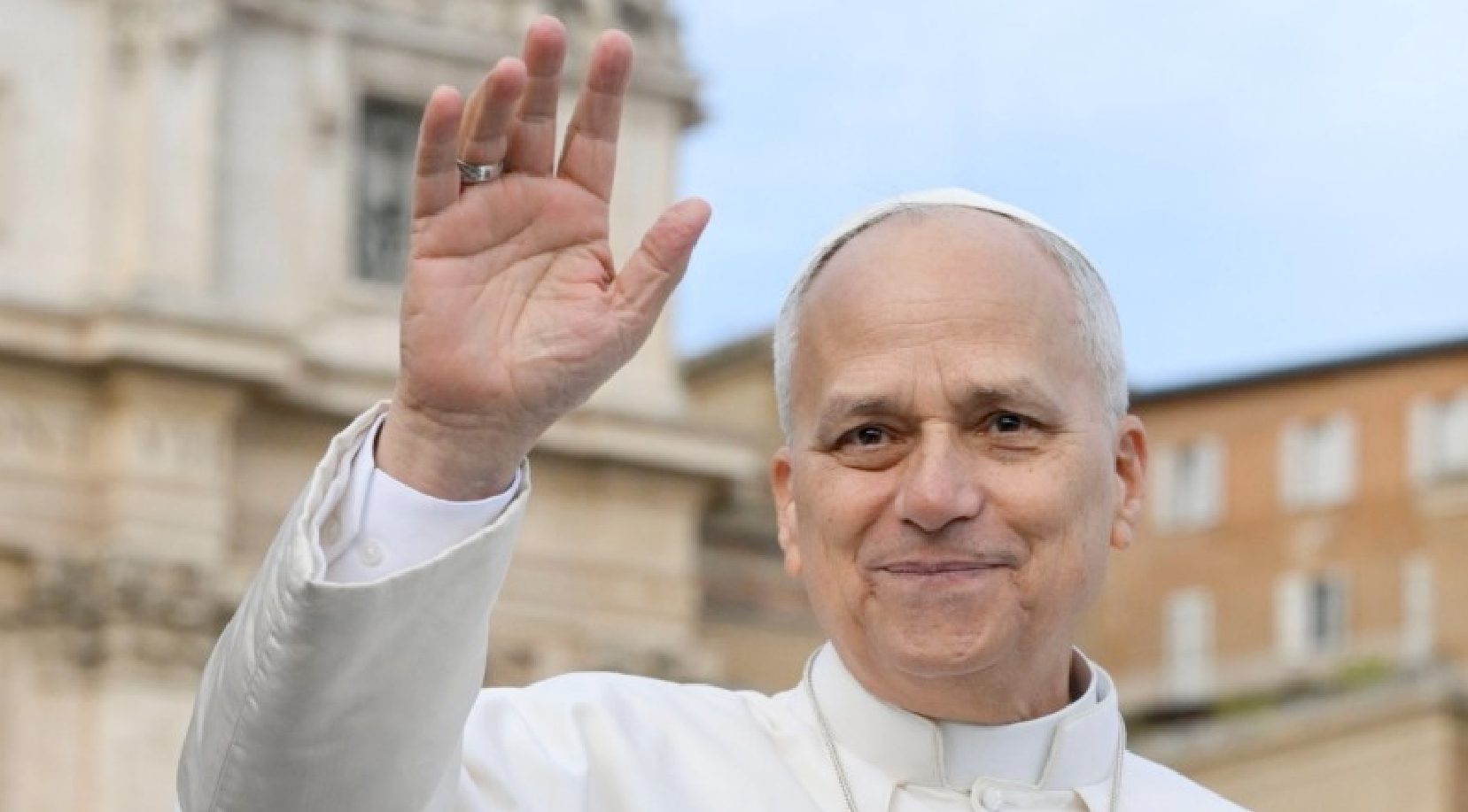
(ZENIT News / Vatican City, 12.05.2025).- Decisions emerging from the Vatican in early December suggests that Pope Leo XIV is moving swiftly to rebuild the Holy See’s financial architecture, correcting what many insiders saw as one of the most delicate legacies of the late Pope Francis. The most visible sign of this shift came with a decree abolishing the short-lived commission created to boost Vatican fundraising—an office whose origins, composition, and mandate had been questioned from the start.
The Commissio de donationibus, established last February while Francis was undergoing treatment at the Gemelli Hospital, was intended to launch targeted donation campaigns and attract new benefactors for Vatican projects. Its creation was announced at a moment when the pope’s health was fragile, his mobility limited, and his inner circle unusually active. The commission was approved for a three-year experimental period, yet in practice it operated for fewer than ten months.
Leo XIV’s decision, formally signed in late September but released on 4 December, dismantles the entire structure: its statutes are revoked, its regulations voided, and its members removed. All assets belonging to the office will be transferred to the Holy See, and its liquidation will be overseen by the Administration of the Patrimony of the Apostolic See, led by Archbishop Giordano Piccinotti. The decree emerged after months of review by the Vatican’s Council for the Economy, which studied the commission’s purpose, evaluated its early steps, and consulted external experts before recommending a complete restructuring of how the Holy See raises funds.
The suppressed commission had been composed exclusively of Italian officials, none with dedicated professional experience in high-level fundraising. Its president, Monsignor Roberto Campisi, was serving as an adviser in the Secretariat of State, the very department that had previously lost control of major financial assets following a costly real-estate debacle in London. Observers noted the paradox: an office created to enhance transparency and donor confidence ended up directed by figures associated with past administrative missteps. Campisi was reassigned in September as the Holy See’s permanent observer to UNESCO—an appointment widely interpreted as a lateral move, since his predecessors over the past half-century had traditionally been elevated to episcopal rank and sent as nuncios.
The doubts surrounding the commission’s credibility were not limited to institutional politics. Major donors, particularly in the United States—where philanthropic networks are strong and expectations for accountability are high—expressed discomfort that no American experts had been included on the board. Many interpreted Francis’ decision to place the commission under the Secretariat of State as a way of restoring influence to an office that had been curtailed after losing hundreds of millions of euros in the London affair.
Leo XIV’s decree appears to confront those concerns head-on. The new pope, known for his training in mathematics and his preference for clear structures, is positioning himself to strengthen financial governance as the Holy See enters the Year of Jubilee. Vatican insiders note that, while Leo has refrained from repudiating Francis’ intentions, he has shown readiness to adjust, refine, or reverse previous decisions where their implementation proved fragile or ambiguous.
That pattern had already emerged in late November, when Leo reassessed the reforms governing the major Roman basilicas and placed them under regular oversight by the Council for the Economy. Earlier in October, he revoked a 2022 rescript that centralized all curial accounts within APSA and required all financial activity to pass through the Vatican’s sole «commercial bank», the Institute for the Works of Religion. And just days before announcing the suppression of the fundraising commission, Leo reversed a separate administrative decision from 2024 concerning the Diocese of Rome.
Financial signals from the Vatican have been mixed. A recent report highlighted a marked rise in income and a substantial reduction in the structural deficit. But the association representing lay employees cautioned that some increases came from one-off donations and occasional investment gains, raising questions about long-term stability. These concerns underscore why Leo’s reforms—though technical—carry broader implications for the credibility of the Holy See’s finances.
In place of the commission he has dissolved, the pope is calling for a new working group tasked with drafting a more sustainable, transparent, and coherent fundraising model. Members will be proposed by the Council for the Economy and appointed by the pope after review by the Secretariat of State. The effort reflects a desire not merely to close a problematic chapter, but to lay foundations for a future in which donor engagement is matched by robust governance.
As 2025 approaches its end, the Vatican’s financial system is undergoing one of its most significant recalibrations in years. The decisions of Leo XIV suggest a pontiff intent on ensuring that the economic mechanisms supporting the ministry of the Apostolic See are as clear and trustworthy as the mission they are meant to sustain.
Thank you for reading our content. If you would like to receive ZENIT’s daily e-mail news, you can subscribe for free through this link.

Publicaciones relacionadas:
 Pope Leo Appoints New President of the Pontifical Academy for Life
 A New Phase in the Leonine Pontificate: Pope Reshapes His Inner Circle with a Surprising Appointment
 Pope Leo XIV to publish new document on Catholic education and declare Newman co-patron of Catholic education
 Leo XIV perfects the mission of the Pontifical Academy for Life
