

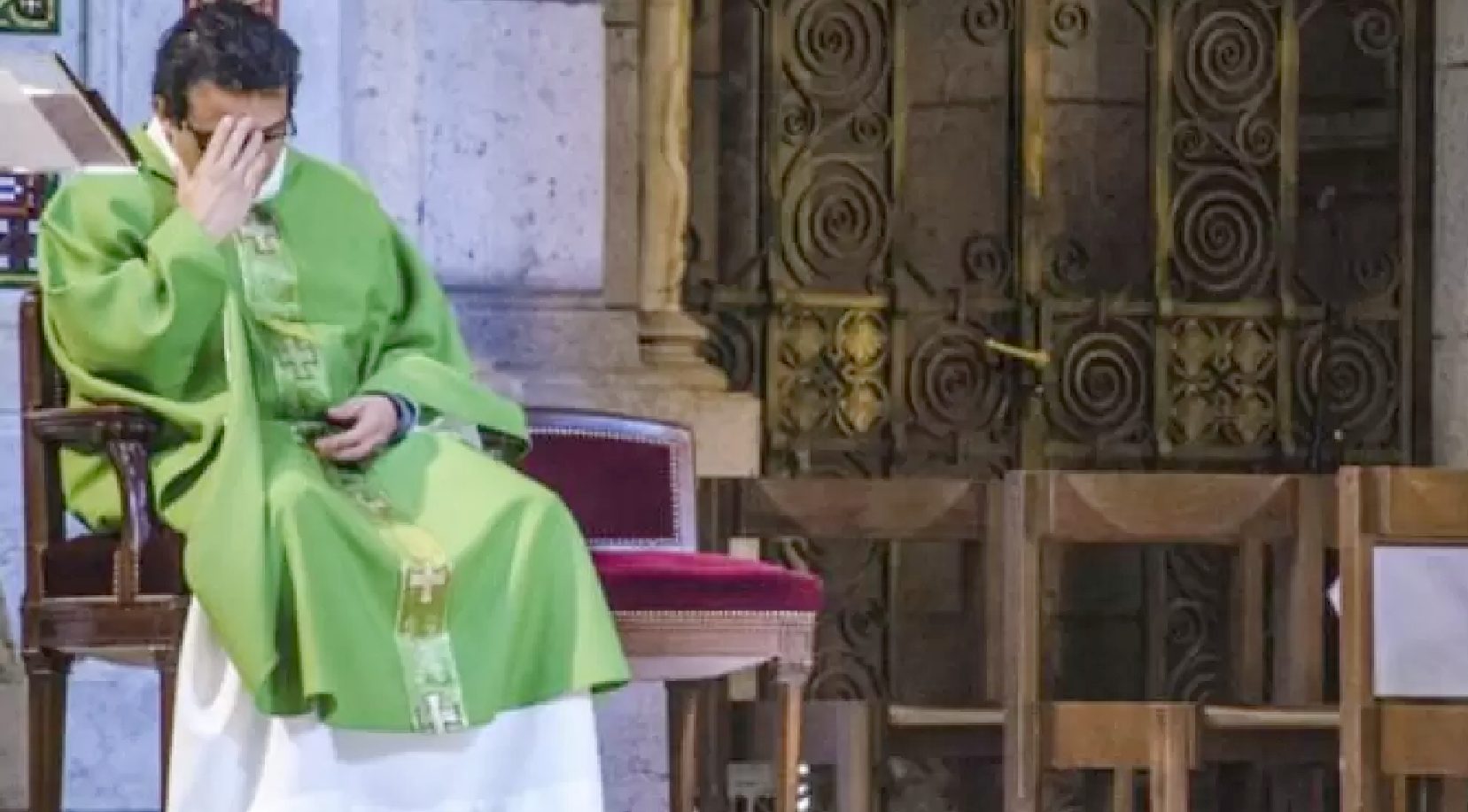
(ZENIT News / London, 12.06.2025).- A decade-long effort to understand how ordained ministers cope with the demands of parish life has reached its final chapter, and the picture that emerges is both reassuring and troubling. The Living Ministry panel study, launched in 2017 by the National Ministry Team, set out to trace the long arc of clergy wellbeing. Its last report, released in early December, suggests that while most priests and ministers remain convinced they are living the life they were called to, many are doing so under conditions that erode their emotional, social, and financial stability.
The survey followed more than a thousand clergy ordained in different cohorts or admitted to training in 2016, revisiting them year after year. Roughly half participated in the most recent wave. The authors caution that the findings should not be treated as a comprehensive portrait of the clergy across the UK, but they still illuminate the pressures most commonly reported at the parish level: exhaustion, loneliness, discouragement, and persistent financial anxiety.
The sense of isolation stands out sharply. Four in ten respondents said they often felt alone in their ministry. The report notes that the structure of parish life can blur the boundary between work and personal space: every encounter in the neighbourhood, every conversation after a Sunday service, every pastoral visit becomes part of one’s professional identity. That dynamic, the authors write, makes deep local friendships difficult to cultivate and leaves some clergy “carrying a public self at all times,” which several described as profoundly lonely.
Signs of mental strain are equally notable. Nearly a third of participants reported levels of wellbeing associated with mild, possible, or clinical depression. The rate was even higher among incumbents, who unlike other clergy groups did not experience improved mental health after the COVID-19 pandemic. The study contrasts these numbers with broader UK data, where roughly two-thirds of women and nearly three-quarters of men show no signs of depression.
Burnout, analysed in this final wave as a combination of depletion, isolation, and demoralisation, affected a smaller fraction—about eight percent reached the formal threshold. Yet almost half were rated high on demoralisation alone. Researchers insist that low morale does not necessarily imply ineffective ministry; rather, it reflects the cumulative weight of expectations and structural constraints. Many clergy said they feel judged by two blunt indicators: attendance figures and the parish’s ability to meet its financial quota. These measures, they said, fuel a sense of failure even when pastoral work is flourishing in less quantifiable ways.
Pressure on parish resources also plays a part. Nearly half of respondents said they were discouraged by their parish finances, and more than a third cited the burden of maintaining aging church buildings. Administrative tasks, including compliance requirements imposed by dioceses or national structures, were described as the greatest source of workload stress and, for some, a diversion from the very ministry that drew them into ordained life.
The report also offers a window into what sustains clergy despite these pressures. Respondents pointed to the impact of their ministry—moments of transformation in parishioners’ lives, opportunities for teaching, pastoral care, or community-building—as a primary source of hope. Personal faith, as well as supportive friendships among colleagues, featured prominently. A minority referenced signs of parish growth, though most said such growth was slow and modest.
What appears strikingly absent is confidence in church leadership as a source of encouragement. Fewer than four percent cited bishops or archbishops when asked what gave them hope. Several respondents characterised existing wellbeing initiatives as too superficial or mismatched to their lived reality. One minister summed up a common frustration: instead of offering “wellbeing days no one asked for,” dioceses should “ask clergy what would genuinely help—and then provide that.”
Despite the weariness voiced throughout the study, vocational commitment remains remarkably stable. In the final round, nearly three-quarters affirmed that they were fulfilling the calling that brought them into ministry. The authors suggest that this deep alignment with purpose may be the very factor allowing clergy to persevere even as institutional, societal, and personal pressures intensify.
The report closes with an implicit invitation: for church leaders to listen more closely to those serving on the ground, and for communities to recognise the unseen emotional and practical costs borne by the people who guide them. Whether this decade of research will inspire systems that strengthen rather than strain the vocation remains an open question—but few doubt its urgency.
Thank you for reading our content. If you would like to receive ZENIT’s daily e-mail news, you can subscribe for free through this link.

Publicaciones relacionadas:
 U.S. Bishops’ Chairman for Religious Liberty on “Respect for Marriage Act”
 The 4 vicinity of the priest: Pope receives fifth Spanish seminary in Vatican (Getafe)
 Cardinal O Malley’s era at the head of the important diocese of Boston in the USA comes to an end: here is the successor
 This is how the assembly of US bishops went: synod, abortion, Eucharistic coherence, and migration among the topics discussed
