

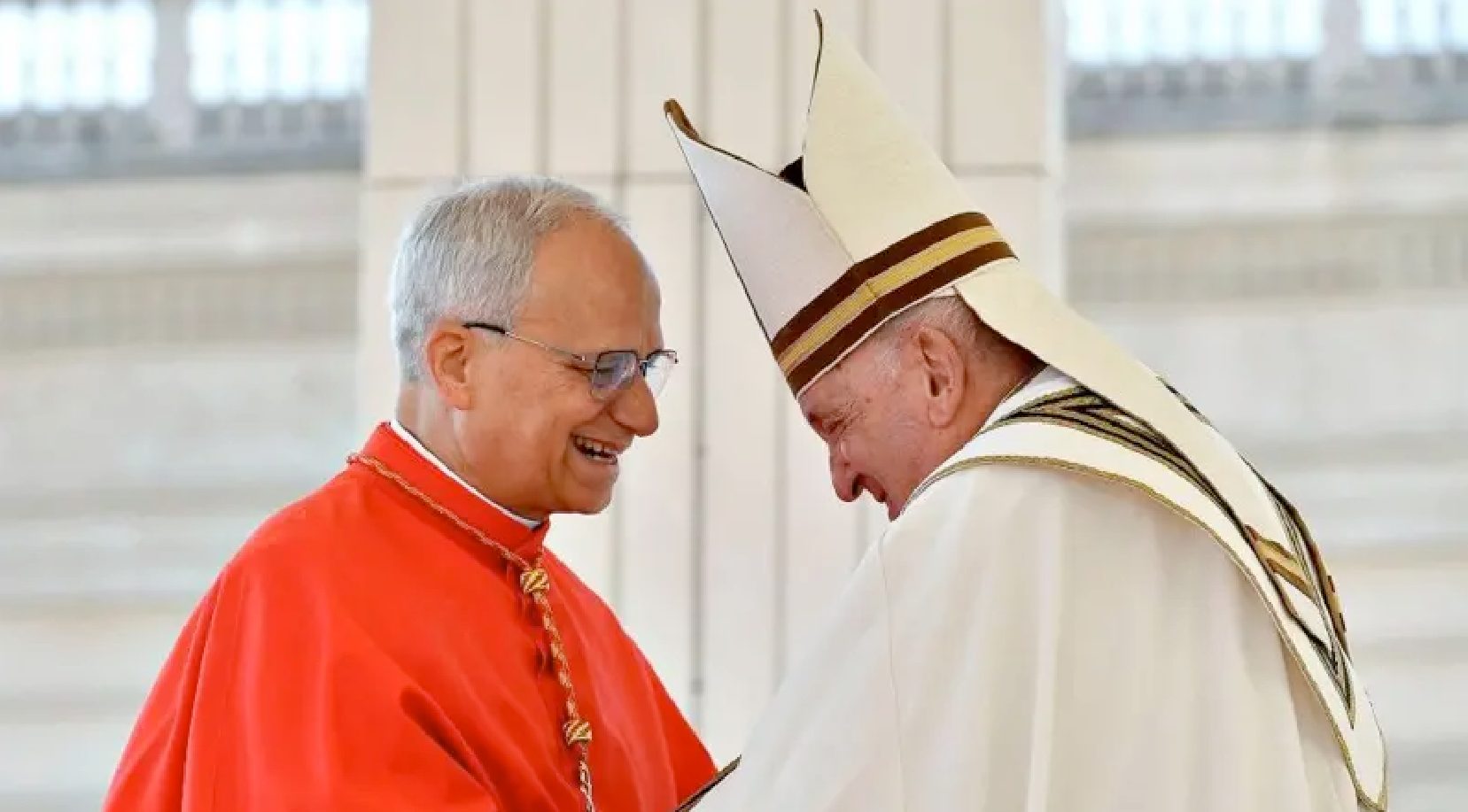
(ZENIT News/ Rome, 12.14.2025).- Few institutions measure global curiosity as accurately as the digital platforms people instinctively turn to when a story breaks. In 2025, these platforms told a striking story about the Catholic Church: two Popes, separated by death and succession, ranked among the most searched figures online, revealing the intense interplay between religion and global attention throughout the year.
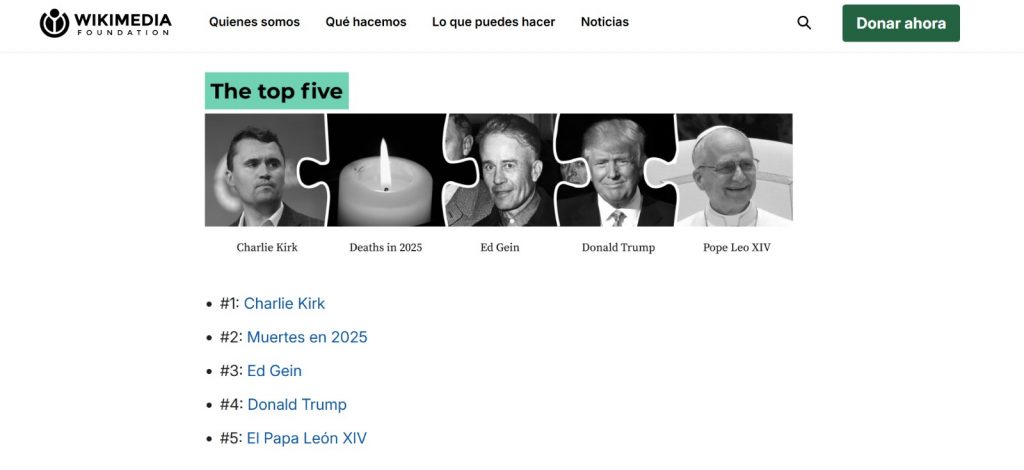
Data published by the Wikimedia Foundation placed Pope Leo XIV among the five most-read articles on the English Wikipedia, an extraordinary position usually reserved for political leaders, major scandals, or momentous world events. Only a few topics — from polarizing political figures to notorious crimes and high-profile deaths –generated more interest. Just outside the top 10, in 11th place, was Pope Francis, whose death earlier this year prompted millions to reread his life and legacy.
The surge surrounding Leo XIV was immediate and unprecedented. Following the election of Cardinal Robert Francis Prevost on May 8, global traffic to Wikimedia platforms skyrocketed to unprecedented levels. At its peak, users were accessing Wikimedia projects at a rate of approximately 800,000 visits per second, more than six times the normal volume. These figures reflected the global urgency to understand who the new Pope was, where he came from, and what kind of pontificate he might lead.
Francis, for his part, remained a central figure even after his death. Wikimedia highlighted his passing as one of the most impactful of 2025, noting how readers sought context for a papacy that lasted more than a decade and marked a historical milestone as the first led by a Latin American Pope. The sustained interest in his biography suggests that his influence did not end with his funeral, but continues to shape how people interpret the Church today.
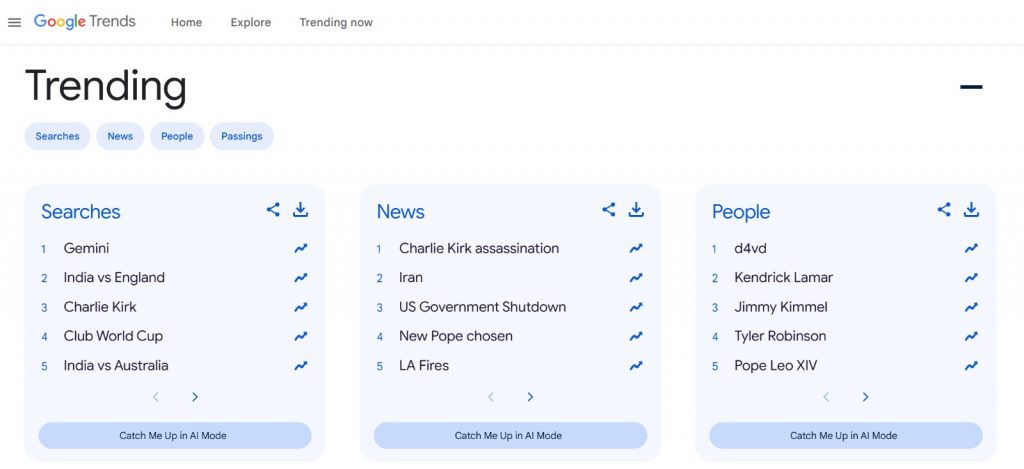
Wikipedia’s data was reflected in search trends on other websites. Google’s annual «Year in Search» report confirmed that Leo XIV ranked among the most searched people worldwide in 2025. Searches related to his election also ranked among the top global news queries, underscoring how a centuries-old institution still maintains immediate relevance in the digital age. In the United States, the Pope’s birthplace, interest was particularly strong, with Leo XIV among the most searched personalities of the year.
This digital fascination was not isolated. The travel platform HelloTickets identified a parallel trend, describing 2025 as the beginning of what it called a renewed and culturally resonant Catholicism. According to its analysis, the election of Leo XIV coincided with a dramatic increase in demand for religious and cultural travel, especially to Rome. Visits to the city were reported to have increased almost nine times compared to the previous year, reflecting a rise in interest that combines spirituality, heritage, and contemporary curiosity.
While some of this increase can be attributed to the Jubilee celebrations held throughout the year, the overall pattern points to something deeper: a Church that, under the new Pope, has once again captivated a much wider audience than its usual faithful. Papal audiences, pilgrimages, and cultural events all experienced greater demand, suggesting that the curiosity generated online was translated in practice into movement.
Taken together, these indicators reflect a rare convergence. The death of one Pope and the swift election of another marked more than a leadership transition; they transformed the Catholic Church into one of the most searched, read, and debated topics of the year. In an era dominated by fleeting trends and fragmented attention, the continued global focus on Leo XIV and Francis suggests that the papacy still functions as a symbolic lens through which millions seek meaning, continuity, and direction. In 2025, the world didn’t just witness a change in Rome. It searched for it, read about it, and made its way to it: a click, a query, and a pilgrimage at the same time.

Publicaciones relacionadas:
 7 out of 10 Spanish citizens believe that Leo XIV’s papacy will be good or better than that of Pope Francis
Pope Leo XIV reverses Pope Francis’ decision regarding the organization of the Diocese of Rome
7 out of 10 Spanish citizens believe that Leo XIV’s papacy will be good or better than that of Pope Francis
Pope Leo XIV reverses Pope Francis’ decision regarding the organization of the Diocese of Rome
 Germans trust Leo XIV more than Islam: new survey results released
 A «Box Office» Pope: Vatican Reveals Number of People That Attended Events with Leo XIV in 2025
