

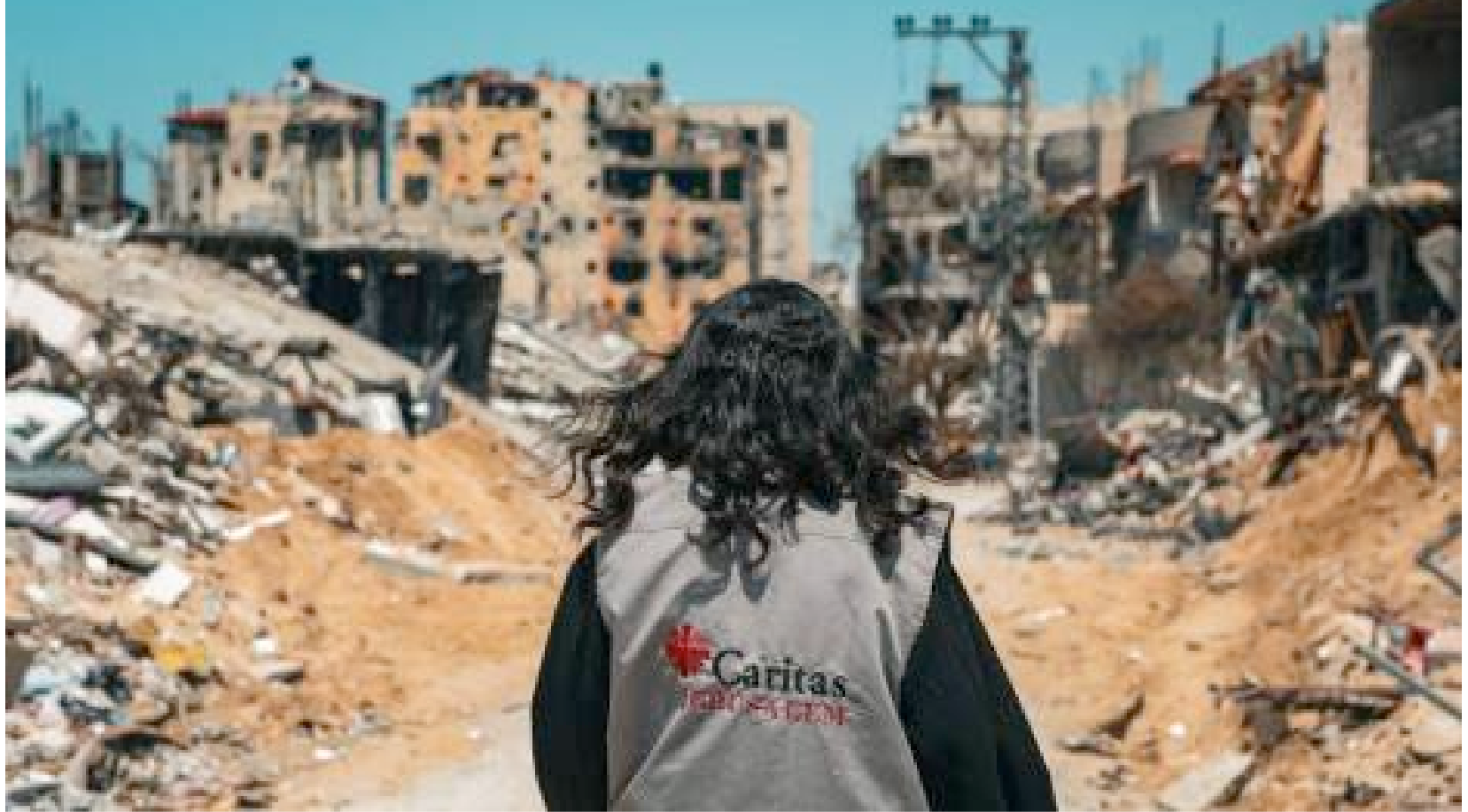
(ZENIT News – FIDES / Jerusalem, 01.05.2026).- Both Caritas Internationalis and Caritas Jerusalem are among the 37 humanitarian organizations that on December 30 received a notice from the Israeli authorities informing them that their “permits” would expire the following day, Wednesday, December 31.
As of that date, the Israelis authorities have given the 37 organizations a 60-day deadline to cease their humanitarian operations in Gaza and the West Bank, including East Jerusalem.
The measures adopted by the Israelis authorities have been justified by alleging the failure to comply with the requirements set by the new registration rules, and in particular the alleged lack of communication of the «completed» personal data of the members of their respective teams.
In a joint statement, 53 international humanitarian organizations operating in the Palestinian Territories denounced that «the recent registration measures adopted by Israel will hinder crucial humanitarian action, at a time in which the civilian population faces serious and widespread need, notwithstanding the cease-fire in Gaza.”
The NGOs reiterate their commitment to provide «large-scale vital assistance,» in partnership with the United Nations and with Palestinian civil society organisations, and call on Israel to revoke a number of measures aimed at jeopardizing a humanitarian effort that, in these times, proves indispensable. The statement was signed, among other organisations, by Oxfam, Doctors Without Borders, Pax Christi USA, Islamic Relief and Emergency.
The text stresses that, in Palestine, the humanitarian organizations affected by the Israeli measures «support 60% of the field hospitals, manage almost three quarters of the activities of receiving and distributing non-food goods, and provide the entirety of the assistance to children suffering from serious acute malnutrition. Their withdrawal would imply the closure of health facilities, the disruption of food distribution, the collapse of accommodation systems and the suspension of life-saving treatments.»
Recalling that 500 humanitarian workers have been killed in Gaza since October 7, 2023, the NGOs explain that «they cannot transfer sensitive personal data to one of the parties in the conflict, as this would violate the humanitarian principles of compulsory protection and data protection. These false narratives delegitimize humanitarian organisations, endanger staff and jeopardize aid delivery.»
Already on December 31, the spokesman of the Latin Patriarchate of Jerusalem, Farid Jubran, issued a statement to clarify that Caritas Jerusalem «is a humanitarian and development organization operating under the authority and governance of the Assembly of Catholic Ordinaries of the Holy Land. In Israel, Caritas Jerusalem is a Legal Ecclesiastical Personality, whose status and mission have been recognized by the State of Israel through the 1993 Fundamental Agreement and the subsequent 1997 Agreement on Legal Personality, signed between the Holy See and the State of Israel.»
Therefore, «Caritas Jerusalem has not initiated any new registration procedures before the Israelis authorities,» For its part, «Caritas Internationalis does not initiate or carry out any direct intervention within the country.» The statement of clarification added that Caritas Jerusalem «will continue its humanitarian and development operations in Gaza, the West Bank and Jerusalem, in accordance with its mandate.»

