

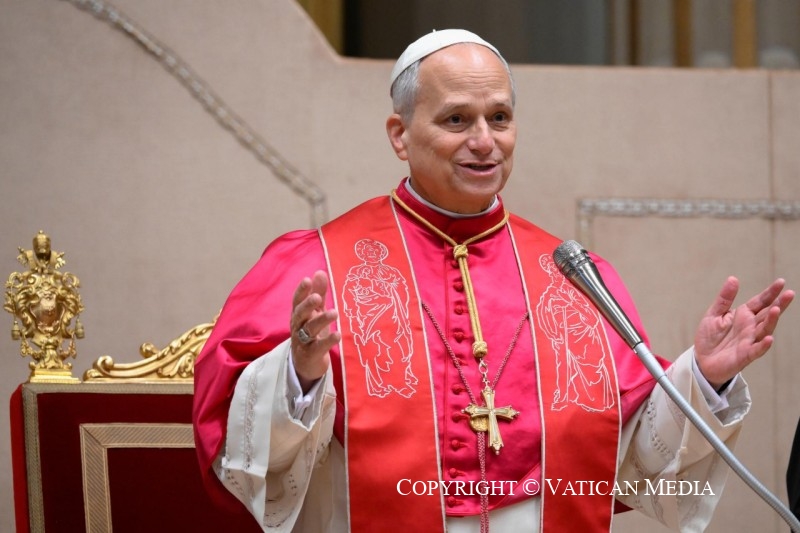
(ZENIT News / Rome, 01.09.2026).- On Christmas Eve, at a moment usually reserved for liturgy rather than geopolitics, the nerve center of Vatican diplomacy became the setting for an unusually urgent exchange. According to official documents reviewed by The Washington Post, Cardinal Pietro Parolin, the Holy See’s Secretary of State and the Pope’s closest diplomatic lieutenant, summoned the United States ambassador to the Vatican, Brian Burch, on December 24. The question he pressed was stark and precise: was Washington preparing a limited action against narcotrafficking networks, or was it moving toward outright regime change in Venezuela?
That meeting, held on the eve of Christmas, frames the entire investigation published by the Post—a reconstruction of the final international efforts to prevent Venezuela’s political collapse from tipping into a full-scale U.S. military intervention. Parolin, the report suggests, did not deny the obvious. Nicolás Maduro, he reportedly acknowledged, “had to go.” But precisely because of that inevitability, the cardinal pleaded for what diplomats call an off-ramp: a negotiated exit that would avert bloodshed.
The Post portrays Parolin acting as a seasoned operator, drawing on decades of diplomatic experience and his own past as nuncio in Caracas. For days, he sought access to U.S. Secretary of State Marco Rubio, driven by a specific fear: chaos, violence, and regional destabilization if the crisis spiraled beyond control.
Then came a geopolitical twist. According to a source cited by the Post, Russia signaled its willingness to offer asylum—not only to Maduro, but potentially to members of his inner circle. The proposal was blunt: leave the country, live abroad, keep your money. One person familiar with the offer summarized it starkly, saying that Vladimir Putin would “guarantee security.”
The Post’s investigation, built on interviews with roughly twenty people and on sensitive conversations, many conducted under anonymity, traces how those escape routes gradually closed. Maduro, it argues, was given multiple chances to avoid the final outcome. Each time, he refused. And as diplomatic windows shut, operational planning advanced.
A recurring theme in the report is miscalculation. Maduro, according to several sources, failed to grasp how serious the moment had become. Even as Washington’s tone hardened and military signals accumulated, he convinced himself that time was still on his side. A phone call with Donald Trump in November stands out. Maduro reportedly believed the exchange had gone well. From the U.S. perspective, the message was the opposite: you can leave the easy way, or you can leave the hard way.
At one point, the search for a controlled exit went remarkably far. The Post reports that Maduro was offered safe passage to Washington for face-to-face talks. He declined. Instead, he bet on political arithmetic: that Democrats would prevail in the midterm elections, that Trump would be constrained, that endurance would pay off. One source captured the mood with a cutting image: “He was out there dancing.”
The investigation does not stop at the fall itself; it also explores what might have followed. While the Vatican worked to secure an exit for Maduro, Washington, according to the Post, began leaning toward a succession plan centered on Vice President Delcy Rodríguez. The shift was striking. For years, Rodríguez had been sanctioned and identified with the regime’s hard core. Yet doubts grew in U.S. circles about the opposition’s ability—particularly María Corina Machado’s—to win over the armed forces or govern the state apparatus.
Compounding that reassessment was a classified CIA analysis, obtained by the Post, concluding that Maduro loyalists were better positioned to manage a post-Maduro transition than the opposition. Rodríguez, the report suggests, embodied a duality: publicly combative, privately pragmatic. She was seen as capable of negotiating with oil interests and foreign actors. “She wasn’t anti-American,” one source told the Post, noting that she had even lived in Santa Monica, California.
Efforts to engineer exile continued until the final stretch. Intermediaries proliferated: Russians, Qataris, Turks, unofficial envoys, business figures. In one particularly revealing episode, a Brazilian tycoon arrived in Caracas with concrete proposals on the table, including Maduro’s departure. According to sources who spoke to the Post, the reaction from Maduro and his wife was fury.
The end came swiftly and violently. U.S. special forces carried out an operation that left dozens dead. Maduro was taken to New York to face narcotrafficking charges.
What emerges from the Washington Post’s reporting is not a romantic portrait of Vatican diplomacy, but a realistic one. The Holy See appears as what it is in such crises: a moral power without an army, sometimes able to serve as a bridge. Washington is shown navigating between negotiation and coercion, concluding that when the off-ramp fails, the hard way becomes unavoidable. And Maduro appears, most disturbingly, as a ruler who—through arrogance, paranoia, or sheer misjudgment—chose to gamble with catastrophe rather than accept an exit.
The episode lays bare both the strength and the limits of papal diplomacy. Rome has no divisions to deploy and no sanctions to impose. Its leverage lies elsewhere: in insisting that even the ugliest conflicts remain human conflicts, and that as long as a crack exists to prevent violence, there is a moral obligation to try. The Maduro case shows that Vatican diplomacy can buy time, open doors, propose rational and humane exits, and coordinate actors who otherwise refuse to speak. It also exposes the structural boundary it cannot cross. When great powers decide that the hard way is inevitable, the Holy See cannot stop the machinery. It can only warn, record, and often stand as the last uncomfortable witness that another option once existed.
Regarding the Post’s revelations, the Holy See Press Office issued a statement: “It is disappointing that parts of a confidential conversation have been published that do not accurately reflect the content of the conversation itself, which took place during the Christmas period.” Far from diminishing its relevance, the Post’s investigation underscores its real value. Vatican diplomacy does not guarantee success. What it preserves is conscience.
Thank you for reading our content. If you would like to receive ZENIT’s daily e-mail news, you can subscribe for free through this link.

Publicaciones relacionadas:
 The Middle East, the spread of war, and the position of the Pope and the Catholic Church
 Vatican questions “preventive” war in Iran as Leo XIV intensifies diplomatic calls for peace
 A Church Against the Logic of War: Vatican Voices, Middle East Realities, and the Risk of a Vanishing Christianity
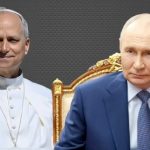 Pape Leo Spoke On The Phone With Vladimir Putin: This Is What Their Conversation Was About
