

(ZENIT News / Rome, 02.01.2026).- Sometimes reform begins not with documents or decrees, but with an uncomfortable reminder spoken aloud.
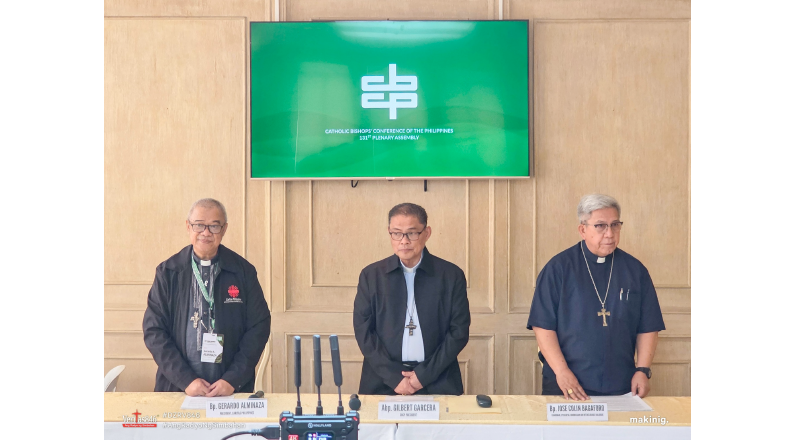
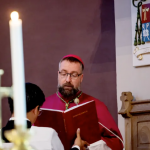
That was the case at the 131st plenary assembly of the Catholic Bishops’ Conference of the Philippines (CBCP), where Bishop Crispin Varquez delivered what colleagues later described as a timely and necessary wake-up call: stop allowing episcopal gatherings to become displays of luxury, and return instead to the Gospel logic of simplicity.
Addressing some 90 Filipino bishops and diocesan administrators, Varquez urged his peers to keep their twice-yearly assemblies modest, warning against the “scandal” of accepting lavish hospitality from host dioceses—many of which struggle financially.
Varquez, 65, is not speaking from abstraction. He has led the Diocese of Borongan in eastern Samar for nearly two decades, a region among the poorest in the country. Government figures from 2023 show that close to 25 percent of Eastern Samar’s population lives in poverty. For a bishop serving such communities, questions of cost and optics are anything but theoretical.
His remarks came amid a relatively new CBCP practice: rotating plenary assemblies among provincial dioceses rather than holding them exclusively in Manila. While the move was meant to foster inclusion and shared responsibility, Varquez cautioned that it carries unintended pressures.
“We know the generosity of our people,” he told the assembly. “They are always happy to welcome us and express their love for the Church. But sometimes that generosity can go beyond what is fitting for our vocation and mission.”
He added a pointed appeal: that bishops never be seen as burdening host dioceses or creating scandal by enjoying comfort financed by the faithful. Moderation, he argued, would not only protect struggling local churches but also prevent an unspoken competition among dioceses to outdo one another in hospitality.
His proposal was practical as well as pastoral. Episcopal commissions, he said, should organize conventions that are “simple, frugal, and affordable,” focusing on essentials such as participation, formation, programming, and mission. Only then, he suggested, would even smaller and poorer dioceses be able to take part fully in the life of the national conference.
A mirror held up to clerical culture
Varquez’s intervention touched a nerve because it exposed a broader reality in Philippine Catholicism.
The Philippines remains Asia’s largest Catholic stronghold: around 86 million people—roughly 79 percent of the population—identify as Catholic. This historical dominance, shaped by centuries of Spanish colonial influence, has also fostered a culture in which clergy often receive special treatment, a dynamic many church leaders now openly acknowledge as clericalism.
That diagnosis came straight from the top.
Archbishop Gilbert Garcera of Lipa, 66, newly elected president of the CBCP, addressed the issue just days earlier during a January 23 meeting with bishops and major religious superiors. He cited “deep-rooted clericalism and patriarchy” as key reasons why the Church’s aspiration to become a genuine “Church of the Poor” remains, in his words, wounded.
Speaking to reporters after the plenary session on January 26, Garcera publicly welcomed Varquez’s challenge.
“We are grateful to Bishop Varquez for reminding us to be simple bishops,” he said. “Simplicity is a way of serving people better.”
Other prelates echoed that sentiment.
Bishop Gerardo Alminaza, 66, who heads the CBCP’s social action arm, called the speech a “timely reminder” and broadened the conversation to include environmental responsibility. He pointed to everyday practices—such as the routine use of disposable plastic water bottles at church events—as small but significant signs of inconsistency with the Church’s ecological commitments.
“Maybe we can agree on other ways to avoid single-use plastics,” Alminaza suggested, adding that such changes could help the Church take environmental concerns more seriously.
Bishop José Colin Bagaforo, 71, likewise supported Varquez’s message, stressing that economic hardship among ordinary parishioners demands restraint from church leaders.
“We have to walk seriously with our people,” he said, “and at the same time be conscious that we should not be extravagant in holding our conferences.”
He predicted that Varquez’s address would serve as a moral compass for many bishops going forward.
Beyond logistics: a spiritual challenge
The speech also resonated beyond episcopal circles.
Online reactions were largely positive, with many Catholics saying aloud what they had long felt privately. Sister Eleanor Llanes of the Missionary Sisters of the Immaculate Heart of Mary told Crux that the call to simplicity must extend to the entire Church, particularly its leadership.
She pointed to parishes that invest heavily in ornate decorations and elaborate church interiors while neglecting deeper pastoral needs.
“This has to be taught to the whole Church,” she said, adding that the bishop could have gone further in articulating how clergy might serve as countercultural witnesses in a society shaped by consumerism and material success.
Llanes posed a sharper question in light of the Philippines’ chronic struggles with corruption: was Varquez also challenging the Church’s own lifestyle choices?
Her reflection underscores what made the bishop’s intervention so striking. It was not merely about budgets or accommodations. It was about credibility.
In a country where many families live paycheck to paycheck, and where public trust in institutions is fragile, how bishops conduct themselves—what they accept, how they gather, and what they prioritize—speaks volumes.
Varquez’s appeal suggests that the path toward a more authentic “Church of the Poor” may begin with something deceptively simple: choosing restraint over comfort, witness over privilege, and fraternity over display.
For the Philippine episcopate, the question now is whether this moment becomes a turning point—or just another speech applauded and forgotten.
Thank you for reading our content. If you would like to receive ZENIT’s daily e-mail news, you can subscribe for free through this link.

Publicaciones relacionadas:
 Former Churchman Whom Pope Francis Removed as Cardinal for Being An Abuser Dies
 Cuban bishops cancel special visit to the Pope: there is no gasoline in the country, not even for airplanes
 Cardinal Dolan reveals that the US Vice President apologized to him for a false and defamatory comment
 The unusual, candid, and widely praised letter from a European bishop urging confession
