

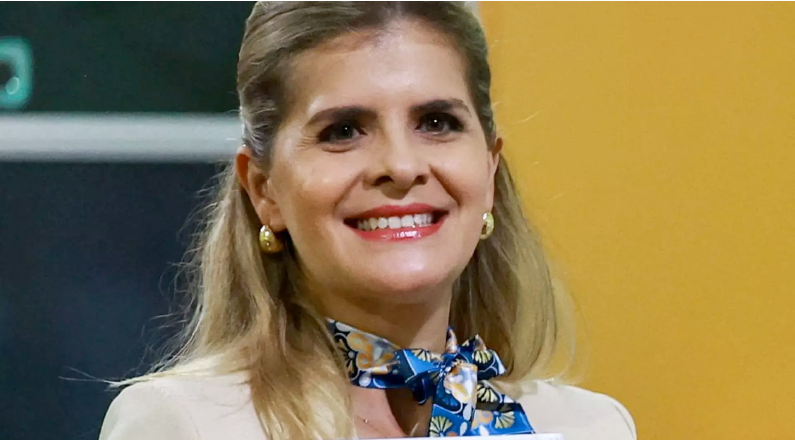
(ZENIT News / San José, 02.04.2026).- Costa Rica has entered a new political chapter with the election of Laura Fernández Delgado as president, a victory that not only reshapes the country’s leadership but also signals the enduring influence of faith-informed values in Central American public life.
Fernández secured the presidency on Sunday, February 1, 2026, achieving a first-round victory with 48.3 percent of the vote once 94 percent of polling stations had been counted—comfortably surpassing the threshold required to avoid a runoff. Her closest rival conceded defeat shortly thereafter, clearing the way for Fernández to become the next head of state.
Almost immediately, the Catholic bishops of Costa Rica offered a formal message of congratulations, addressing both the president-elect and the newly chosen members of parliament. In their statement, the Episcopal Conference framed the election not merely as the end of a democratic process, but as the beginning of what they described as a demanding and deeply consequential mission: governing a nation marked by diverse opinions, social realities, and sensitivities.
The bishops called on God to grant Fernández wisdom, prudence, and strength, urging that her decisions be guided by justice, peace, and respect for human dignity—particularly for those living in situations of greater vulnerability. They also emphasized the urgent need for national reconciliation, encouraging the incoming government to heal divisions and foster a climate of dialogue and mutual respect.
Quoting Psalm 127—“Unless the Lord builds the house, the builders labor in vain”—the prelates reaffirmed their spiritual closeness to the new president and pledged ongoing prayer for her, the elected deputies, and all those who will share responsibility in governing the country. They concluded by invoking the guidance of the Holy Spirit as Fernández assumes what they called a “high responsibility before the nation.”
Fernández’s political ascent has been closely watched both domestically and abroad, particularly because of her unapologetically pro-life stance. A former Minister of Planning and chief of staff to outgoing President Rodrigo Chaves, she ran on a platform that combined economic growth, public security, and moral conservatism—an approach that resonated strongly with Costa Rica’s religious and socially traditional voters.
During the campaign and throughout her previous government service, Fernández repeatedly underscored the protection of unborn life as a central pillar of her political vision. She has publicly described abortion as “nothing other than murder” and has backed legislative efforts to significantly toughen penalties.
Under proposals supported by Fernández, prison sentences for women who cause or consent to their own abortion would rise from the current one to three years, to between four and six years. For those who perform abortions without the woman’s consent, sentences could increase to as much as 12 years, compared with the current maximum of 10.
These measures build on policies introduced under President Chaves, whose administration sharply restricted legal access to abortion. Today, in Costa Rica, abortion without penalty is permitted only when the mother’s life is in immediate danger. Chaves eliminated broader interpretations that had allowed abortions on health grounds, arguing that the law should apply solely when faced with the stark choice between the life of the mother and that of the unborn child.
Fernández has consistently defended this approach, stating that safeguarding unborn Costa Ricans is a duty of the state. Her victory, paired with campaign promises to take a tougher line on crime and drug-related violence, reflects a broader electorate that continues to prioritize security, stability, and the defense of life from conception.
Speaking via video link to supporters gathered in San José on election night, Fernández thanked Chaves for entrusting her with leadership responsibilities and assured voters that his legacy was “in good hands.” She pledged to work tirelessly to keep Costa Rica on a path of economic growth, freedom, and what she called “the progress of our people.”
For the Catholic Church, the election represents both an opportunity and a challenge. While Fernández’s moral positions align closely with long-standing Church teaching on the sanctity of life, the bishops have also stressed the need for inclusive governance—one that reaches across political divides and places the common good above partisan interests.
It is worth noting that Costa Rica remains one of the few countries in Latin America where abortion laws are among the most restrictive, a reality shaped by a strong Catholic heritage and an increasingly active evangelical presence. The Episcopal Conference’s intervention signals the Church’s intention to remain a moral interlocutor in public life, advocating not only for the unborn but also for social cohesion, care for the poor, and respectful dialogue in a polarized world.
Thank you for reading our content. If you would like to receive ZENIT’s daily e-mail news, you can subscribe for free through this link.

Publicaciones relacionadas:
 USA: Nationwide Prayer Vigil for Life to Take Place January 18-19
 USA: Bishop Thomas Responds to Supreme Court’s Planned Parenthood and Medicaid Decision
 S Korean bishops discuss abortion law with lawmakers
 Monaco reaffirms its Catholic identity by halting abortion reform: Prince refuses to enact the law
