

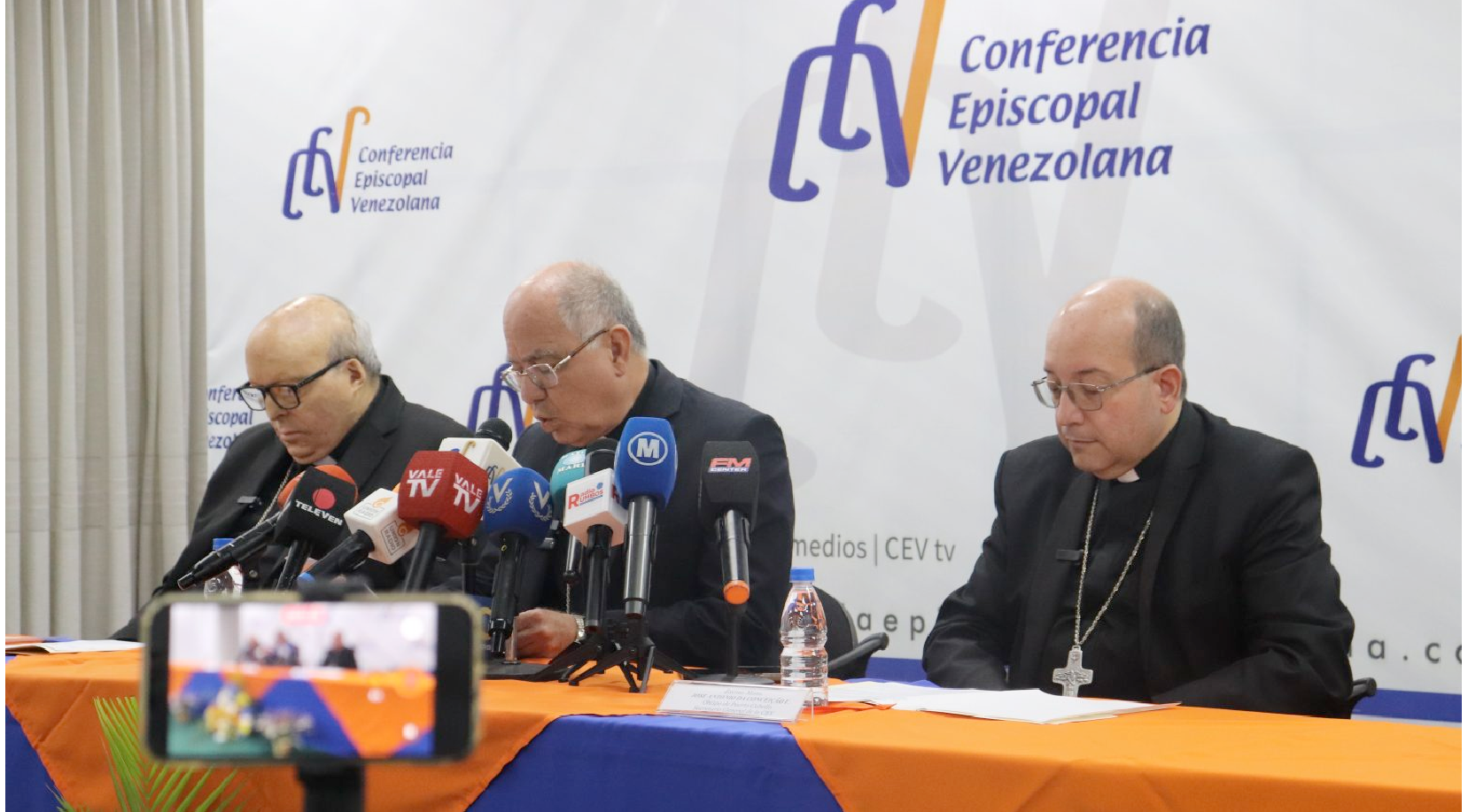
(ZENIT News / Caracas, 02.10.2026).- At the close of their 125th Ordinary Plenary Assembly, the Catholic bishops of Venezuela chose neither silence nor alarmism: they turned to Scripture. Drawing from the prophet Isaiah — “Your light shall rise like the dawn” — they issued a pastoral exhortation that interprets Venezuela’s present turbulence through a lens shaped by hope, realism and moral urgency.
Published on 9 February 2026 by the Venezuelan Episcopal Conference (CEV), the message acknowledges that the political and social landscape of the country has been profoundly altered by the events of 3 January. Without minimizing the uncertainty and fear that grip large sectors of the population, the bishops deliberately anchor their reading of history in the Gospel image of Christ calming the storm. The message is explicit: the boat may be battered, but it is not abandoned. Jesus remains “God-with-us”, Emmanuel, even amid national upheaval.
The document situates itself in continuity with Pope Leo XIV’s Angelus address of 4 January, when the Pontiff insisted that “the good of the beloved Venezuelan people must prevail over every other consideration.” That phrase becomes the interpretative key for the bishops’ diagnosis of the country’s wounds. They list, with notable clarity, the daily realities that afflict Venezuelans: the scarcity of fairly paid employment, systemic corruption that operates with impunity, and repeated violations of human and civil rights — particularly freedom of expression, due process and the right to legal defense.
From there, the text moves decisively into institutional territory. For the bishops, sovereignty and democracy are not abstract slogans but measurable realities. They argue that rebuilding the nation requires restoring the independence of public powers and ensuring the credibility of key institutions, especially the Supreme Tribunal of Justice and the National Electoral Council. Only institutions perceived as impartial and trustworthy, they stress, can guarantee genuinely free and fair elections.
The bishops make a pointed reference to the presidential elections of 28 July 2024, noting that popular sovereignty — expressed through universal, direct and secret suffrage — was undermined when detailed election results were not publicly released by state authorities. Against this background, the events of 3 January are acknowledged as controversial: interpreted by many as a violation of international law, yet also seen by others as a possible opening toward democratic renewal. The bishops neither endorse nor condemn these interpretations outright, but they recognize their disruptive significance.
One of the most striking dimensions of the message is its concrete solidarity. The bishops renew their closeness to political prisoners and their families, to the millions forced into migration, to patients unable to access essential medicines, to young people whose educational and professional futures have been derailed, to marginalized indigenous communities, and to those who have lost their property through arbitrary confiscations. They also commemorate the victims of violence, past and present, describing their deaths as senseless losses of irreplaceable human lives.
Within its 22 points, the exhortation repeatedly returns to the Church’s self-understanding. The bishops reaffirm their commitment to the common good, especially to the poor and the most vulnerable, and call on all sectors of society to place this objective above personal, ideological, partisan or economic interests. Peace, they argue, cannot be built on resentment or propaganda. It requires rejecting violence, dismantling lies, and silencing what they describe as the “war of words” that corrodes social trust.
The path forward, in their view, is demanding. It involves processes of rapprochement, mutual recognition, forgiveness and reconciliation, along with a purification of historical memory grounded in truth and justice. Respect for human dignity and the daily practice of fraternity are presented not as optional virtues but as prerequisites for national healing.
Human rights occupy a central place in the bishops’ appeal. They insist that sustainable and peaceful development is impossible without full respect for civil and political freedoms. In practical terms, they call for the repeal of laws that restrict fundamental rights, particularly those affecting free expression, electoral participation and the work of civil society organizations. While welcoming the recent release of some detainees imprisoned for political reasons or for expressing dissenting views, they reiterate their demand for the unconditional release of all political prisoners. In the same spirit, they advocate for a broad and inclusive general amnesty law as a decisive step toward reconciliation and democratic coexistence.
The message also looks beyond institutional reform to the social fabric itself. The bishops emphasize the family as the cornerstone of integral human development and urge greater participation across all sectors of society. Economic justice figures prominently: they denounce the widespread impoverishment affecting much of the population and insist that revenues from the reactivation of the oil industry must be directed toward fair wages and genuinely equitable social programs. Such policies, they warn, must avoid partisan clientelism and enable citizens to meet their fundamental material, social and intellectual needs with dignity.
The exhortation closes with a summons: the bishops invite Venezuelans to draw strength from daily prayer and to make Lent a time of renewed interior life through practices such as lectio divina, Eucharistic adoration, the Way of the Cross and communal spiritual encounters. These, they suggest, can rebuild bonds among citizens as children of the same land.
Entrusting the nation to the intercession of Our Lady of Coromoto, Venezuela’s patroness, the bishops conclude with a call: to assume personal and collective responsibility for the future of the country, and to walk together — without shortcuts — along paths of freedom, justice and peace.
Thank you for reading our content. If you would like to receive ZENIT’s daily e-mail news, you can subscribe for free through this link.

Publicaciones relacionadas:
 Charism, governance, and communion: Three reflections from the Pope to the consecrated lay members of Regnum Christi
 Leo XIV’s view of sport in a letter about the Winter Olympics
 Pope Leo XIV will visit Algeria, the land of Saint Augustine, according to local media: these are the dates given by the press
 For the first time, a Pope will address the Spanish Parliament: it will be Leo XIV during his visit to Madrid in June 2026
