

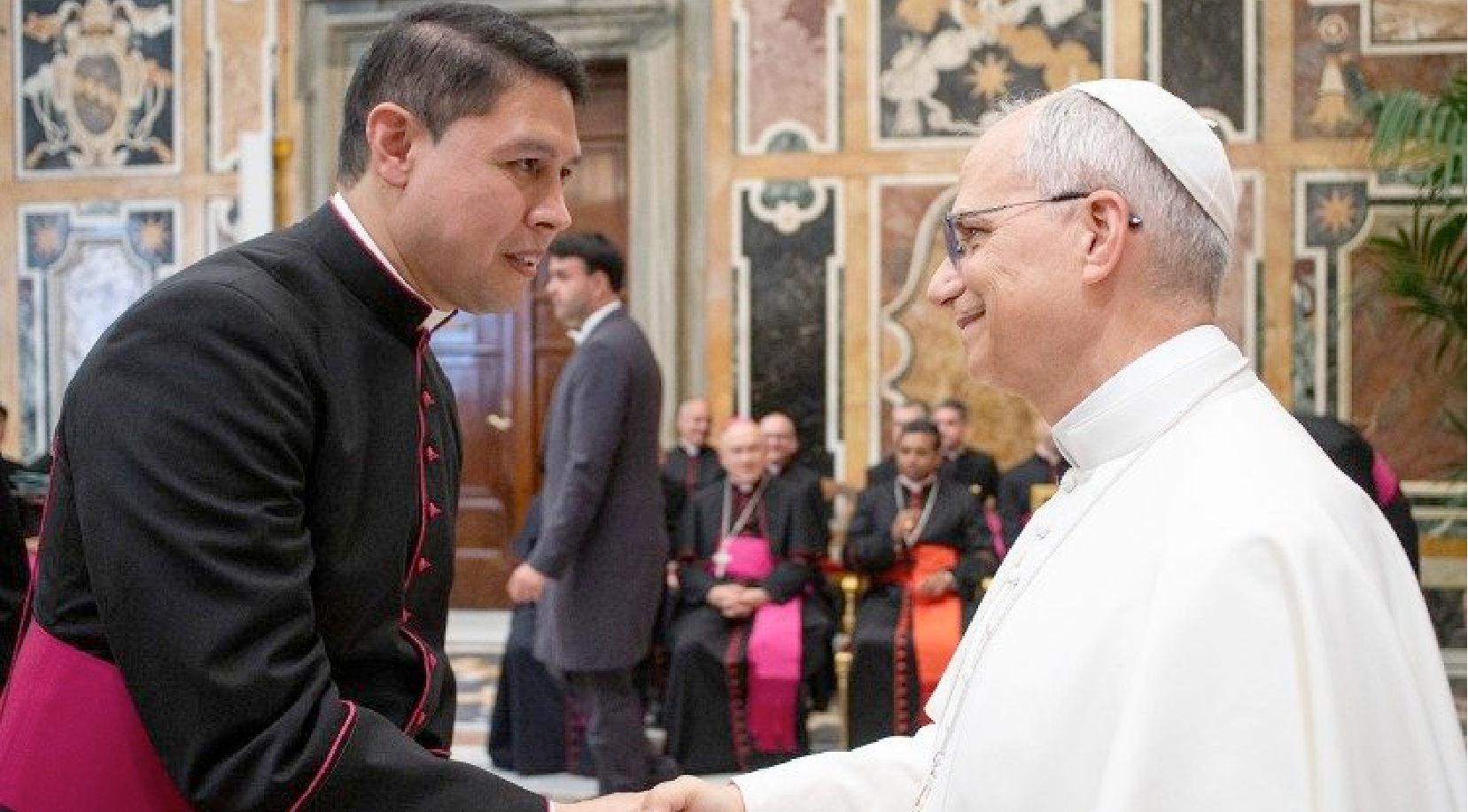
(ZENIT News / Rome, 02.17.2026).- The streets of Malabo have become a testing ground for a papal visit to Equatorial Guinea. On Monday, 9 February 2026, cameras from the Ministry of Information, Press and Culture captured a Vatican delegation walking through sites that could soon host Pope Leo XIV. At its head was Monsignor José Nahúm Jairo Salas Castañeda, the Mexican prelate now responsible for orchestrating the Pope’s international journeys.
The visit was not a mere technical inspection. According to local authorities, the reconnaissance carried a spiritual and pastoral weight, reflecting the magnitude of an event expected to mobilize the country’s Catholic community. Accompanying the Vatican team were Prime Minister Manuel Osa Nsue and members of the State–Church Joint Commission, the body tasked with coordinating protocol, logistics and security for what is being framed as an occasion of both national and international consequence.
🇻🇦🇬🇶✔️Comprobado: Papa León XIV a Guinea: video capta a responsable de los viajes del Santo Padre visitando el país
El Ministerio de Información, Prensa y Cultura de Guinea Ecuatorial publicó un video correspondiente al al lunes 9 de febrero en la ciudad de Malabo. En él se ve a… pic.twitter.com/Z2f4AwzEf0
— P. Jorge Enrique Mújica, LC (@web_pastor) February 17, 2026
Salas Castañeda’s presence in Malabo is emblematic of a generational and structural transition in how the Holy See manages papal mobility. His appointment as Coordinator of Apostolic Journeys was announced on 21 June 2025 by Archbishop Edgar Peña Parra, Substitute for General Affairs at the Secretariat of State. He succeeded Cardinal George Koovakad, who had overseen Pope Francis’ travels since 2021 and, after being created cardinal in December 2024, was named Prefect of the Dicastery for Interreligious Dialogue on 21 January 2025.
A diplomat by formation, Salas Castañeda entered the Holy See’s diplomatic service on 1 July 2013. His early assignments took him to Burundi (2013–2016), Iraq (2016–2019) and Hungary (2019–2023). It was in Budapest that he gained hands-on experience with complex papal events, contributing to the organization of two apostolic journeys by Pope Francis: in September 2021 for the 52nd International Eucharistic Congress, and again in April 2023. Since 1 July 2023, he has served in the Section for General Affairs of the Secretariat of State, where he also oversaw the Central Office of Church Statistics, responsible for the Annuario Pontificio and its forthcoming digital transformation. That background in data management may prove more relevant than it seems: modern papal travel is as much about precision planning and measurable impact as it is about symbolic presence.
The Equatorial Guinea preparations unfold within a broader matrix of potential destinations. In the same week that Salas inspected Mongomo and assessed media logistics in the Central African nation, the Holy See Press Office confirmed that a study is underway for a possible trip to Monaco. Meanwhile, a preparatory committee has been established in Spain for a prospective papal visit, complete with a dedicated website. Although the Vatican has not officially confirmed dates, Bishop Joan Planellas of Tarragona suggested in remarks to Spanish public television that the Pope could travel to Madrid, Barcelona and the Canary Islands from 6 to 12 June — a span that would make it the longest papal visit to Spain since the era of St. John Paul II.
Beyond Europe and Africa, South America has entered the equation. On 11 February, Argentina’s foreign minister personally delivered a letter inviting the Pope to visit the country. The proposal envisions an Argentine stop as part of a broader November tour of South America, potentially including Peru and Uruguay. Notably, Pope Francis never visited Argentina or Uruguay during his pontificate, a fact that gives any future journey to those nations an additional layer of historical resonance.
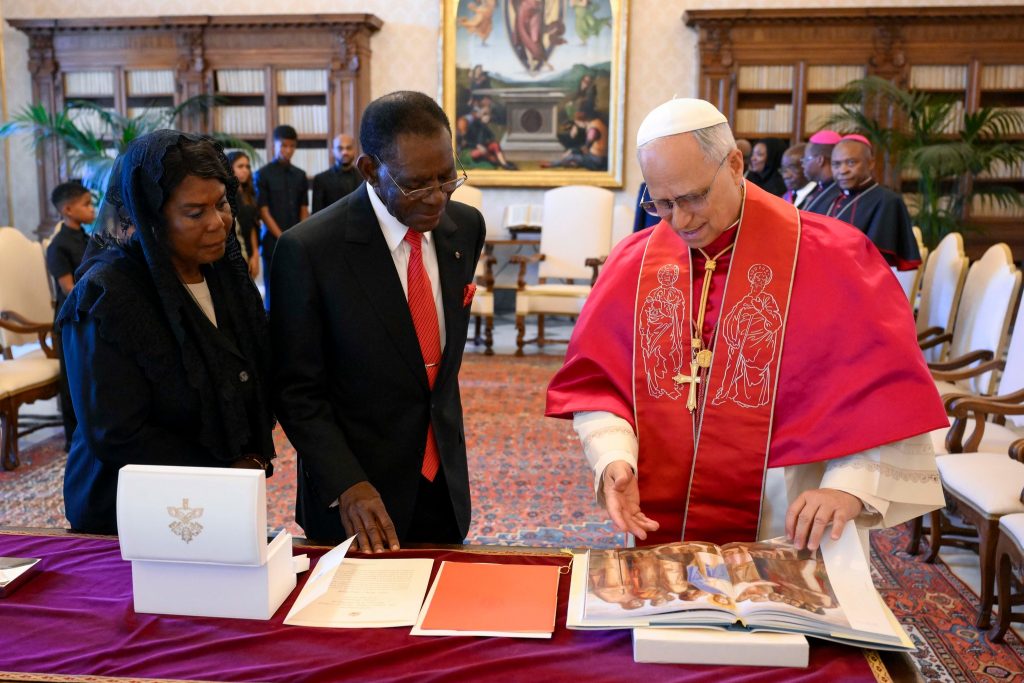
In this emerging geography of invitations, each prospective destination carries its own ecclesial and political calculus. Equatorial Guinea represents a Catholic-majority African nation where church-state collaboration is visibly on display. Spain, historically intertwined with Catholic identity yet marked by secularization, would offer a different pastoral terrain. Argentina and Uruguay evoke the unfinished itinerary of Francis, while Peru has long served as a bridge between Andean Catholicism and wider Latin American ecclesial currents.
What is striking is how quickly Leo XIV’s travel agenda is taking shape. Within months of Salas Castañeda’s appointment, multiple continents are under active consideration. The choreography now unfolding — advance teams, joint commissions, diplomatic audiences, preparatory committees — illustrates how a papal journey is constructed long before the aircraft door closes in Rome. It is a process that blends ecclesiology, diplomacy, security strategy and media planning.
If Malabo’s walk-through on 9 February is any indication, the new pontificate intends to move early and visibly. For the Vatican, apostolic travel has never been mere movement; it is a pastoral act staged in public space. The question is no longer whether Leo XIV will travel, but how these first destinations will define the tone of his engagement with a Church that is at once local and unmistakably global.
Thank you for reading our content. If you would like to receive ZENIT’s daily e-mail news, you can subscribe for free through this link.

Publicaciones relacionadas:
 Pope Leo’s visit to Argentina unofficially confirmed after audience with President Milei
 This is the first YouTube video message from Pope Leo XIV to USA
 Statement by then Father Prevost, now Leo XIV, against the death penalty in the U.S. comes to light
 For the first time, a Pope will address the Spanish Parliament: it will be Leo XIV during his visit to Madrid in June 2026
