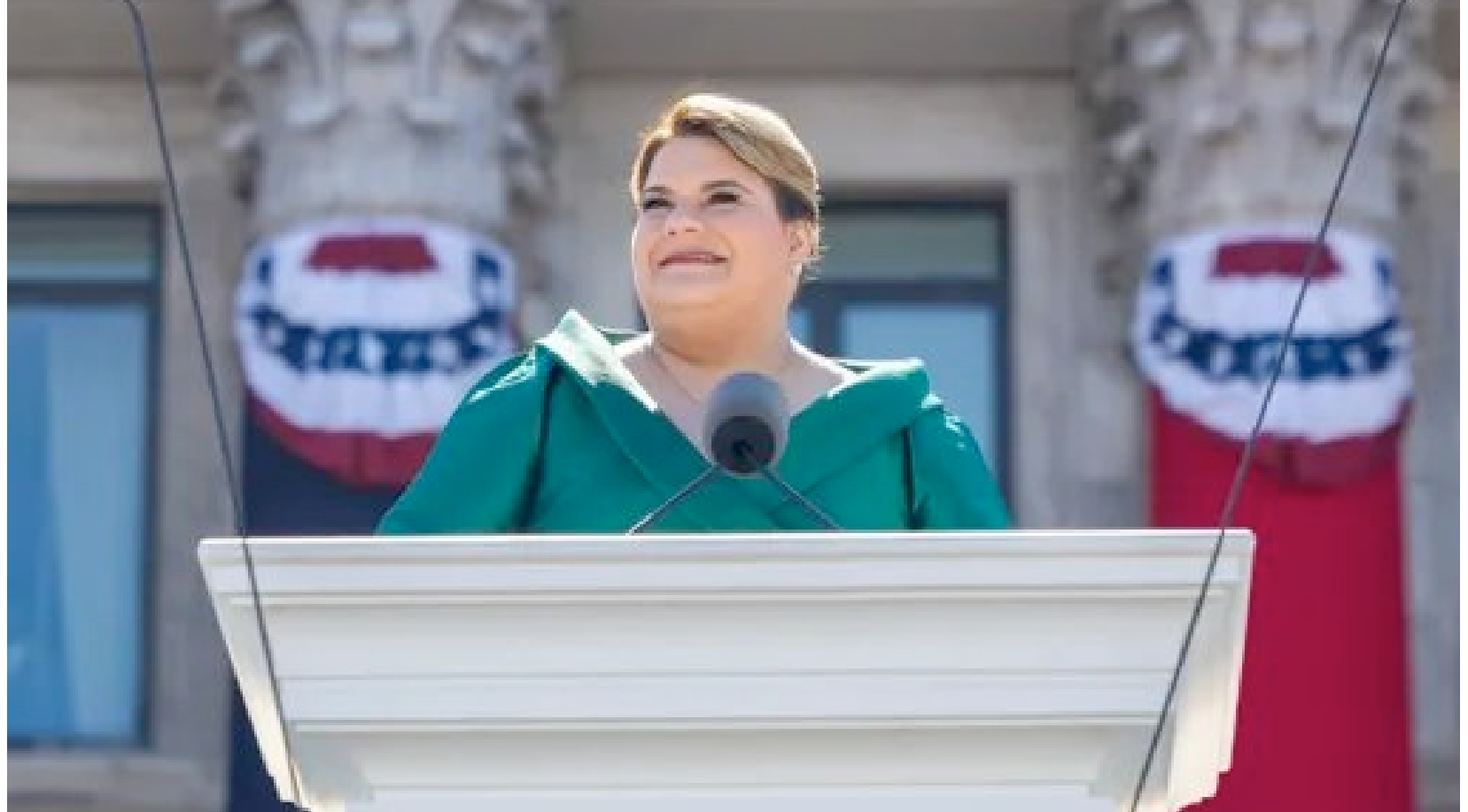
(ZENIT News / San Juan, 02.17.2026).- Puerto Rico has taken a consequential step in the legal treatment of unborn life, amending its Penal Code to explicitly recognize a child “conceived at any stage of gestation” as a human being for criminal law purposes. The measure, signed on 12 February 2026 by Governor Jenniffer González-Colón, does not alter the territory’s abortion regulations. Yet its language has immediately reshaped the legal and political landscape by embedding the concept of fetal personhood within the island’s homicide statutes.
The new statute, Senate Bill 923 (SB923), modifies Article 92 of the Penal Code to clarify that the term “human being” includes a child in the womb at any point during pregnancy. The reform is directly tied to the earlier “Keishla Rodríguez Law,” named after a pregnant woman murdered in April 2021 by her former partner, boxer Félix Verdejo. Verdejo was convicted and sentenced to two life terms. That case became a catalyst for legislative efforts to ensure that violence against a pregnant woman resulting in the death of her unborn child is treated as involving two victims.
Under the governor’s formulation, the intentional and knowing killing of a pregnant woman that results in the death of the fetus at any stage of gestation constitutes first-degree murder. The objective, according to the official press release, is to align civil and criminal provisions by affirming the humanity of the unborn.
This reform builds on a prior legislative step taken on 20 December 2025, when Governor González signed Senate Bill 504 (SB504), amending the Civil Code to define all human beings—including those conceived in any phase of gestation—as “natural persons.” That earlier statute granted unborn children inheritance rights, allowing them to be named beneficiaries or heirs. It explicitly stated that it did not affect a woman’s legal right to abortion.
Taken together, the December and February measures establish a legal architecture in which unborn children possess civil recognition and are now expressly included within the scope of criminal protection in cases of homicide. For supporters, the change is presented as a matter of coherence. The government’s statement emphasized the need for consistency between civil and penal norms in acknowledging the fetus as a human being.
Pro-life advocates have celebrated the move as historic. The organization Susan B. Anthony Pro-Life America described the law as a landmark moment affirming that “every human life has value and deserves protection.” Kristan Hawkins, president of Students for Life, hailed what she called a major victory, arguing that the measure reflects scientific consensus that life begins at conception. Veteran activist Frank Pavone commented that legal language shapes cultural understanding, suggesting that recognizing the unborn as human beings will alter the framework of public debate.
International pro-life groups have also weighed in. The Mexican organization UNNA stated that the reform elevates the legal status of the unborn to a level of full protection against acts of violence, consolidating a legislative vision centered on human dignity from conception.
Opponents see the matter differently. Rosa Seguí Cordero, spokesperson for Puerto Rico’s National Campaign for Free, Safe and Accessible Abortion, told the Associated Press that legal personality had effectively been granted to a zygote, arguing that women’s rights had been diminished in the process. Annette Martínez Orabona, executive director of the American Civil Liberties Union in Puerto Rico, criticized the legislative process, asserting that the measure lacked sufficient analysis and leaves troubling ambiguities in the realm of civil rights.
The political context is not incidental. Puerto Rico, an unincorporated U.S. territory with its own constitution and legal system, is governed by the New Progressive Party (PNP), affiliated with the U.S. Republican Party. The PNP currently holds a legislative majority, providing the institutional pathway for these reforms. While the statutes do not directly curtail abortion access, critics argue that embedding fetal personhood into foundational legal categories may lay groundwork for future challenges.
From a jurisprudential standpoint, the development is significant because criminal law carries symbolic weight beyond its immediate enforcement. By redefining “human being” within Article 92 and linking that definition to first-degree murder provisions in Article 93, the legislature has expanded the conceptual perimeter of protected life. Even without altering abortion statutes, the move situates unborn life within the moral vocabulary of homicide law.
The debate unfolding in Puerto Rico mirrors a broader tension visible across U.S. jurisdictions after the recalibration of federal abortion jurisprudence in recent years. Some states and territories have pursued direct restrictions on abortion; others have focused on incremental measures, such as fetal homicide laws or civil personhood definitions. Puerto Rico’s approach combines both symbolic and technical adjustments, while formally maintaining the existing abortion framework.
Whether the reform will remain confined to cases of violence against pregnant women or influence future litigation and legislative initiatives remains to be seen. Supporters frame it as legal honesty aligned with scientific understanding of human development. Opponents warn of a gradual erosion of reproductive rights through the cumulative effect of statutory language.
What is beyond dispute is that Puerto Rico has inserted the question of unborn personhood more deeply into its legal code. In doing so, it has not only amended a statute but intensified a debate that extends well beyond the island’s shores.
Thank you for reading our content. If you would like to receive ZENIT’s daily e-mail news, you can subscribe for free through this link.