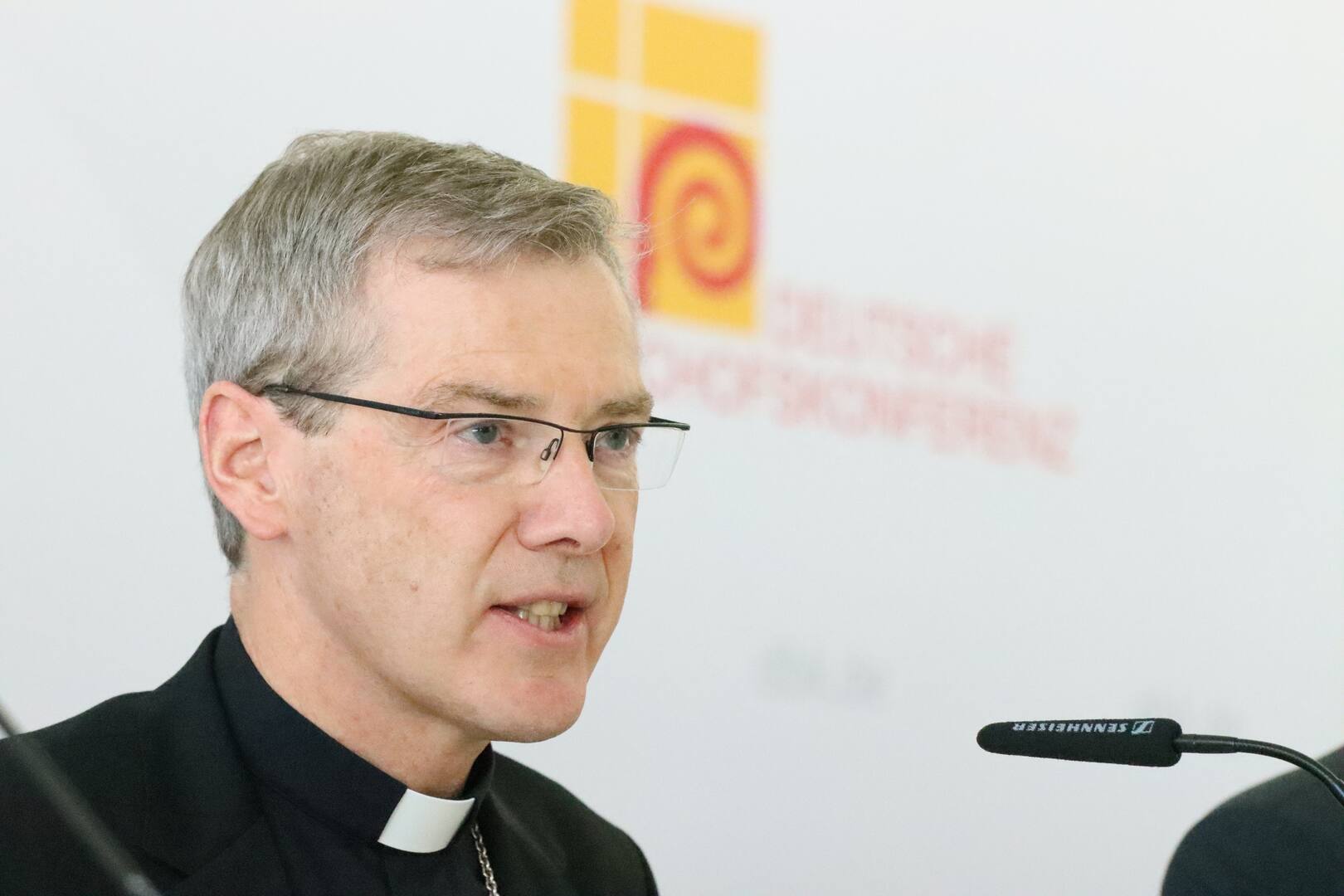
(ZENIT News / Rome, 03.01.2026).- The German bishops have reopened one of the most sensitive fault lines in contemporary Catholic Church: who may preach during the Eucharist, and under what authority. At their spring plenary assembly in Würzburg, the German Bishops’ Conference approved a regulatory framework that would allow lay men and women, deemed “spiritually qualified” and formally commissioned by a diocesan bishop, to preach during Mass. The decision revives a request already tested in Rome—and firmly rejected—only three years ago.
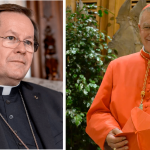
The timing is deliberate. The newly elected president of the bishops’ conference, Heiner Wilmer, announced that he will personally bring the proposal to the Holy See on his next visit to Rome. The decision was taken at the spring assembly held in Würzburg, a city that has become an emblematic stage for Germany’s ongoing debates about synodality, authority, and ecclesial reform.
The regulation implements a mandate approved in 2023 by the Synodal Assembly of the German “Synodal Way,” adopted by a large majority that included bishops themselves. That mandate explicitly urged the bishops’ conference to seek Roman authorization so that preaching at Mass would not be limited to priests and deacons, but could also be entrusted to other commissioned faithful. Wilmer has framed the move as transparent and accountable: he intends not only to submit the request to the Holy See, but also to explain and defend it in person during discussions there.
The Würzburg agenda, however, goes beyond preaching. During the same Roman visit, Wilmer plans to seek the required recognitio—formal Vatican validation under canon 838 §3—for the statutes of a proposed permanent Synodal Conference in Germany. This body is meant to anchor, at national level, the outcomes of the synodal process. Wilmer has described as a “strong sign” of the link between universal and local synodality the announced presence of Cardinal Mario Grech at the Katholikentag scheduled to take place in Würzburg in May.
Yet the renewed German initiative runs headlong into the existing legal and theological architecture of the Church. Canon 767 §1 of the 1983 Code of Canon Law states unambiguously that the homily, as part of the liturgy itself, is reserved to a priest or a deacon. This is not a disciplinary custom that a bishops’ conference may adapt, but a codified norm touching the very structure of the Eucharistic celebration. Any change would require a direct normative act by Rome.
That position was reinforced in the interdicasterial instruction Ecclesiae de Mysterio, endorsed by eight Vatican dicasteries. The document insists that the homily is not delegable on the basis of rhetorical skill or theological competence. Rather, it is described as an act “structurally and inseparably linked to the sacramental action” and therefore proper to the ordained minister by virtue of the sacrament of Holy Orders. Crucially, the instruction specifies that not even a diocesan bishop has the authority to dispense from this norm.
What the German bishops’ communiqué does not recall—and what gives this episode a sense of déjà vu—is that the same request was formally submitted to Rome three years ago and explicitly denied. On 29 March 2023, Cardinal Arthur Roche, then Prefect of the Dicastery for Divine Worship and the Discipline of the Sacraments, sent a detailed letter (Prot. N. 747/22) to the then president of the German bishops’ conference, Bishop Georg Bätzing. The letter responded directly to the mandates adopted earlier that month by the fifth Synodal Assembly of the German Synodal Way in Frankfurt.
Roche’s reply went beyond a procedural appeal to canon law. It articulated a sacramental theology in which Word and Sacrament are inseparable realities, both expressions of the sacra potestas conferred by ordination. The homily during the Eucharistic celebration, he wrote, must remain reserved to a sacred minister—priest or deacon—and this exclusivity must be understood at a sacramental level, not as a merely functional assignment. To reduce the homily to a functional task, Roche warned, would inevitably erode the specificity of the ordained ministry itself.
The cardinal did acknowledge a pastoral reality familiar across the Church: many homilies fall short in quality. But his conclusion was uncompromising. The remedy, he argued, is not to replace the ordained minister with a more eloquent or academically trained layperson, but to improve homiletic formation in seminaries and through ongoing clergy education. Pastoral deficiencies, he cautioned, cannot justify solutions whose long-term structural consequences for the identity of the ministerial priesthood are unpredictable.
The unanswered question now is whether the German bishops intend to advance substantially new theological or canonical arguments, or whether they are betting on a changed ecclesial climate in Rome to yield a different outcome. What is clear is that the debate is no longer simply about who speaks from the ambo. It has become a test case for the limits of synodality, the reach of episcopal conferences, and the extent to which sacramental theology itself is open to reinterpretation.
Thank you for reading our content. If you would like to receive ZENIT’s daily e-mail news, you can subscribe for free through this link.