

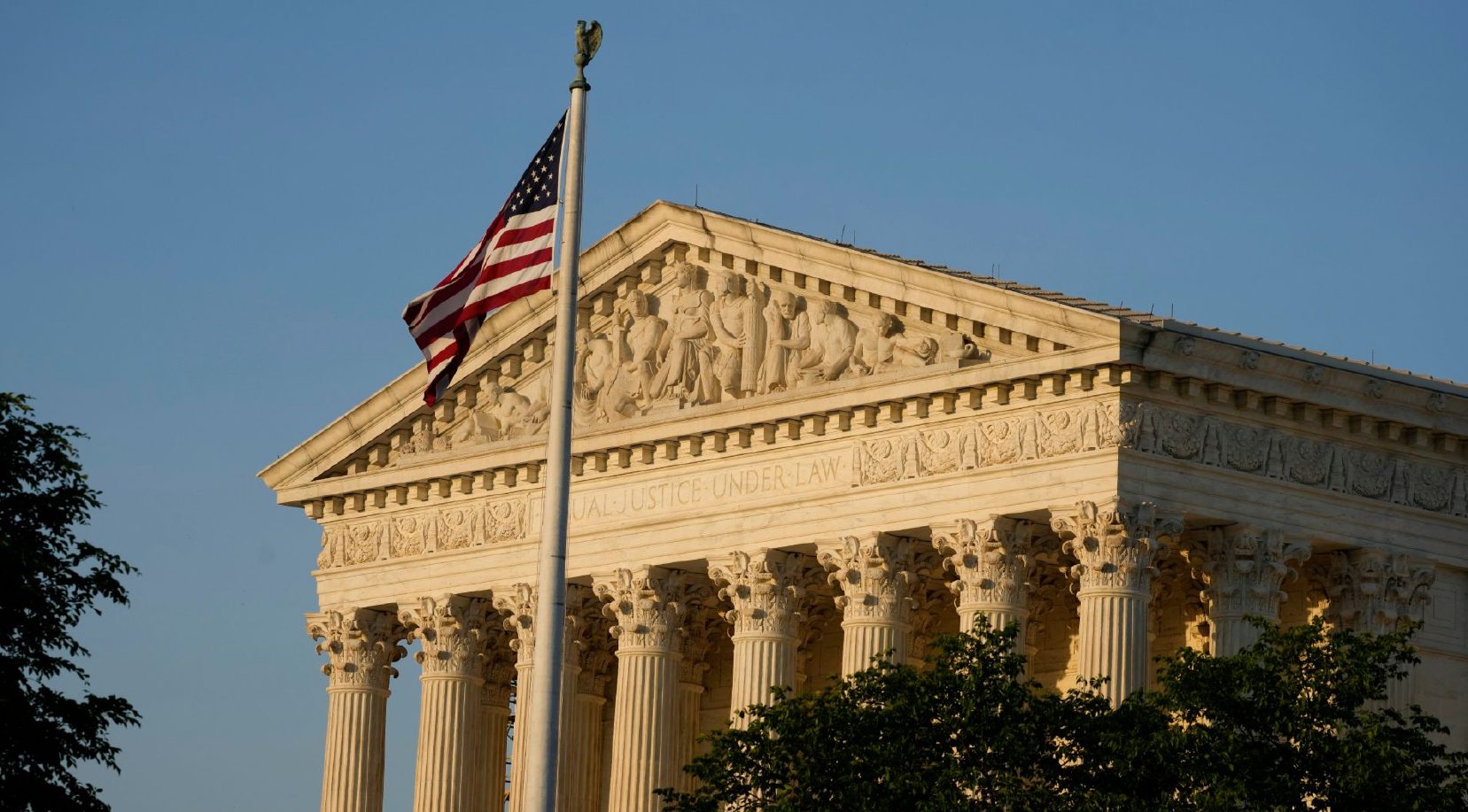
(ZENIT News / Washington, 03.04.2026).- In a decision that could reverberate far beyond the classrooms of California, the U.S. Supreme Court on March 2, 2026, intervened in a bitterly contested dispute over parental authority, religious liberty and gender identity in public schools.
By a 6–3 vote, the justices blocked enforcement of California policies that prevented schools from informing parents if their child adopted a transgender identity at school, unless the child consented to disclosure. The ruling, issued in the case of Mirabelli v. Bonta, does not definitively resolve the litigation. But it signals that a majority of the Court believes the state’s approach likely runs afoul of constitutional protections — particularly those rooted in the First and Fourteenth Amendments.
At the heart of the controversy is a state-level confidentiality rule requiring educators to withhold from parents information about a student’s gender transition at school, even when teachers themselves object to the policy. Parents and teachers challenged the mandate, arguing that it effectively excluded families from decisions touching on a child’s mental health, moral formation and religious upbringing.
Writing in its order, the Court concluded that California’s policy “substantially interferes” with what longstanding precedent recognizes as the primary right of parents to direct the upbringing and education of their children. Citing earlier rulings affirming that parents — not the state — hold the principal authority over childrearing, the justices underscored that this authority extends to participation in decisions affecting a child’s psychological well-being.
The Court gave particular weight to the issue of gender dysphoria, describing it as a condition with significant mental health implications. When a child exhibits signs of gender dysphoria at school, the California policy required that parents be kept in the dark while schools facilitated elements of social transition during school hours. That arrangement, the justices indicated, likely crosses constitutional lines.
The litigation has unfolded over nearly three years. On Dec. 22, 2025, federal district judge Roger Benítez ruled that parents possess a constitutional right to receive “gender information” concerning their children. He grounded that conclusion in both the Fourteenth Amendment’s due process clause and the First Amendment’s protection of religious liberty. Benítez also found that teachers have First Amendment rights that allow them to share such information with parents, even if state policy instructs otherwise.
In January 2026, the U.S. Court of Appeals for the Ninth Circuit temporarily blocked Benítez’s order while the case proceeded. The plaintiffs then sought emergency relief from the Supreme Court. The March 2 ruling effectively lifts the appellate court’s stay, halting California’s enforcement of the secrecy policy for now.
The case has drawn national attention in part because of the coalition behind it. The Thomas More Society, a religious liberty law firm, represented parents and teachers who argued that the policy forced educators to act against deeply held convictions about the parental role. The Becket Fund for Religious Liberty highlighted that several Catholic families discovered their children had been socially transitioned at school without their knowledge or consent. In one instance cited in court filings, parents learned of the situation only after their daughter attempted suicide.
Public opinion appears to favor parental involvement. According to the 2025 Religious Freedom Index published by Becket, approximately 73 percent of Americans believe parents are the primary educators of their children. That cultural backdrop likely frames how this case will be received across the country.
Paul M. Jonna, special counsel with the Thomas More Society, described the ruling as a turning point for parental rights, asserting that states may not facilitate a child’s gender transition in secret. Yet even supporters of the plaintiffs acknowledge that the legal battle is not over. The Supreme Court’s action came through an emergency appeal and does not constitute a final merits decision. The case will continue in lower courts, where factual and constitutional questions will be further examined.
For California, the stakes are immediate. The state had defended its policy as necessary to protect student privacy and safety. The Supreme Court, however, noted that in doing so the state excluded “the primary protectors of a child’s best interests”: parents.
The broader implications could be significant. Several states have adopted or considered similar policies shielding student gender transitions from parental notification. If the Court ultimately affirms the reasoning signaled in this interim ruling, it could establish a nationwide precedent limiting the ability of public schools to withhold such information.
The dispute touches a fault line in contemporary American life: the tension between expanding conceptions of individual identity and longstanding doctrines of parental authority. For religious families in particular, the issue carries added weight. Catholic teaching, for example, describes the right and duty of parents to educate their children as “primordial and inalienable,” a formulation rooted in natural law reasoning and echoed in constitutional jurisprudence.
Thank you for reading our content. If you would like to receive ZENIT’s daily e-mail news, you can subscribe for free through this link.

