

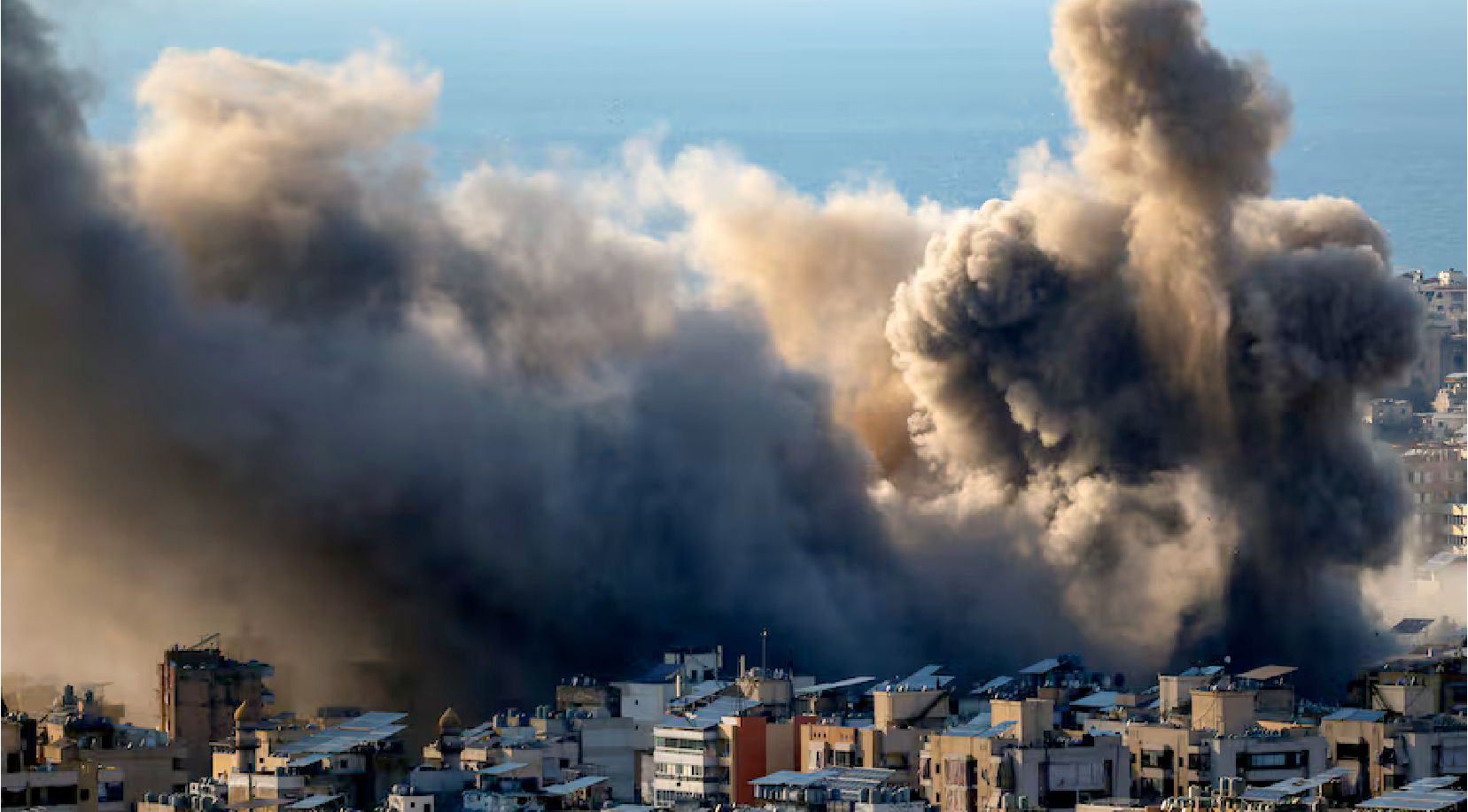
(ZENIT News / Roma, 03.08.2026).- The bells of a small church in southern Lebanon have become an unlikely symbol of defiance in a region once again sliding toward war.
In the village of Alma al-Shaab, near the Israeli border, residents recently gathered in the courtyard of their parish church and rang its bells as news of expanding military strikes spread across the Middle East. The gesture was not meant as provocation: despite evacuation orders and the threat of bombardment, many families say they intend to remain in their homes.
Their determination reflects the broader human drama unfolding since the end of February, when joint military operations by the United States and Israel targeted sites inside Iran. Tehran retaliated with drones and missiles against Israeli territory, U.S. bases, and infrastructure across Gulf states, drawing neighboring countries into a rapidly widening conflict.
The toll has risen quickly. Iranian sources report at least 1,230 deaths in Iran, including civilians, government officials and the country’s supreme leader, Ayatollah Ali Khamenei. A strike on a girls’ primary school in the port city of Minab alone killed more than 160 civilians, according to Iranian officials. Beyond Iran’s borders, the violence has also claimed lives: at least 72 people in Lebanon, 12 in Israel, six members of the U.S. armed forces, and 11 civilians in other Arab states.
Against this backdrop, the Vatican has intensified its diplomatic and moral appeals for restraint.
During the Angelus prayer on March 8 in St. Peter’s Square, Pope Leo XIV warned that the conflict risks spiraling beyond its current fronts. Speaking to thousands of pilgrims on the third Sunday of Lent, he urged believers to pray “that the roar of bombs may cease, that weapons may fall silent, and that space may open for dialogue.”
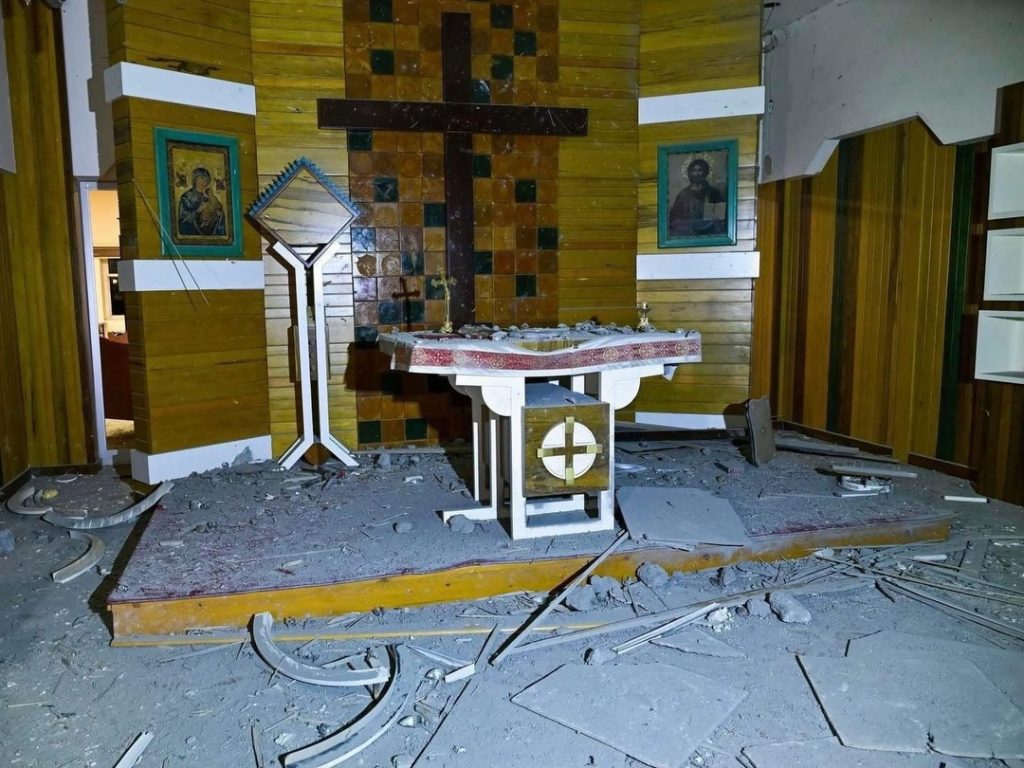
The pontiff expressed particular concern that Lebanon—already weakened by years of political paralysis and economic crisis—could again be pulled into instability. He entrusted the region to Mary, traditionally invoked in Catholic devotion as Queen of Peace, asking for reconciliation and hope for those suffering from war.
The pope’s appeal coincided with International Women’s Day, prompting him to broaden his message beyond geopolitics. He called for renewed commitment to equality and solidarity with women who remain victims of discrimination and violence worldwide.
Yet while the pope’s words emphasized prayer and moral responsibility, the Vatican’s diplomatic machinery has been equally active behind the scenes.
In an interview with Vatican media on March 4, Cardinal Pietro Parolin, the Holy See’s Secretary of State, offered one of the most detailed assessments yet of the crisis. Speaking on the fifth day of the war, the veteran diplomat lamented what he described as a profound erosion of the international order established after the Second World War.
The United Nations, founded in 1945 to prevent future global conflicts, was intended to anchor a system in which disputes would be resolved through law and diplomacy. According to Parolin, that architecture now appears increasingly fragile.
“If states claim the right to launch preventive wars according to their own criteria,” he warned, “the entire world risks being set ablaze.”
The cardinal suggested that the principles underpinning international law—from disarmament agreements to respect for national sovereignty—are being gradually sidelined by the logic of force. In such a climate, he argued, justice risks being replaced by power, and legal norms by the rule of the strongest.
Parolin acknowledged that Iran’s internal repression, including the harsh response to protests earlier this year, raises serious concerns about civil liberties. But he insisted that military escalation cannot be the solution.
“Violence always produces victims and destruction,” he said, stressing that the civilian population invariably bears the greatest cost.
That cost is already visible in places far from the main battlefields.
In northern Iraq, a drone attack on March 4 damaged a residential building belonging to the Chaldean Catholic Archdiocese of Erbil. The complex, located in the suburb of Ankawa, houses young Christian families and church workers. Fortunately, the building had been largely evacuated because of its proximity to Erbil International Airport, and no casualties were reported.
The apartments had originally been built with financial support from the Knights of Columbus to shelter Christians displaced by the Islamic State insurgency between 2014 and 2018. The attack also damaged a nearby convent belonging to the Chaldean Sisters of Mary Immaculate.
Archbishop Bashar Warda of Erbil said the incident illustrates a grim pattern common in wartime: the most vulnerable populations are often the first to suffer.
“Once again we ask for solidarity and prayers,” he said, noting that Iraq’s small Christian minority continues to struggle to remain in its ancestral homeland.
Communication breakdowns are also deepening concern for the safety of Christian communities elsewhere in the region. Since the outbreak of hostilities on February 28, church officials have been unable to reach Cardinal Dominique Mathieu, the Belgian Franciscan who serves as archbishop of Tehran-Isfahan.
Mathieu leads a tiny Latin-rite Catholic community in Iran numbering roughly 2,000 faithful. According to the Franciscan order’s headquarters in Rome, the last confirmed contact with him occurred on the day the war began. Internet and telephone networks inside Iran have since become unreliable or inaccessible.
The 62-year-old cardinal, elevated to the College of Cardinals in 2024, became the first cardinal ever based in Iran when Pope Francis appointed him archbishop in 2021. His disappearance into silence underscores how deeply the conflict has disrupted ordinary channels of communication.
For the Vatican, the fate of such communities is part of a broader concern about the region’s fragile religious mosaic.
Throughout the Middle East, ancient Christian populations have dwindled sharply over the past century due to war, migration and economic hardship. Renewed conflict threatens to accelerate that decline, particularly in areas already strained by displacement.
Lebanese church leaders have therefore joined the Vatican in urging immediate de-escalation. In a statement issued March 5, the Assembly of Catholic Patriarchs and Bishops of Lebanon warned that the continuation of hostilities “threatens the dignity of the human person, a gift from God, and undermines the foundations of justice and stability.”
The patriarchs called on political authorities to prevent Lebanon from becoming a battlefield for regional powers and appealed to the international community to intensify diplomatic efforts before the violence spreads further.
Their message echoes a consistent theme in Catholic social teaching: peace is not merely the absence of war but a condition rooted in justice, human dignity and international cooperation.
That perspective has also informed debates among Catholic ethicists about the legitimacy of the current military campaign.
According to the Catechism of the Catholic Church, armed conflict may only be justified under strict conditions commonly known as “just war” criteria. These include the presence of a grave and certain threat, the exhaustion of all peaceful alternatives, a realistic prospect of success, and the requirement that the harm caused by war not exceed the evil it seeks to eliminate.
Some theologians in the United States have urged political leaders to measure their decisions against those principles. They note that even when a government claims a legitimate cause, moral evaluation must also consider whether the intention behind military action is genuinely the restoration of peace rather than geopolitical advantage.
Such reflections underline the complexity of the present crisis. Beyond battlefield calculations lies a deeper question: whether the international community still possesses the political will to resolve disputes without resorting to force.
For Pope Leo XIV, that question is not abstract. It touches the daily lives of families who face bombardment, displacement or uncertainty about the future.
In southern Lebanon, the people of Alma al-Shaab say they understand those risks all too well. Many remember the destruction inflicted during previous conflicts along the border. Yet instead of leaving, they have chosen a symbolic act rooted in faith.
Each time the bells of their church ring, they send a message—to neighbors, to soldiers on both sides of the frontier, and perhaps to the wider world—that their presence endures.
In a region where war often drowns out quieter voices, the sound of those bells carries a fragile but stubborn hope: that peace, however distant it may seem today, is still worth waiting for.
Thank you for reading our content. If you would like to receive ZENIT’s daily e-mail news, you can subscribe for free through this link.

Publicaciones relacionadas:
 A Church Against the Logic of War: Vatican Voices, Middle East Realities, and the Risk of a Vanishing Christianity
 Pope Leo XIV, the US-Iran war, and a forceful call in a Middle East on the brink of the abyss
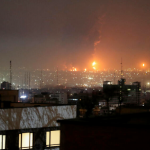 The Middle East on the Brink of Collapse: Another Call for Peace from the Pope, the Death of a Member of the Order of Malta in Lebanon, and Bombings at Shepherds’ Fields in Bethlehem
 UNICEF spends hundreds of millions of dollars promoting sexually explicit content, according to research
