

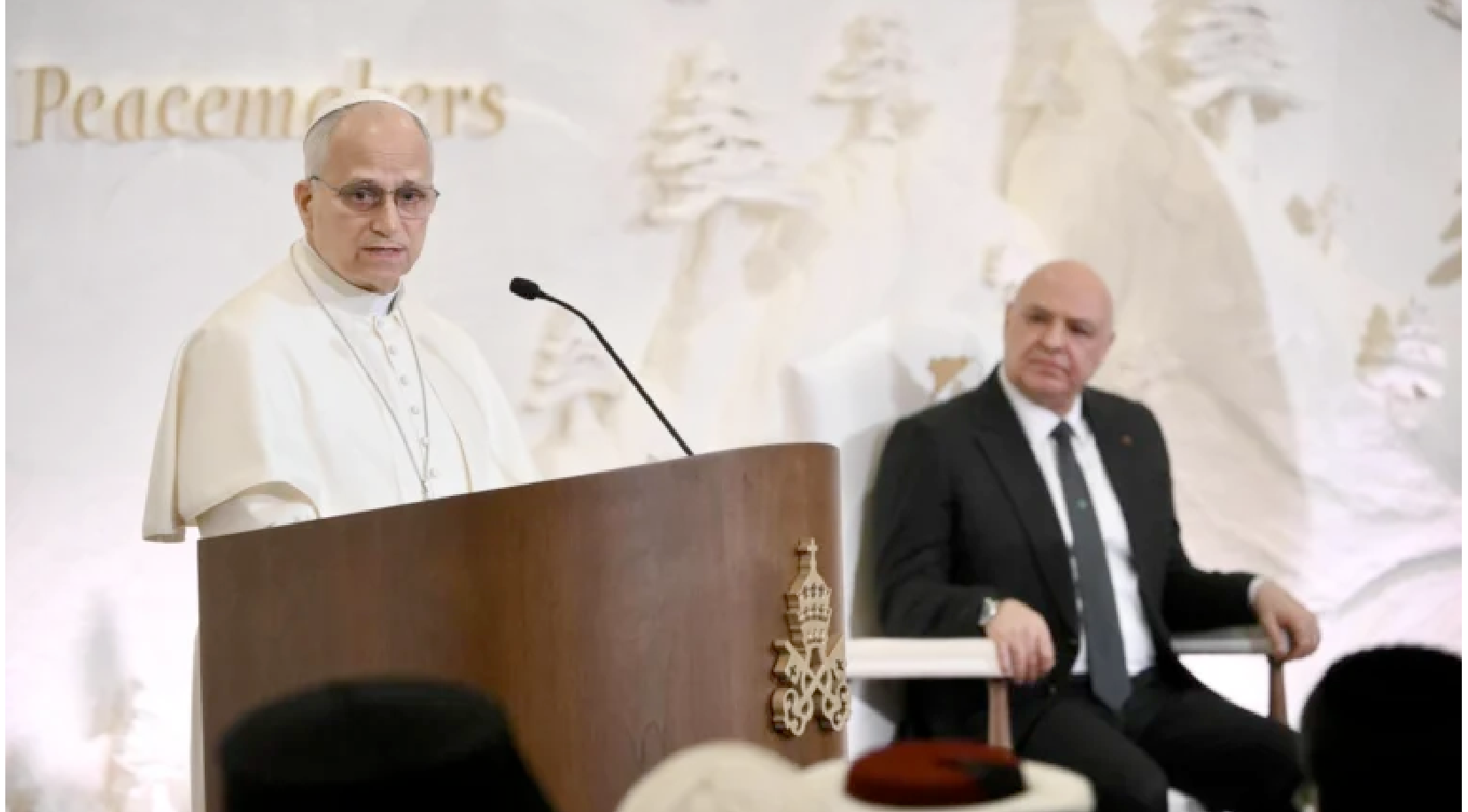
(ZENIT News / Beirut, 03.11.2026).- As violence escalates across Lebanon and hundreds of thousands of civilians flee their homes, the country’s government has made an unusual diplomatic appeal: it has asked the Holy See to intervene in order to help preserve the historic Christian presence in villages along the southern border with Israel.
The request came during a telephone conversation on March 10 between Lebanon’s foreign minister, Youssef Raji, and Paul Richard Gallagher, the Vatican’s secretary for relations with states and international organizations. According to Lebanese officials, the minister urged the Holy See to use its diplomatic channels to help protect Christian communities caught in the widening conflict.
Raji stressed that these border villages—many of them predominantly Christian—have long remained loyal to the Lebanese state and its official military institutions, even through the country’s most turbulent periods. He warned that continued bombardment and evacuation orders could threaten their very survival.
The Vatican response was cautious but attentive. Gallagher reportedly assured the Lebanese minister that the Holy See is maintaining diplomatic contacts aimed at halting the escalation and preventing further displacement of civilians. He also reiterated that Lebanon remains close to the heart of Pope Leo XIV, who continues to remember the country in his prayers.
A war that is emptying southern Lebanon
The appeal to the Vatican comes amid a rapidly deteriorating security situation. Since early March, hostilities between Israel and the Shiite militia Hezbollah have intensified dramatically, triggering large-scale Israeli airstrikes across Lebanon.
According to Lebanese authorities and humanitarian organizations, more than 500 air raids have struck targets in the country’s south in recent days. The attacks have killed around 400 people—including at least 80 children—and injured more than 600 others.
The fighting has also caused mass displacement. Evacuation orders issued by the Israeli military have expanded to cover much of southern Lebanon and even parts of the capital’s southern suburbs. Estimates vary, but as many as 500,000 people have been forced from their homes, while some reports suggest evacuation warnings may have affected up to 700,000 residents.
The humanitarian consequences are already severe. Families have fled with little more than what they could carry, seeking refuge in schools, cars, or overcrowded shelters. Aid organizations report that many temporary accommodations lack basic infrastructure such as beds or functioning plumbing.
Humanitarian groups warn of an impending catastrophe. Save the Children has urged world leaders to prevent a full-scale assault on densely populated areas, warning that children could again become the principal victims of the conflict.
Communities caught between armies
Among those most vulnerable are the small Christian villages scattered along the frontier with Israel—places such as Qlayaa, Rmeish, and Alma al-Shaab.
For generations these communities have represented one of the last concentrations of historic Christianity in the region. Today many residents say they feel trapped between Israeli military operations and Hezbollah fighters who sometimes move through the area.
In several cases villagers have refused evacuation orders, insisting on remaining in their ancestral homes despite the danger. Their stance has drawn admiration from many Lebanese observers but also heightened fears that the communities could become unintended casualties of a conflict they did not choose.
The tensions were tragically illustrated on March 9 with the death of Maronite priest Pierre El Rahi. The parish priest of Qlayaa was reportedly struck by a projectile fired from an Israeli tank while responding to an attack that had already wounded local residents.
Today I spoke by phone with Archbishop Paul Gallagher, Secretary for Relations with States of the Holy See. We exchanged views on the latest developments in Lebanon and on the difficult situation facing the border villages in the south.
I asked the Holy See to intervene and…
— Youssef Raggi (@YoussefRaggi) March 10, 2026
His death shocked the country and resonated widely within the Catholic world. Many Lebanese have described him as a pastor who refused to abandon his people in the midst of violence.
Another Christian civilian, farmer Youssef Al-Ghafri, had been killed the previous day in the nearby village of Alma al-Shaab, further intensifying fears among local communities.
Evacuations and diplomatic concern
While some villages continue to resist evacuation, others have begun to empty under mounting pressure. In Alma al-Shaab, residents were escorted out by the peacekeeping mission United Nations Interim Force in Lebanon as the security situation deteriorated.
Local leaders warn that the absence of a strong Lebanese army presence in these areas makes it difficult to prevent armed groups from entering the villages, which can then transform them into targets for Israeli strikes.
The crisis has also drawn attention from the Vatican’s diplomatic network. The apostolic nuncio to Lebanon, Paolo Borgia, is expected to visit several of the threatened communities in the coming days in a gesture of solidarity with residents determined to remain on their land.
For the Holy See, the stakes go beyond the immediate conflict. Lebanon hosts the largest Christian population in the Middle East, composed primarily of Maronites but also Greek Orthodox, Melkites, Armenians and other communities.
When Pope Leo XIV visited the country during his first international apostolic journey last December, he spoke about the importance of safeguarding this pluralistic society, describing the presence of Christians in Lebanon as a mission aimed at fostering what he called a “civilization of love and peace.”
A fragile balance
That vision now appears under threat. Lebanese leaders have long warned that the departure of Christians from the country would disrupt the delicate balance that defines the nation’s political and cultural life.
President Joseph Aoun once expressed the concern bluntly, noting that if Christians were to disappear from Lebanon, the equilibrium on which the state is built could collapse.
As bombs fall and villages empty, many Lebanese Christians fear that the latest war could accelerate a demographic decline already underway for decades across the Middle East.
For that reason, Lebanon’s appeal to the Vatican is not simply a request for diplomatic mediation. It is also a plea to protect a fragile human and religious landscape—one that has survived centuries of upheaval but now faces one of its most uncertain moments.
Thank you for reading our content. If you would like to receive ZENIT’s daily e-mail news, you can subscribe for free through this link.

Publicaciones relacionadas:
 Palestinian and Israeli leaders present Pope with peace plan for Holy Land (includes status for Jerusalem)
 Vatican questions “preventive” war in Iran as Leo XIV intensifies diplomatic calls for peace
 The last historic Christian village in the Holy Land, threatened with annexation by the Jewish state of Israel
 A Church Against the Logic of War: Vatican Voices, Middle East Realities, and the Risk of a Vanishing Christianity
