

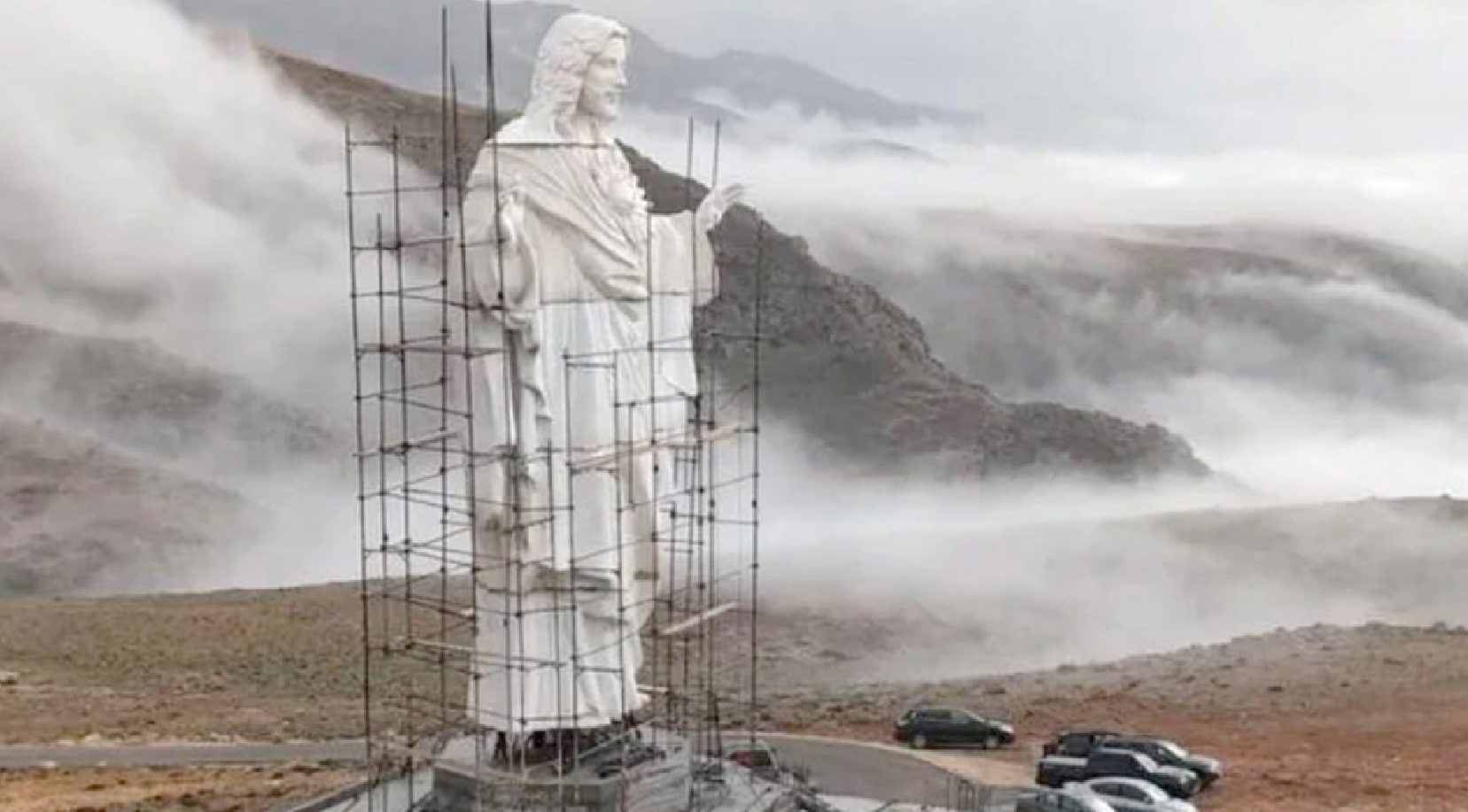
(ZENIT News / Beirut, 03.24.2026).- In the eastern reaches of Lebanon, where the Bekaa Valley stretches toward a tense and often volatile border with Syria, a striking new silhouette is beginning to redefine the horizon. High on Jabal al-Salib, near the predominantly Christian town of Al-Qaa, a monumental statue of Christ with outstretched arms is taking shape—an image both familiar in Christian iconography and newly charged with meaning in a region marked by conflict.
The project, conceived as recently as August 2025 and launched within weeks thanks to local initiative and private patronage, has advanced with unusual determination given the circumstances. On March 14, 2026, workers reached a symbolic milestone: the installation of the statue’s head. Images of the operation, rapidly circulated online, have drawn attention far beyond Lebanon, resonating with Christian audiences worldwide who recognize in the figure an echo of Rio de Janeiro’s Christ the Redeemer—now reinterpreted in a Middle Eastern key.
Ver esta publicación en Instagram
Though final technical specifications have not been fully standardized across sources, the structure is expected to stand roughly 15 meters tall, resting on a substantial base of about 5 meters. The broader architectural complex, which includes a church currently under construction beneath the statue, will rise to approximately 23 meters. Designed to endure the harsh climatic conditions of the mountain, the sanctuary aims to serve not only as a devotional site but as a lasting physical testament to endurance.
The choice of location is neither incidental nor purely aesthetic. Perched above the Bekaa Valley and visible across long distances—including, reportedly, from parts of Syrian territory—the statue occupies a strategic vantage point. In a region frequently shaken by geopolitical tensions, particularly in the context of the Israel–Hezbola conflict and recurrent ռազմական escalations affecting areas such as Baalbek, its visibility carries symbolic weight. The decision to continue construction despite nearby bombardments has only reinforced the perception among local residents that this is more than a religious monument: it is an act of quiet resistance.
For the inhabitants of Al-Qaa, a community with deep Christian roots, the statue expresses a layered spiritual narrative. It is seen as a gesture of gratitude for what they interpret as divine protection through years of instability, often attributed to the intercession of revered figures such as Saint Elijah, Saint George and the Virgin Mary. At the same time, it functions as a reaffirmation of identity in a land where demographic shifts and emigration have steadily eroded the Christian presence.
Those involved in the project acknowledge that Lebanon’s ongoing economic collapse and political paralysis have weighed heavily on both logistics and morale. Yet, paradoxically, these very hardships appear to have intensified the symbolic resonance of the endeavor. To see Christ physically elevated above the town, one organizer noted, is to be reminded that the community remains “protected, loved and not abandoned.”
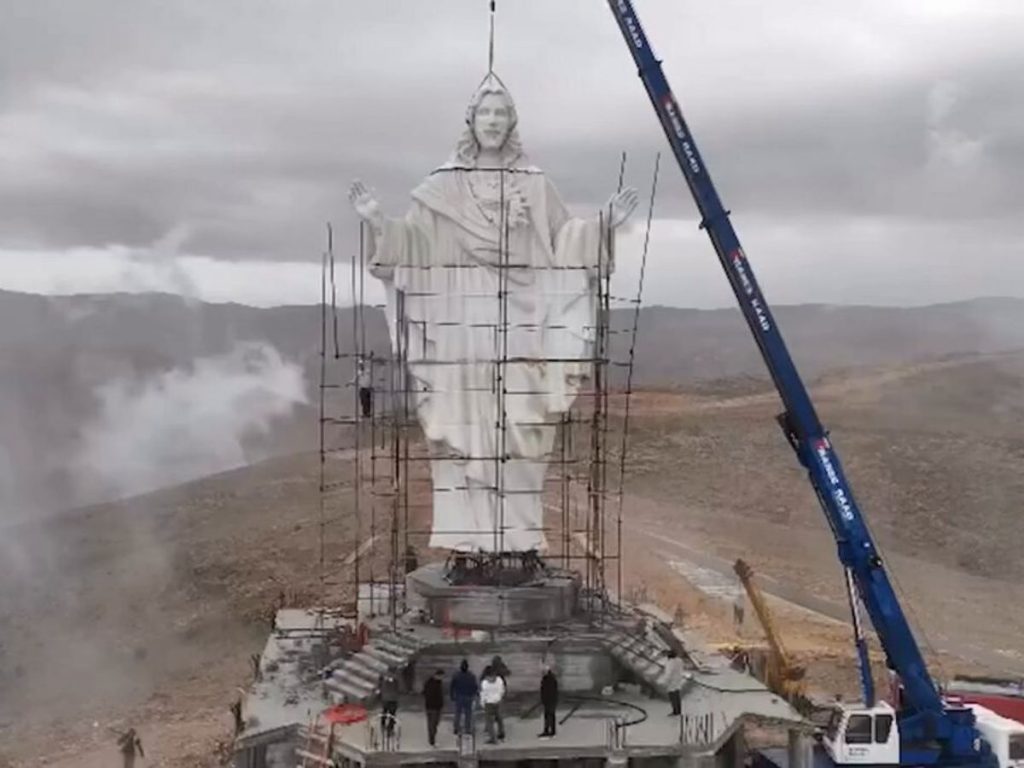
In this sense, the statue joins a broader landscape of monumental religious expressions in Lebanon, alongside landmarks such as Our Lady of Lebanon in Harissa and the statues dedicated to Saint Charbel. Each of these sites reflects a distinct chapter in the country’s spiritual history; the emerging Christ of Al-Qaa may come to represent its present struggle.
What distinguishes this project, however, is the immediacy of its context. Unlike monuments erected in times of relative stability, this one rises amid ongoing uncertainty—economic crisis, regional tensions, and the lingering aftershocks of violence. Its construction is therefore not merely commemorative but contemporaneous, unfolding in parallel with the very trials it seeks to transcend.
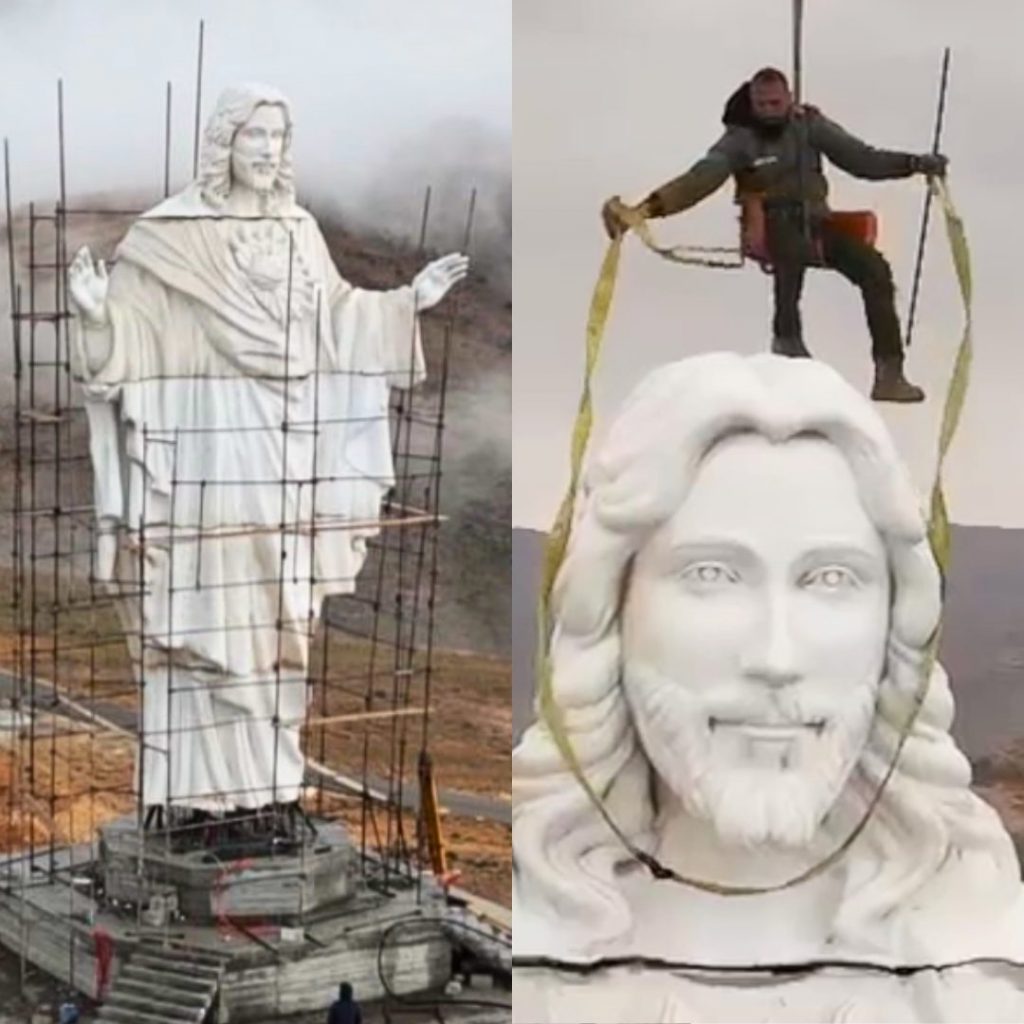
There is, as yet, no confirmed date for its completion. But for many observers, the timing of its partial unveiling already carries a sense of providence. In a landscape where the line between endurance and exhaustion is often thin, the emerging figure of Christ—arms open over a fractured valley—has begun to function as a visual theology: a proclamation, in concrete and stone, that faith persists even where stability does not.
Thank you for reading our content. If you would like to receive ZENIT’s daily e-mail news, you can subscribe for free through this link.

