

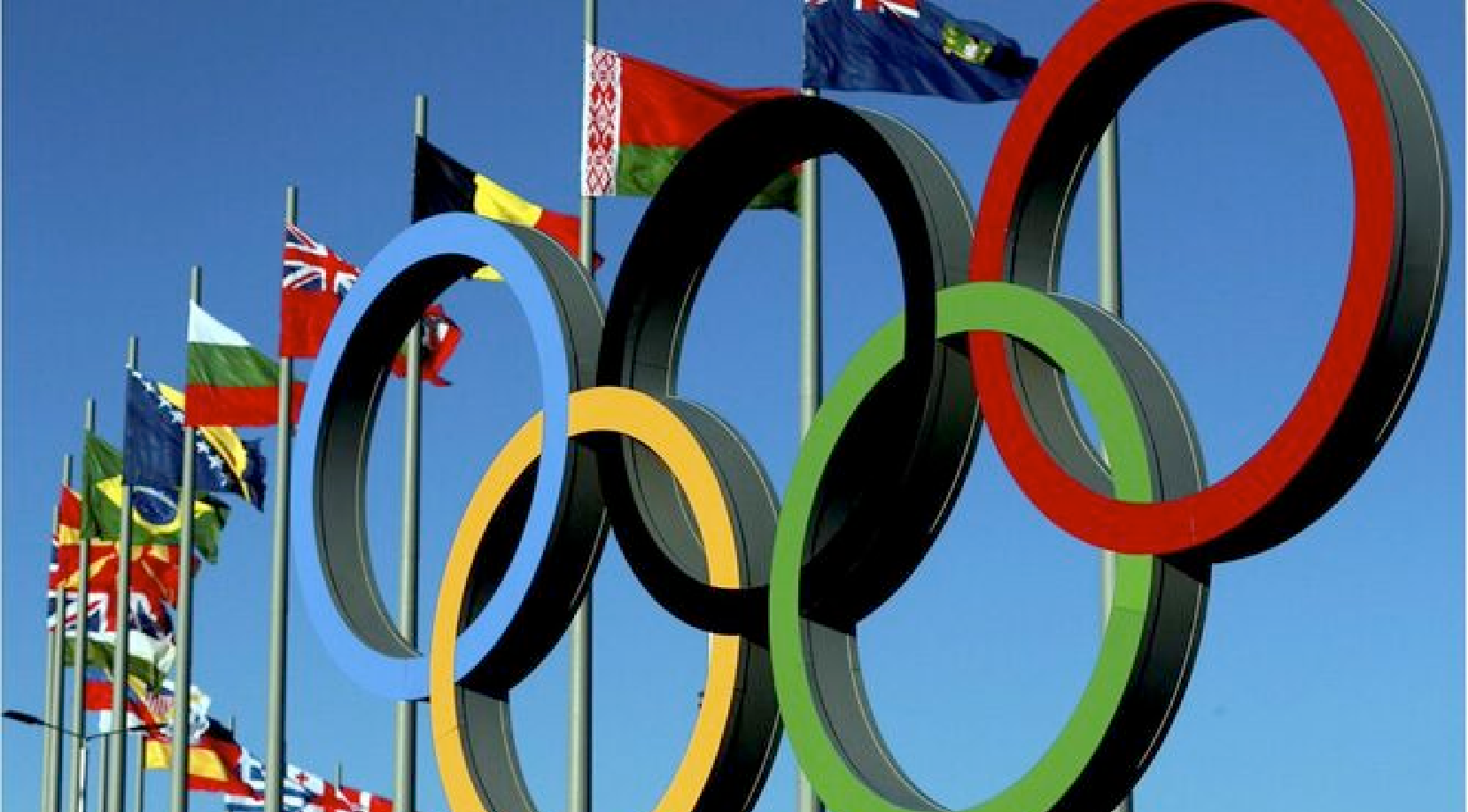
(ZENIT News / Lausanne, 03.27.2026).- The decision by the International Olympic Committee (IOC) to exclude transgender women from female Olympic categories marks one of the most consequential policy shifts in global sport in recent years. More than a technical adjustment, it signals a redefinition of how the Olympic movement understands fairness, biology and the boundaries of competition—issues that now sit at the intersection of science, law and culture.
Approved after months of internal deliberation, the new framework will take effect at the Los Angeles 2028 Games. At its core lies a requirement that all athletes competing in female events undergo genetic testing to determine eligibility. The IOC has specified that a single test—based on saliva, cheek swab or blood sample—will suffice, aligning with protocols already introduced in disciplines such as athletics.
For Kirsty Coventry, the IOC’s first female president, elected in 2025, the reform reflects a principle she emphasized throughout her campaign: the protection of women’s sport. In announcing the policy, she framed the issue in starkly competitive terms, noting that Olympic outcomes are often decided by the smallest margins. From that perspective, she argued, allowing “biological males” to compete in women’s categories would undermine both fairness and, in some cases, safety.
Yet the scientific basis invoked by the IOC remains contested. Internal analyses presented by the committee’s medical leadership suggested that athletes with male biological markers may retain physical advantages even after testosterone suppression. However, experts such as geneticist Eric Vilain have cautioned that the evidence is far from definitive, exposing a tension between policy-making and scientific uncertainty that has long characterized this debate.
The new rules also reshape the treatment of athletes with differences of sexual development (DSD), a group whose inclusion has been one of the most complex and controversial questions in elite sport. Under the updated framework, many such athletes—particularly those without typical XX chromosomes—will no longer be eligible for female categories, though they may compete in male or mixed events.
The IOC’s move does not emerge in a vacuum. In recent years, individual sports federations—athletics, swimming, boxing and rugby among them—have already implemented restrictions on transgender participation, effectively fragmenting the Olympic system. The new policy recentralizes that authority, replacing a patchwork of rules with a unified standard.
At the same time, the decision lands in a broader political climate where gender identity in sport has become a flashpoint. In the United States, for instance, measures such as those supported by Donald Trump have sought to bar transgender athletes from women’s competitions at the collegiate level. Coventry, however, has insisted that the IOC’s stance was not shaped by political pressure, but by internal consultations and medical advice.
The practical implications are immediate and complex. Legal challenges are widely expected, likely reaching the Court of Arbitration for Sport, which has previously adjudicated similar disputes. National laws may also complicate implementation: in countries like France, privacy regulations restrict genetic testing, potentially forcing athletes to undergo eligibility procedures abroad.
There are also ethical concerns, particularly regarding younger competitors. Olympic participation can begin at remarkably early ages—sometimes as young as 11—raising questions about consent, data protection and the long-term consequences of genetic classification. Critics warn that without robust safeguards, the policy risks exposing minors to intrusive procedures under the banner of fairness.
The IOC insists that its approach is grounded in both science and equity. But beneath the technical language lies a deeper dilemma that sport alone cannot resolve. The Olympic ideal has always balanced universality with distinction: the inclusion of all, and the separation of categories to ensure meaningful competition. In redefining who belongs where, the IOC is not merely regulating sport—it is, in effect, arbitrating one of the most sensitive anthropological debates of the modern era.
There are also ethical concerns, particularly regarding younger competitors. Olympic participation can begin at remarkably early ages—sometimes as young as 11—raising questions about consent, data protection and the long-term consequences of genetic classification. Critics warn that without robust safeguards, the policy risks exposing minors to intrusive procedures under the banner of fairness.
The IOC insists that its approach is grounded in both science and equity. But beneath the technical language lies a deeper dilemma that sport alone cannot resolve. The Olympic ideal has always balanced universality with distinction: the inclusion of all, and the separation of categories to ensure meaningful competition. In redefining who belongs where, the IOC is not merely regulating sport—it is, in effect, arbitrating one of the most sensitive anthropological debates of the modern era.
Thank you for reading our content. If you would like to receive ZENIT’s daily e-mail news, you can subscribe for free through this link.

Publicaciones relacionadas:
 CA library changes policy, allows women’s sports discussion
 UK Supreme Court rules: for legal purposes, only biological women are women
 Australia: A Region of the Country Bans Biological Men Who Identify as Women from Prisons Designed for Women
 Top UN Women’s Rights Expert Declares War on Gender Ideology
