

(ZENIT News / Castelgandolfo, 03.31.2026).- As Christians approach Easter, traditionally the liturgical summit of the year, the Vatican finds itself navigating a stark contradiction: proclaiming a message of resurrection and peace while confronting a global landscape marked by war, displacement and mounting diplomatic strain.
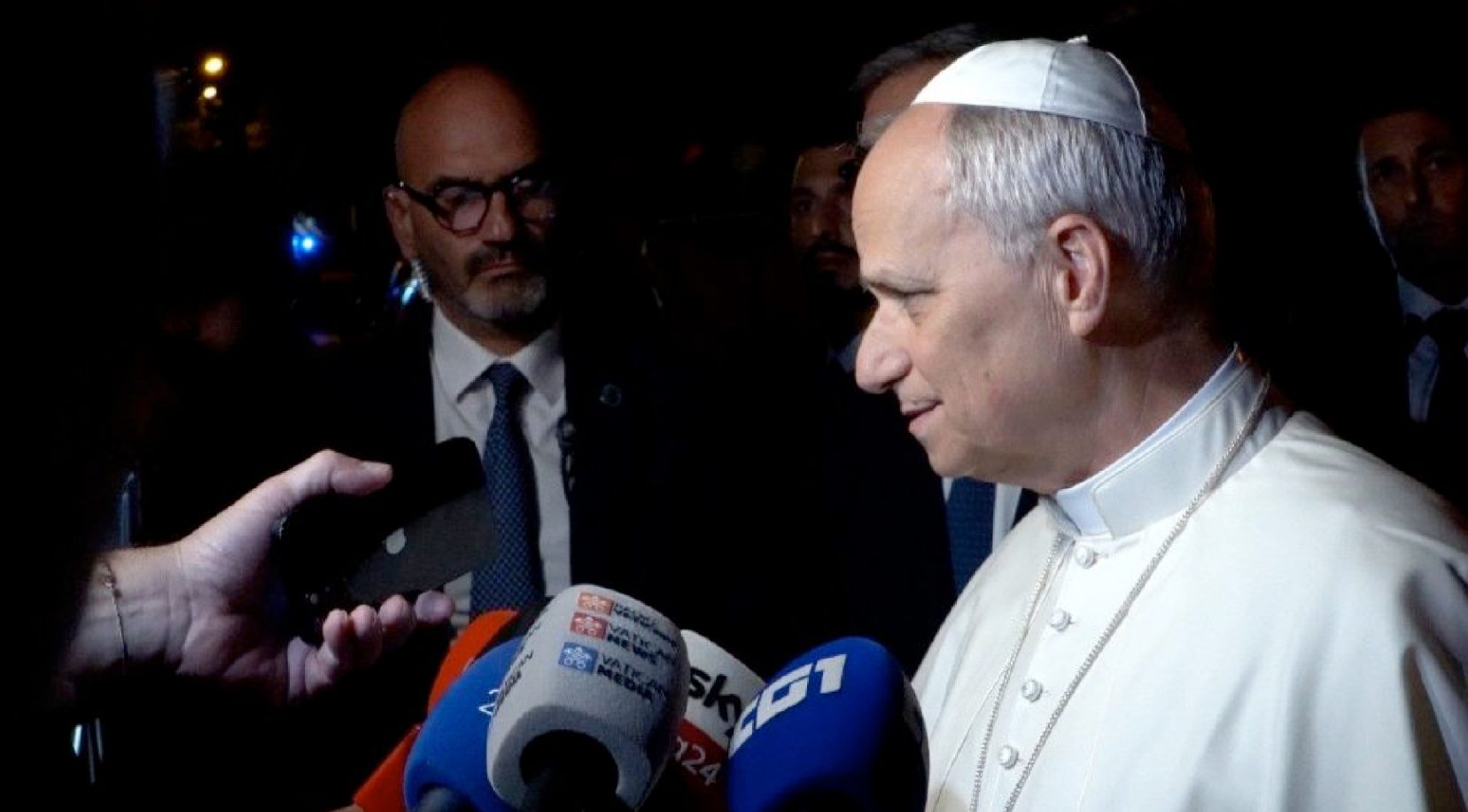
In a series of increasingly pointed interventions over recent days, Pope Leo XIV has sharpened his language on armed conflict, urging world leaders to abandon military escalation and return to negotiation. Speaking from Castel Gandolfo on March 31, the Pope framed the current moment describing Christ as “still crucified today” in the suffering of innocent victims, particularly children caught in war zones.
His appeal was not abstract. Referring indirectly to geopolitical developments, including statements by Donald Trump about ending ongoing conflicts, Leo expressed cautious hope that political leaders might be seeking “a way out” of violence. Yet his broader message was unmistakable: dialogue, not force, must be the primary instrument of international relations.
The Pope’s insistence comes against a backdrop of staggering human cost. In remarks days earlier, he pointed to a world where “more than a million” people have been displaced and where casualties continue to rise, warning that hatred is not only persisting but intensifying across multiple regions, particularly in the Middle East.
Cardinal Pietro Parolin, speaking on March 26, described war bluntly as an “absurdity” that must be brought to an end, especially in view of Easter, which he called “the feast of peace.” His remarks underscore a consistent line from the Holy See: the liturgical calendar is not detached from global affairs but offers a moral lens through which they are judged.
Leo XIV has also broadened his critique to include the technological dimension of modern warfare. In a March 23 address at the Vatican to employees of Italy’s national airline, he lamented that aviation—once a symbol of connection—continues to be used for bombing campaigns. The development of technology, he argued, becomes a regression when it serves destruction rather than human flourishing. Aircraft, he insisted, should be “vehicles of peace, never of war.”
Ver esta publicación en Instagram
The Pope’s own international travel, he suggested, is intended as a counter-symbol: apostolic journeys as instruments of encounter and reconciliation. His upcoming itinerary in April, which includes stops in several African nations, continues a papal tradition dating back to Pope Paul VI, who inaugurated modern papal travel in 1964 as a form of diplomatic and pastoral outreach.
Yet even as the Vatican calls for peace, it has been drawn into a concrete diplomatic dispute with the State of Israel, highlighting the fragility of religious freedom in conflict zones. On March 30, senior Vatican officials—including Parolin and Archbishop Paul Richard Gallagher—met with Israel’s ambassador to the Holy See, Yaron Sideman, following an incident that reverberated sharply in ecclesiastical circles.
Two days earlier, on Palm Sunday, Israeli police had prevented Pierbattista Pizzaballa and the Franciscan Custos of the Holy Land, Francesco Ielpo, from entering the Basilica of the Holy Sepulchre in Jerusalem—arguably Christianity’s most sacred site—at the very start of Holy Week.
The Vatican formally expressed its “regret” over what it described as an “unpleasant episode,” emphasizing that the incident raised serious concerns about freedom of worship. While Israeli authorities provided explanations and a subsequent agreement was reached to ensure participation in the Easter Triduum liturgies, the episode has left a residue of unease.
The incident is particularly sensitive given the symbolic weight of the Holy Sepulchre during Easter, when access restrictions resonate far beyond local circumstances and touch the global Christian community.
The convergence of these developments—papal appeals, technological critiques, and diplomatic tensions—reveals a Vatican increasingly active on multiple fronts. Leo XIV’s decision to personally carry the cross during the Good Friday Via Crucis at the Colosseum further reinforces the message: a pontificate that seeks to embody, not merely articulate, solidarity with suffering.
In this context, Easter emerges not as a retreat from global realities but as a moment of confrontation with them. For the Pope, the liturgical proclamation of peace is inseparable from the political and human urgency of ending war. The Holy See is positioning itself as both a spiritual voice and a diplomatic actor in a world where the distance between altar and battlefield continues to narrow.
Thank you for reading our content. If you would like to receive ZENIT’s daily e-mail news, you can subscribe for free through this link.

Publicaciones relacionadas:
 Pope Leo XIV, the US-Iran war, and a forceful call in a Middle East on the brink of the abyss
 A Church Against the Logic of War: Vatican Voices, Middle East Realities, and the Risk of a Vanishing Christianity
 Trump responds to Pope Leo XIV: I don’t want a ceasefire
 In the Heart of Rome, the Pope Becomes Its Citizen
