

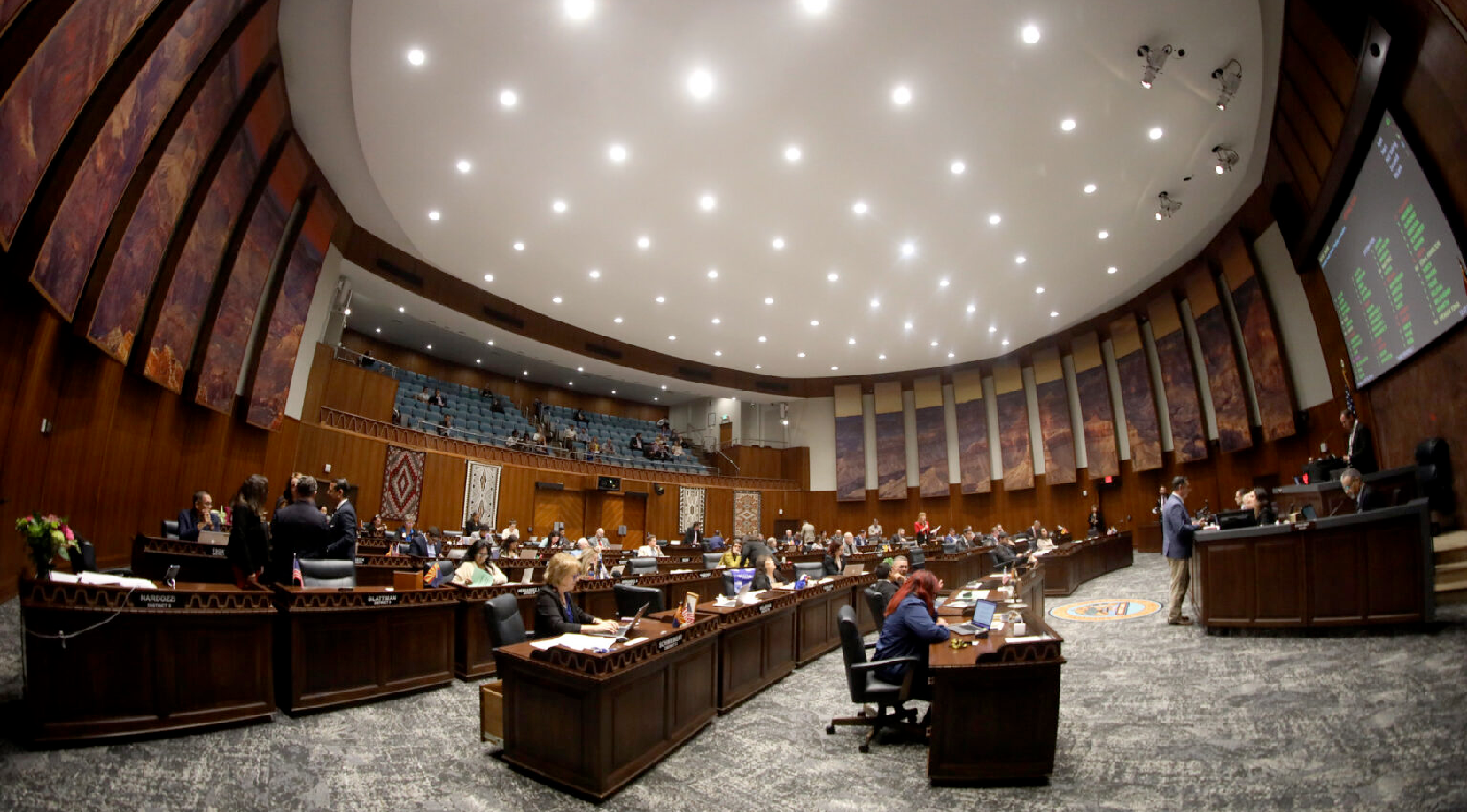
(ZENIT News / Phoenix, 07.02.2026).- For the second time in three years, an effort to require Catholic priests in Arizona to disclose information revealed during sacramental confession has failed, preserving one of the oldest and most protected obligations in Catholic canon law while highlighting an increasingly contentious debate over the relationship between religious freedom and mandatory child abuse reporting.
With the close of Arizona’s 2026 legislative session, House Bill 2039 expired without becoming law. Sponsored by Democratic State Representative Stacey Travers, the proposal would have required priests to report information suggesting ongoing or anticipated child abuse, even if that knowledge had been obtained exclusively through the Sacrament of Reconciliation.
The bill proposed severe penalties for clergy who refused to comply. A first violation would have constituted a Class 6 felony, carrying fines of up to $150,000 and prison sentences of as much as two years. Repeated refusals could have exposed priests to substantially longer terms of imprisonment.
The legislation also contained a provision that attracted particular criticism from religious liberty advocates. While Arizona law already recognizes a clergy-penitent privilege, the bill would have removed that protection whenever a minister believed that abuse or neglect was continuing or might occur in the future. Opponents argued that such language would effectively require priests to speculate about future events while simultaneously compelling them to violate the absolute confidentiality of confession.
Representative Travers defended the proposal by arguing that religious institutions should not invoke the sacramental seal to shield information related to child abuse. She maintained that legal accountability should take precedence over ecclesiastical practice in situations involving potential harm to minors.
Critics, however, rejected the premise that the legislation was necessary. Arizona already requires clergy to report suspected child abuse in virtually every circumstance outside the confessional. The disputed issue was therefore not whether abuse should be reported, but whether the State could compel priests to reveal what they hear during a sacrament that the Catholic Church considers inviolably confidential.
Among the measure’s most vocal opponents was Republican Representative Quang Nguyen, a Catholic lawmaker who had also helped defeat a similar proposal introduced in 2023. He argued that the bill targeted a uniquely Catholic practice rather than addressing a genuine gap in child protection laws. According to Nguyen, existing mandatory reporting requirements already provide authorities with broad legal tools, making the attempt to regulate sacramental confession unnecessary.
The debate in Arizona forms part of a broader national trend. In recent years, several U.S. states have considered legislation seeking to narrow or eliminate legal protections for confidential religious communications when allegations of child abuse are involved. While some proposals have failed during the legislative process, others have advanced further.
Washington State became the first jurisdiction to enact such legislation after multiple attempts. However, implementation encountered immediate legal challenges, and a federal judge later blocked enforcement of the law while constitutional questions concerning religious liberty and the free exercise of religion continue to be litigated.
Montana considered a comparable measure in 2025. Although Democratic Representative Mary Ann Dunwell revised her proposal after discussions with the Montana Catholic Conference, the legislation continued to raise concerns because it would have required clergy to report information obtained in certain pastoral counseling settings. The revised proposal ultimately failed to become law.
For the Catholic Church, the issue extends beyond professional confidentiality. The seal of confession is regarded as absolute and admits no exceptions. Under canon law, a priest who directly reveals the identity of a penitent or the contents of a sacramental confession incurs automatic excommunication reserved to the Holy See. Because the obligation is considered rooted in the very nature of the sacrament, priests are expected to preserve confidentiality even under threat of imprisonment or other civil penalties.
This distinction often surprises those unfamiliar with Catholic teaching. Unlike attorney-client privilege or doctor-patient confidentiality, which are legal protections established by civil law and may include statutory exceptions, the seal of confession is understood by the Church as a sacred obligation owed ultimately to God rather than to the penitent alone. The priest acts not as the owner of confidential information but as a minister who is forbidden ever to disclose it.
The recurring legislative initiatives therefore reflect a difficult legal and ethical question that extends beyond Arizona.
For now, Arizona’s lawmakers have left the existing balance unchanged. Mandatory reporting requirements remain fully applicable to clergy in virtually every context except sacramental confession, preserving a legal accommodation that supporters view as an essential safeguard for religious freedom and opponents continue to regard as an obstacle in the fight against child abuse.
Thank you for reading our content. If you would like to receive ZENIT’s daily e-mail news, you can subscribe for free through this link.

Publicaciones relacionadas:
 Indian government wanted Easter 2024 to go unnoticed, but Catholic population rebelled
 Chinese Communist government takes advantage of Pope’s death to unilaterally impose new bishops
 EU Court to Weigh Whether Baptismal Records Clash with Data Protection Laws
 Pulpits, politics and the limits of free speech: a US court ruling keeps a 70-year barrier in place while Washington prepares new guidance
