

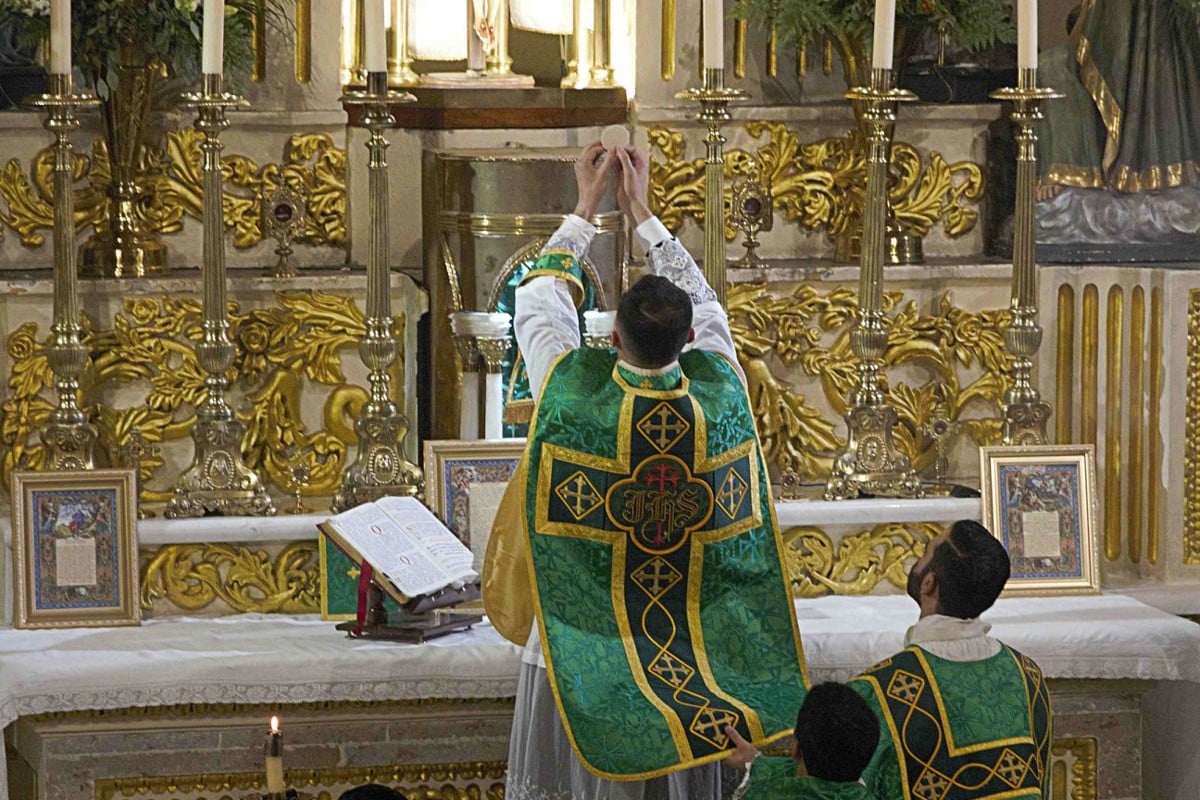
(ZENIT News / Vatican City, 09.15.2026).- The Holy See authorized the celebration of Mass according to the 1962 Roman Missal in parishes belonging to 34 dioceses around the world during 2025, according to the annual decree index published by the Dicastery for Divine Worship and the Discipline of the Sacraments.
The figures offer a rare official glimpse into how the Vatican is applying Pope Francis’ 2021 restrictions on the «older» form of the Roman liturgy. They also show that, despite the tighter rules surrounding the traditional Latin Mass, requests for its continued celebration are still being examined individually rather than treated as a matter settled by a blanket prohibition.
Of the 34 decrees recorded for 2025, 29 renewed existing permissions for a further two years. In several cases, a single decree covered more than one parish within the same diocese. The remaining authorizations concerned new or otherwise distinct permissions, although the published index does not provide a detailed explanation of every case.
The timing of the decisions is also significant. Seven decrees were issued during the pontificate of Francis, who died on April 21, 2025, at the age of 88. The other 27 followed the election of Pope Leo XIV on May 8. The figures therefore document the continuation of the process across two pontificates, rather than a policy confined to the final months of Francis’ leadership.
The United States received by far the largest share of the permissions, with 24 decrees involving dioceses including Sacramento, Seattle, Nashville, Lincoln, Davenport and Cleveland. This continues a pattern already visible in earlier Vatican records. In 2022, the first full year after the implementation of Traditionis Custodes, the Holy See granted permissions involving 35 dioceses and ecclesiastical jurisdictions, 20 of them in the United States.
The annual total rose to 55 authorizations in 2023 before falling to 34 in 2024, the same number recorded for 2025. These figures should not be read as a direct count of all traditional Latin Mass communities worldwide: one decree may cover several parishes, while the index does not necessarily reveal the number of faithful involved or the frequency of celebrations. They do, however, indicate the scale and geographical distribution of the Vatican’s formal decisions.
The liturgy at issue is the form of the Roman Mass associated with the missal promulgated by Pope Saint Pius V in 1570, following the Council of Trent. That missal sought to bring greater uniformity to the Latin Church’s diverse liturgical practices during a period marked by the upheavals of the Protestant Reformation. The edition used by communities today is based on that tradition but incorporates revisions made under Pope Saint John XXIII in 1962.
The contemporary legal framework was established by Francis through Traditionis Custodes in 2021. That document restricted the use of the 1962 Missal and required diocesan bishops to obtain authorization from the Holy See before permitting celebrations in parish churches. The annual decree index is consequently one of the few public Vatican sources showing how that system operates beyond the text of the original legislation.
The 2025 record suggests a policy of regulation rather than automatic approval or universal closure. The predominance of two-year renewals indicates that communities already permitted to use the 1962 Missal remain subject to periodic review. At the same time, the continued issuance of permissions in a wide range of dioceses demonstrates that the older form has not disappeared from the Vatican’s administrative horizon.
The decree index also places these decisions within the broader work of the dicastery. Its annual records include approvals of liturgical translations, confirmations of proper calendars for dioceses and religious congregations, the granting of the title of minor basilica to important churches and shrines, canonical coronations of Marian images, and recognition of new heavenly patrons.
Thank you for reading our content. If you would like to receive ZENIT’s daily e-mail news, you can subscribe for free through this link.

Publicaciones relacionadas:
 Vatican approves new lectionary for Advent in England, Wales and Scotland
 10 short questions and answers on the Instrumentum Laboris for the Synod on Synodality 2024
 Vatican pronounces on the transfer of days of obligation for Mass in the liturgical calendar
 The Vatican, the Pope, and the situation of the Lefebvrians: an analysis based on the current state of affairs
