

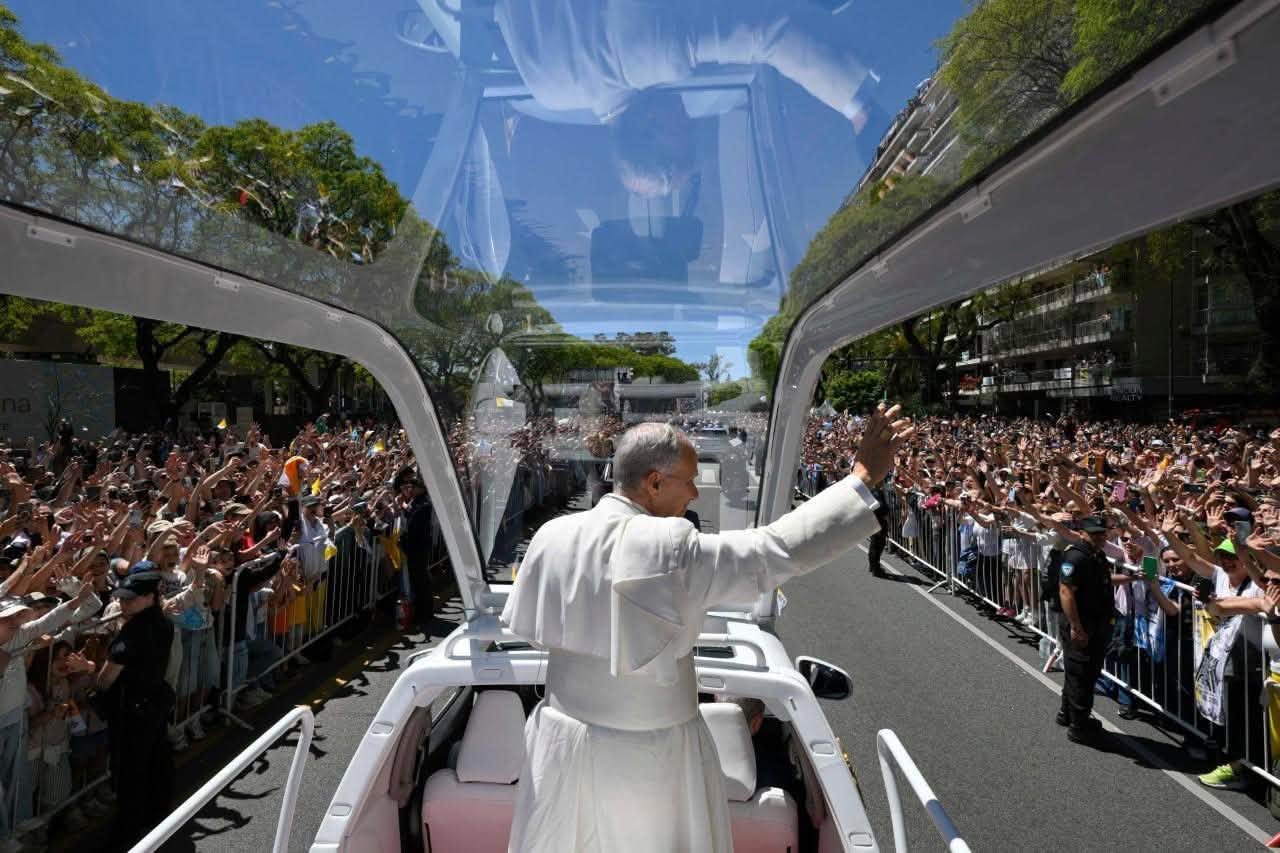
(ZENIT News / Buenos Aires, 12.11.2026).- Argentina gave Pope Leo XIV one of the largest public receptions of his pontificate, with an estimated 2.5 million people attending the Mass he celebrated in Buenos Aires on November 9, followed the next day by another 650,000 in Córdoba. The figures, which make the two celebrations extraordinary even by the standards of major papal visits, also offered a striking picture of a country eager to welcome a Pope — and, through him, to reconnect with the memory of its own son, Francis.
The Buenos Aires attendance was estimated at 2.5 million by the police, while the municipal authorities put the figure at 3 million. Neither number represents an independent count, and the estimate includes people who followed the celebration along Avenida del Libertador and surrounding streets, as well as those who gathered to see the Pope pass. Even using the lower figure, however, the Mass at the Monumento de los Españoles was the largest outdoor Eucharistic celebration in Argentine history, surpassing the approximately two million people who attended Saint John Paul II’s Mass at the same location in 1982.
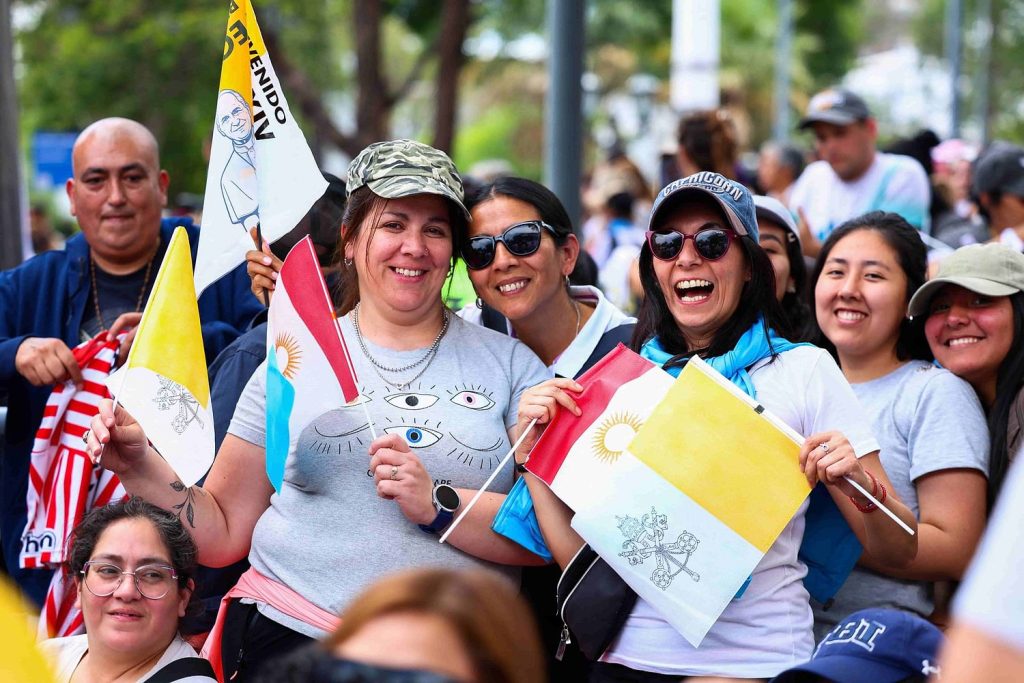
The scale of the gathering was evident long before the liturgy began. Access to the site opened at midnight, and pilgrims had spent the night waiting near the altar, erected weeks earlier in the Palermo district. November 9 had been declared a national holiday for the papal visit. Families, parish groups, young people and visitors filled the streets, many carrying Vatican and Argentine flags. More than 2,000 extraordinary ministers of Holy Communion helped distribute the Eucharist during the celebration.
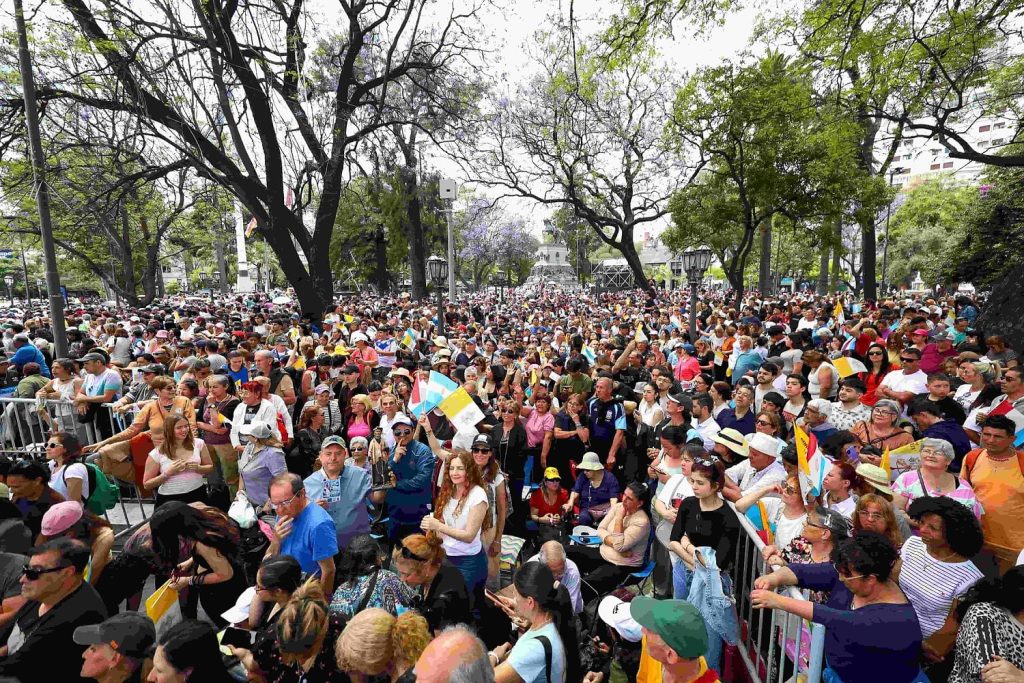
The following day, Leo travelled to Córdoba, where approximately 650,000 people gathered at the grounds of the Military Aviation School for another Mass. The figure, released by the Vatican, fell short of local authorities’ earlier expectations of up to 800,000, but still represented an exceptional turnout in a city of 1.6 million inhabitants. Many faithful had spent the night at the site to secure a place. Taken together, the two celebrations brought the reported attendance to approximately 3.15 million, using the police estimate for Buenos Aires and the Vatican figure for Córdoba.
Yet the crowds were not simply a demonstration of enthusiasm for a visiting head of the Catholic Church. For many Argentines, Leo’s presence carried an additional emotional significance: the country was welcoming a Pope in the homeland of Francis, who never returned to Argentina during his twelve-year pontificate. The applause that greeted Leo’s tribute to his predecessor during the Buenos Aires Mass suggested that the memory of the former archbishop of the city remains deeply rooted in the national Catholic imagination.
Leo used the occasion to place families at the centre of the Church’s mission. He described the family as the primary setting in which faith, human virtues, a sense of work, respect for the elderly, defence of life and fidelity to one’s word are handed on between generations. Against those who regard the Christian family as an outdated institution, he presented it instead as a source of stability amid social uncertainty, precarious employment, domestic violence, painful separations and addictions.
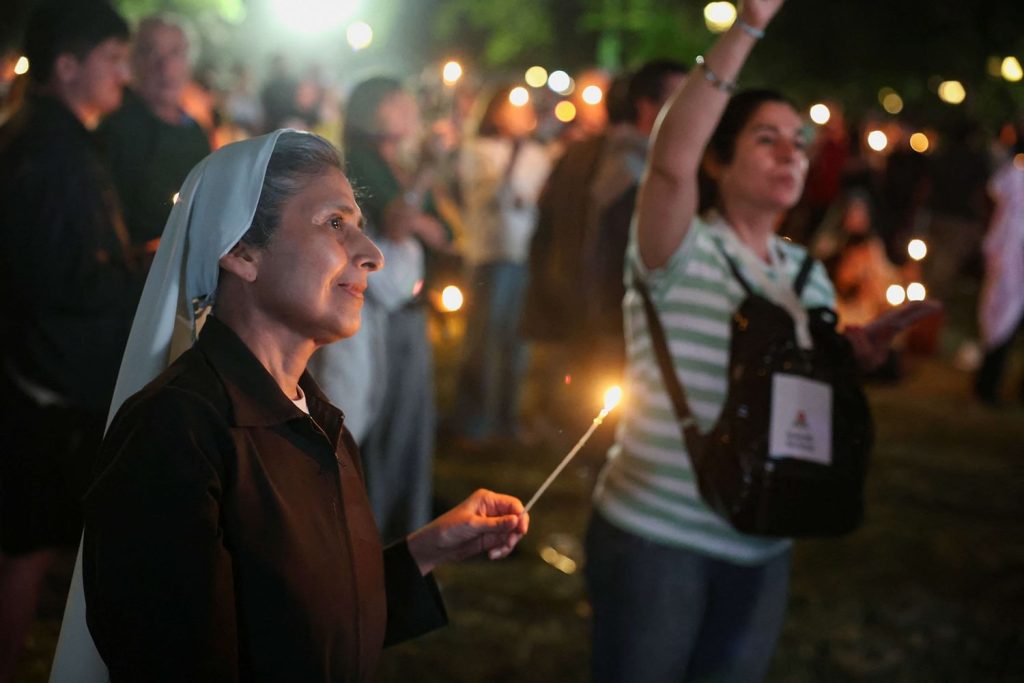
His appeal was practical as well as pastoral: family prayer, Sunday Mass, reconciliation between relatives and grandparents teaching children to pray are among the ordinary ways in which faith survives and is passed on. “The Church in Argentina needs you,” he told families, urging them to take an active role in evangelisation. It was a message that connected the enormous public gathering with the quieter life of parishes and homes, where the future of Catholicism is ultimately formed.
The Córdoba Mass brought a different emphasis. Celebrated on the feast of Saint Leo the Great, it focused on the missionary witness of Argentina’s own saints, particularly Saint José Gabriel del Rosario Brochero and Saint María Antonia de Paz y Figueroa, known as Mama Antula. Brochero, the nineteenth-century priest remembered as the “gaucho priest”, travelled through remote communities on a mule, serving the sick and neglected and bringing the Gospel to isolated populations. Having contracted leprosy while caring for others, he became a powerful symbol of pastoral dedication. Mama Antula, meanwhile, combined contemplative prayer with tireless service, travelling across the country to bring people closer to God.
Leo presented their lives not as distant examples of religious heroism, but as a responsibility handed on to contemporary Catholics. All Christians, he said, are called to holiness, and that vocation necessarily involves making Christ known to others. The Pope urged the faithful to carry that mission into ordinary settings — schools, workplaces, farms, towns and family life. His message to clergy, religious and seminarians later in Córdoba followed the same line: age and physical limitations should not extinguish missionary commitment, because the strength of God does not depend on human energy.
The visit also brought the Pope into contact with some of the country’s most vulnerable people. In Claypole, near Buenos Aires, he visited the Pequeño Cottolengo Don Orione, a residence for people with disabilities and special needs, and met residents and people struggling with addiction. He remarked that a nation’s progress can be measured by the way it welcomes those who require particular care.
On the afternoon of November 9, he also met privately for more than an hour with five people who had suffered abuse by members of the clergy or Church institutions. He listened individually to their accounts and to their proposals for strengthening protection, accompaniment and healing. The encounter was a reminder that the public celebration of Catholic faith must be matched by a serious commitment to those harmed within the Church.
Beyond the liturgies, Leo addressed Argentina’s political and economic challenges. In his first speeches in Buenos Aires, following a private meeting with President Javier Milei, he called for stronger democratic life, respectful dialogue and protection for unborn children. At the Pontifical Catholic University of Argentina, he warned that economic activity loses its human purpose when workers are valued only for efficiency and profit becomes the sole measure of success. He also cautioned that artificial intelligence and unregulated automation could threaten employment, insisting that technology must remain subordinate to ethics and human judgment.
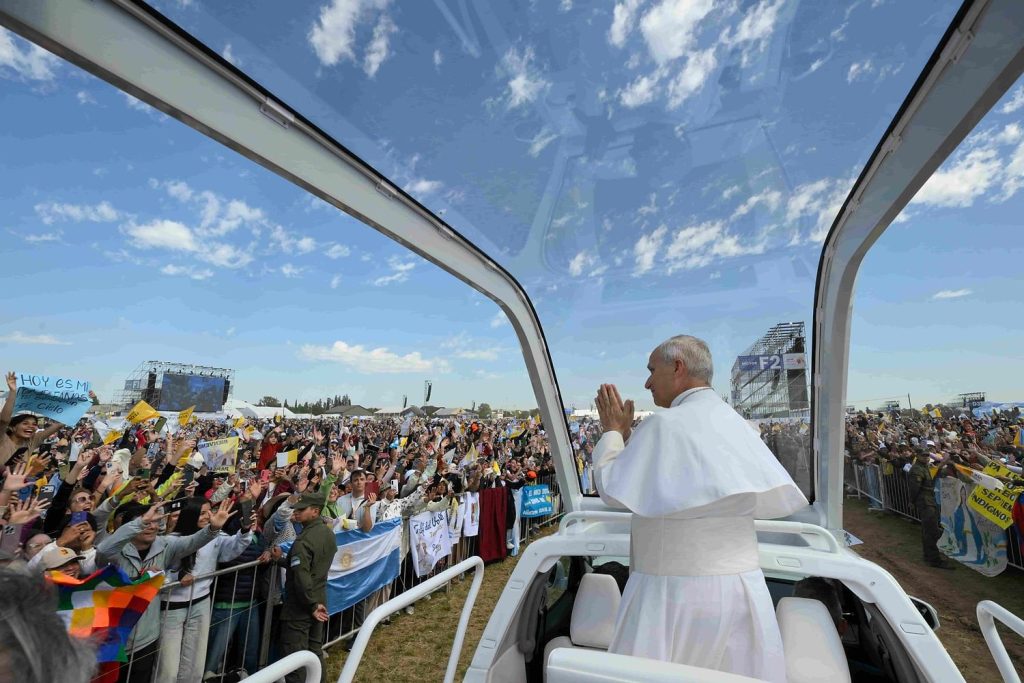
The two vast Eucharistic gatherings were therefore only the most visible part of a visit that combined popular devotion with a demanding social and spiritual message. The millions who came to see Leo XIV testified to the enduring strength of Catholic identity in Argentina, but the Pope’s challenge was not simply to celebrate that enthusiasm. He called on the country’s families, workers, clergy and political leaders to translate it into a renewed commitment to human dignity, solidarity and evangelisation.
Thank you for reading our content. If you would like to receive ZENIT’s daily e-mail news, you can subscribe for free through this link.

Publicaciones relacionadas:
 Pope Leo XIV Opens the Vatican Doors to the Only Orthodox Apostolate Accompanying Homosexual People to Live in Chastity
 Listening and Fasting: Lent as a Time of Conversion. This is what Pope Leo XIV’s first message for Lent 2026 says
 Trump Opens Another War Front: The Pope and the Vatican, Leo XIV Responds: «I Am Not Afraid of the Trump Administration»
 Pope Leo XIV calls the liturgy the “driving force of evangelization” and urges priests to respect liturgical texts and norms
