

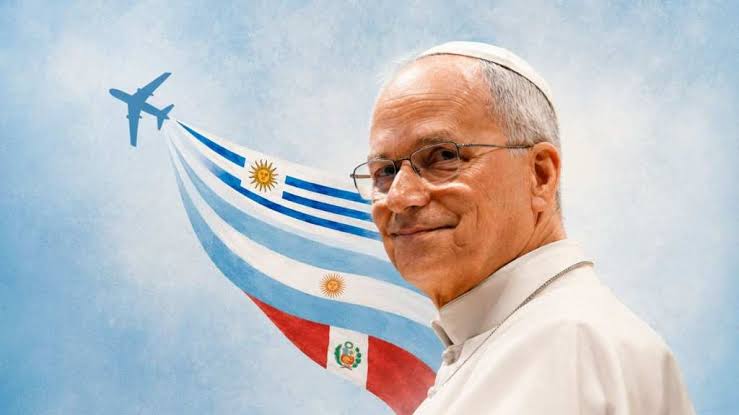
(ZENIT News / Buenos Aires, 09.30.2026).- Pope Leo XIV will arrive in Argentina on November 8 for his first visit to the country, and he will do so with something that is not always available to a visiting pope: a remarkably strong positive image among the population. A new nationwide survey found that 68.5 percent of Argentines have a good opinion of the pontiff, while only 7.2 percent view him negatively.
The figures, released on September 23 by the polling firm Zuban Córdoba, provide an early indication of the reception Leo XIV may encounter when he reaches Argentina from Uruguay. The survey was conducted from September 16 to 19 among 2,000 people across the country, with a 95 percent confidence level, according to the pollster.
The numbers are particularly notable because almost one in ten respondents, 9.7 percent, said they did not know Leo XIV, while another 14.6 percent said they did not know how to answer. In other words, the Pope’s positive rating is not simply the result of universal familiarity: among those expressing an opinion, the favorable view is substantially stronger than the unfavorable one.
There are also clear differences between age groups. Argentines over 60 gave Leo the strongest positive assessment, with 74 percent describing their view of him as good. The figure was 69.2 percent among those aged 31 to 45. Among younger respondents, aged 16 to 30, the Pope’s positive rating fell to 59.6 percent, while 16.4 percent expressed a negative view.
Gender differences were comparatively modest. A favorable opinion was reported by 71.6 percent of men and 65.9 percent of women.
The survey comes at a significant moment for Argentina, a country whose relationship with the papacy has been shaped in recent years by the presence of Jorge Mario Bergoglio, Pope Francis. Leo XIV’s visit therefore carries an unusual personal and ecclesial dimension. It will be the first time that Francis’ successor visits the country since his election to the See of Peter, and the trip will inevitably be viewed against the background of the Argentine Pope’s long absence from his homeland during his pontificate.
Leo will arrive in Argentina on November 8, after beginning his South American journey in Uruguay. He will remain until November 11, when he will continue to Peru, a country where he spent many years as an Augustinian missionary and later served as bishop of Chiclayo.
His Argentine itinerary will take him beyond Buenos Aires. The Pope is scheduled to celebrate Mass and take part in a vigil with young people in the capital, travel to Córdoba, about 750 kilometers from Buenos Aires, and conclude the visit at the Basilica of Our Lady of Luján, the national shrine dedicated to Argentina’s patroness.
Luján could provide the most striking public image of the journey. Organizers expect crowds potentially reaching one million people, particularly for the Eucharistic celebration at the basilica. Such numbers would turn the visit into not only a major Catholic event but also one of the largest public gatherings associated with Leo XIV’s pontificate.
The polling figures should nevertheless be read for what they are: a snapshot of public opinion taken several weeks before the Pope sets foot in Argentina, not a prediction of how the visit will unfold. They do, however, establish an important starting point. Leo XIV will be arriving in a country where nearly seven out of ten surveyed adults already express a favorable opinion of him, while a much smaller proportion report a negative one.
The challenge for the Pope will be to translate that broad goodwill into the encounters that define a papal journey: Masses, meetings, prayer and direct contact with Argentines of different generations and social circumstances. The November visit will show whether the favorable impression recorded in September remains an abstract opinion—or becomes a personal encounter with the new Pope.
Thank you for reading our content. If you would like to receive ZENIT’s daily e-mail news, you can subscribe for free through this link.

Publicaciones relacionadas:
 “Live Your Spirituality Without Ever Separating Yourselves from the Rest of the Ecclesial Body”: Pope Leo XIV to the Neocatechumenal Way
 Some reflections on the close connection between the truth of justice and the virtue of charity, according to Leo XIV
 Pope Leo XIV Opens the Vatican Doors to the Only Orthodox Apostolate Accompanying Homosexual People to Live in Chastity
 Listening and Fasting: Lent as a Time of Conversion. This is what Pope Leo XIV’s first message for Lent 2026 says
