

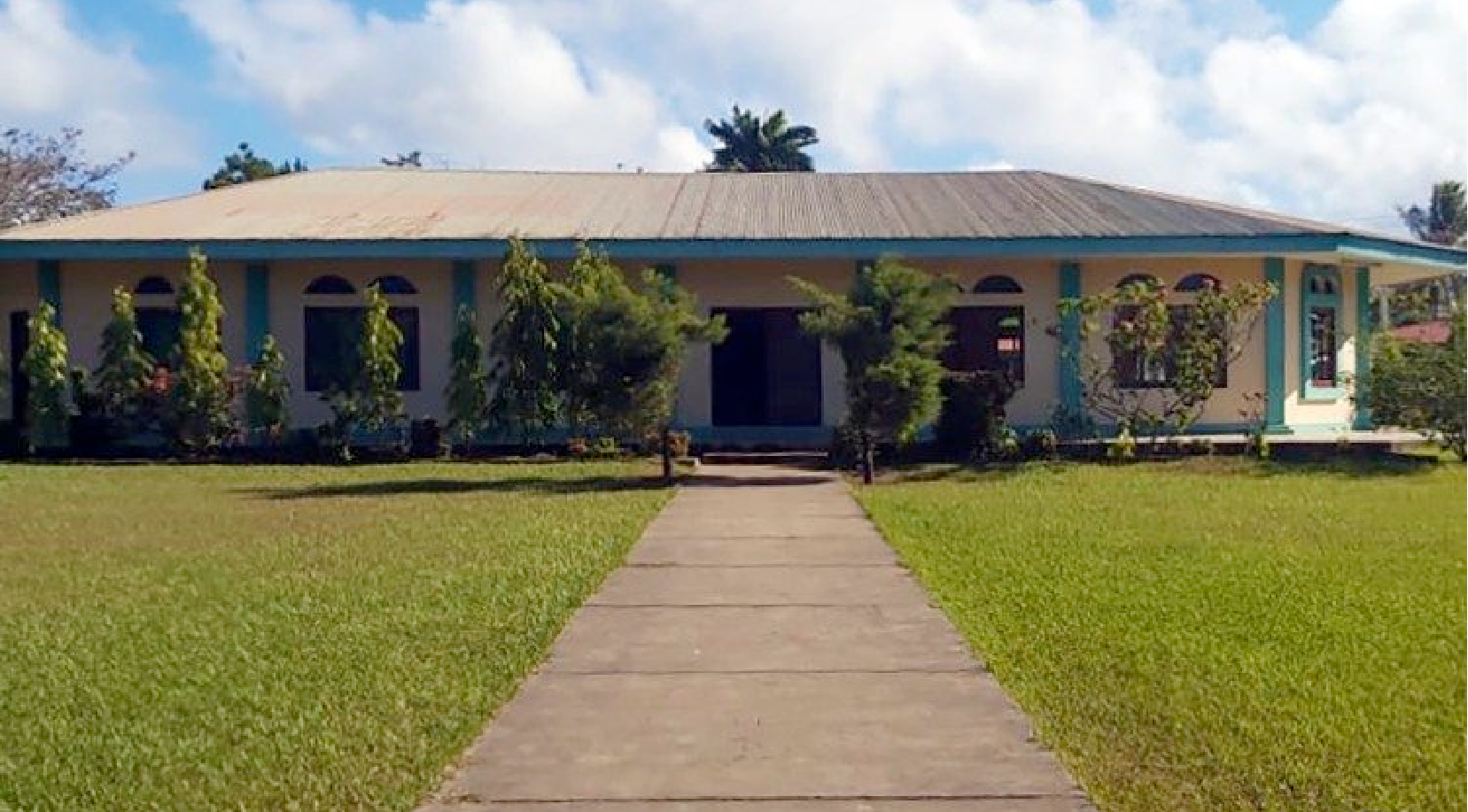
(ZENIT News / Managua, 08.15.2025).- The seizure of the San José boarding school in Jinotepe, once a hallmark of Catholic education in Nicaragua’s Carazo region, is not an isolated event—it is the latest in a methodical dismantling of the Church’s institutional presence under President Daniel Ortega and Vice President Rosario Murillo.
For 40 years, the school was run by the Sisters of St. Joseph, whose congregation arrived in Nicaragua in 1915. Generations of students passed through its classrooms, receiving an education rooted in Christian faith, charity, and humanist values. Now, after a government decree, the school has been renamed the “Bismarck Martínez Educational Center,” in honor of a Sandinista militant killed during the 2018 anti-government protests.
The renaming is more than symbolic—it reframes the school’s history through the lens of the ruling party. Murillo has accused the sisters of complicity in acts of torture and murder against Sandinista supporters during those protests, claims widely rejected by religious observers. Martha Patricia Molina, a researcher on religious freedom in Nicaragua, denounced the charges as baseless defamation, arguing that the sisters have been consistent in their mission of service since the early 20th century.
The confiscation drew immediate international condemnation. The U.S. State Department’s Bureau of Western Hemisphere Affairs called it “further proof that the cruelty of the Murillo-Ortega dictatorship knows no bounds.” But Washington’s outrage is unlikely to slow the trend.
In January, authorities expropriated the San Luis Gonzaga seminary in Matagalpa and the La Cartuja retreat center. In the years before, dozens of Catholic radio stations were shut down, clergy were arrested or expelled, and religious processions were banned. The escalation began after the Church mediated national dialogue talks in 2018—talks that collapsed when government forces violently repressed protests, leaving hundreds dead.
The pattern bears echoes of earlier moments in Latin American history when governments saw the Church as a rival power. In 19th-century Mexico, liberal reforms stripped the Church of its lands; in Cuba after 1959, religious orders were expelled and their schools nationalized. In each case, the move was framed as an act of sovereignty but functioned as a means of ideological control.
Today in Nicaragua, the dynamic is similar: by dismantling Church institutions, the state seeks to weaken the Church’s capacity to form new generations, speak publicly on moral issues, and serve as an independent source of authority. The San José school, with its decades of community trust, represented precisely the kind of influence the Ortega-Murillo administration no longer tolerates.
For the people of Jinotepe, the confiscation is a wound not just to the Church, but to civic memory. While the government has changed the sign at the entrance, the stories of what the Sisters built—quiet acts of service, lessons in faith, and care for the vulnerable—will continue to circulate. History suggests such memories, though repressed, have a way of resurfacing when political tides turn.
Thank you for reading our content. If you would like to receive ZENIT’s daily e-mail news, you can subscribe for free through this link.

Publicaciones relacionadas:
 Nicaraguan Dictatorship Expropriates Two Universities of the Church and Sanctions Caritas Harshly
 Nigeria: church ‘always full’ two years after massacre despite lack of justice
 Nicaraguan dictatorship imposes taxes on Catholic Church donations
 Record year for fires targeting Catholic churches: justice system investigates new fire at iconic Parisian parish
