

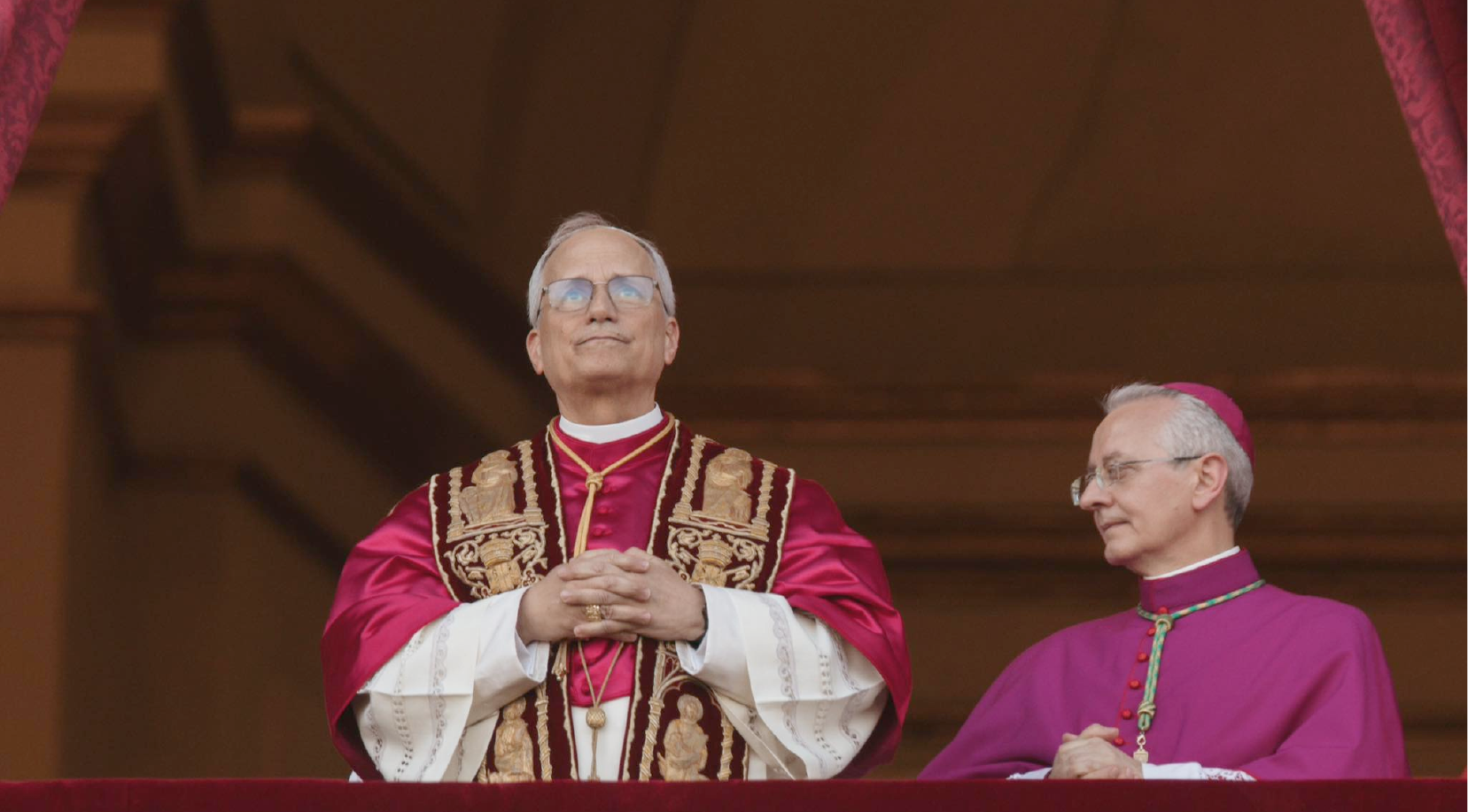
(ZENIT News / Rome, 12.14.2025).- High fashion rarely turns its gaze toward the Apostolic Palace, yet in 2025 the worlds of couture and Catholic ritual briefly converged. Vogue’s American edition included Pope Leo XIV among its list of the year’s best-dressed figures, placing the Bishop of Rome alongside global celebrities, artists, and cultural tastemakers. The choice was not framed as a novelty act, but as recognition of a visual language that blends tradition, symbolism, and personal vision.
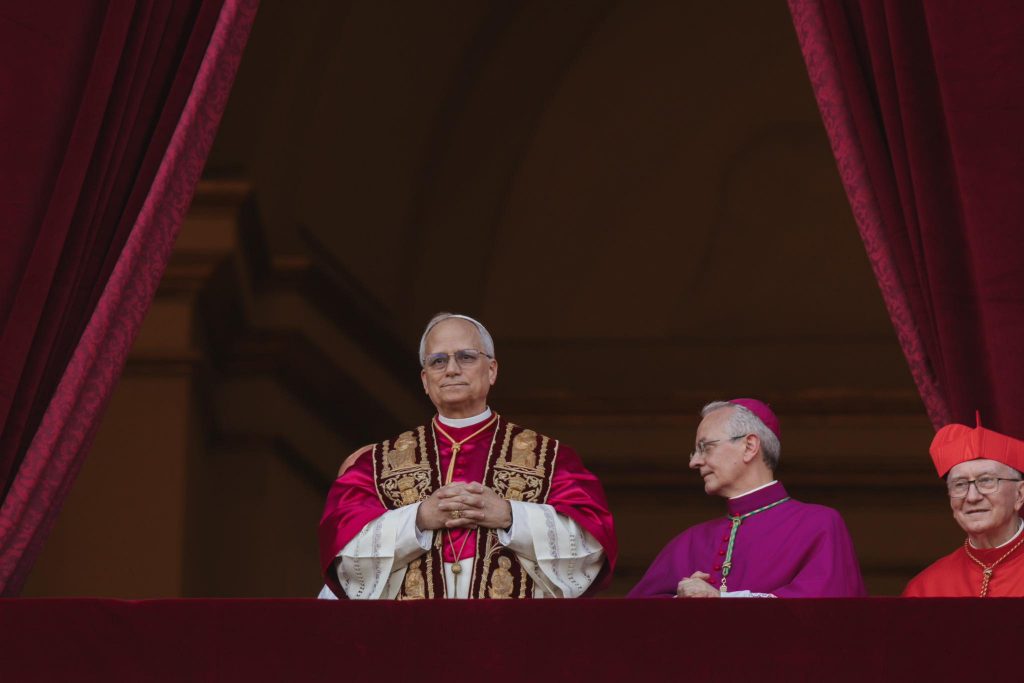
According to Vogue, Leo XIV represents a clear stylistic departure from the «austere» preferences of his predecessor, Pope Francis. Yet the magazine also notes a paradox at the heart of the new pontiff’s image: rather than reinventing papal attire from scratch, he has preserved the Vatican’s historic tailoring tradition, maintaining continuity in the craftsmanship of liturgical garments. In doing so, Leo XIV has positioned himself not as a fashion disruptor, but as a careful interpreter of an inherited aesthetic.
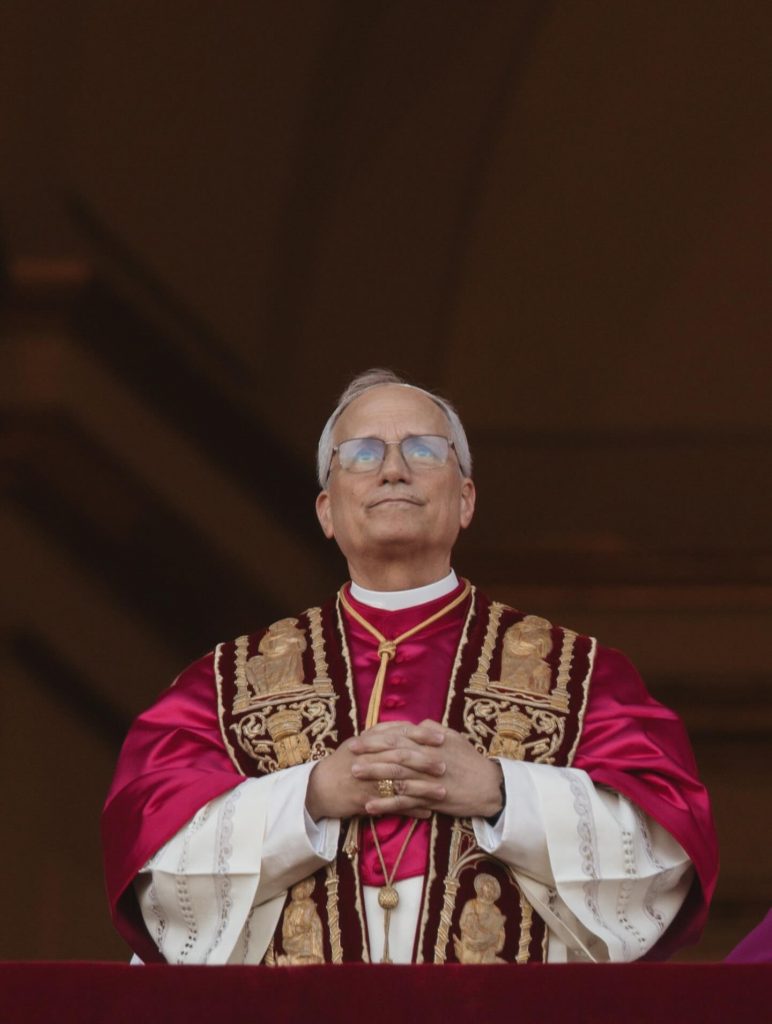
Central to that interpretation is Italian designer Filippo Sorcinelli, founder and creative director of the liturgical atelier LAVS. Sorcinelli is no stranger to the Vatican, having collaborated with previous pontiffs, including Benedict XVI. His background is unusually multifaceted: beyond sacred vestments, he composes and performs sacred music, builds perfumes, and is trained as an organist. His work for Leo XIV has drawn attention not for flamboyance, but for its deliberate richness—velvet textures, gold-thread embroidery, and carefully balanced proportions.
Vogue singled out the pope’s first public appearance after his election as the defining image of his papacy’s visual identity. Standing on the central loggia of St. Peter’s Basilica, Leo XIV wore a red satin mozzetta and a wine-colored stole embroidered in gold, completed by a pectoral cross suspended from a golden silk cord. Broadcast to millions, the moment carried the weight of ritual and history, while simultaneously signaling a renewed confidence in the expressive power of liturgical dress.
For Sorcinelli, such garments are never merely decorative. He describes sacred vestments as part of a living tradition, one that continuously renews itself without severing its roots. Some pieces are passed down from pope to pope, accumulating what he calls a shared memory. Others are conceived for a single, unrepeatable moment, designed to embody an event that will never occur again in quite the same way. In his view, every pontificate leaves a trace, and the vestments silently record those spiritual and personal choices.
Preparing clothing for a pope, Sorcinelli explains, means assuming the weight of centuries. Each stitch enters what he describes as a universal memory, linking past, present, and future. The Vatican, in his words, is a place where stone seems to breathe and liturgy gives form to time itself. To work there is to participate in a current that flows across generations, demanding beauty not as luxury, but as responsibility.
His philosophy was shaped early on, beginning with a chasuble he made for a friend at his ordination. From that first piece, Sorcinelli became convinced that sacred garments require both technical mastery and spiritual awareness. Any flaw, he insists, becomes immediately visible. Precision, respect for proportion, and an almost obsessive care for detail are not optional, because the fabric is meant to translate an act of faith into visible form.
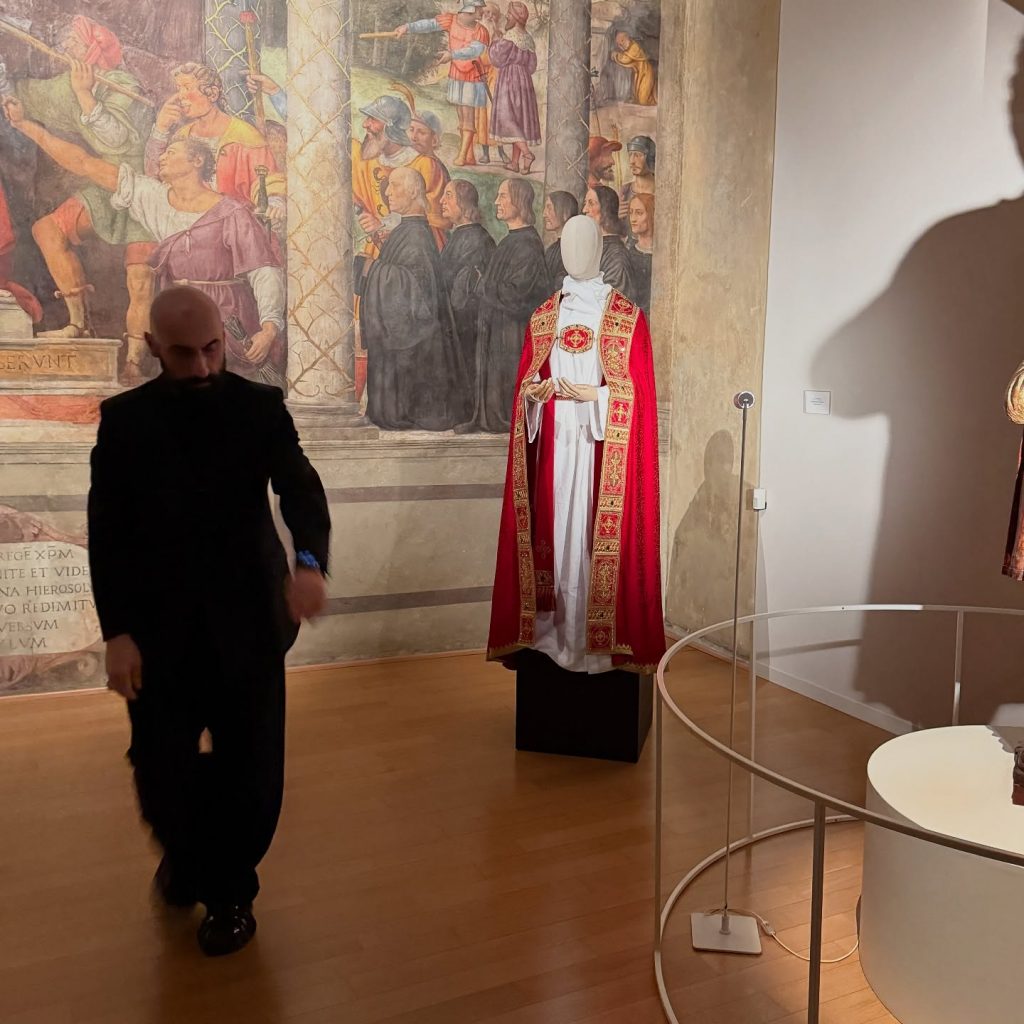
Sorcinelli’s prominence in ecclesiastical circles is all the more striking given his personal profile. Openly gay and visibly tattooed, he does not conform to the stereotypes often associated with Vatican artisans. He speaks candidly about his sexuality as an integral part of his identity and, by extension, of his creativity. While acknowledging moments of rigidity and suspicion, he maintains that beauty has consistently proven stronger than prejudice, allowing his work to speak where words might fail.
The inclusion of Pope Leo XIV in Vogue’s annual ranking—alongside figures such as Michelle Obama, Rihanna, and Cate Blanchett—reflects more than an appreciation of fine tailoring. It highlights how religious symbolism continues to resonate within contemporary culture, even in secular spaces. In Leo XIV’s case, vestments have become a form of dialogue: between tradition and modernity, faith and aesthetics, continuity and personal expression.
In a year dominated by celebrity style and cultural spectacle, the image of a pope in carefully crafted liturgical attire managed to stand out. Not because it chased fashion, but because it reminded a global audience that, in certain settings, clothing still carries the weight of history, belief, and meaning.
Thank you for reading our content. If you would like to receive ZENIT’s daily e-mail news, you can subscribe for free through this link.

Publicaciones relacionadas:
 Pope Leo XIV grants his first “doctorate”: this is the saint named the 38th Doctor of the Church
 This is the 197-inch sculpture dedicated to Pope Leo XIV in his former Peruvian diocese
 Here’s what you need to know about the new “Google of the Vatican”: the Pontifical Yearbook Online blessed by Pope Leo XIV
 Photo Gallery: Leo XIV Now Has An Official Mosaic to Enrich St. Paul’s Basilica, and This Is How He Reacted When It Was Shown to Him
