

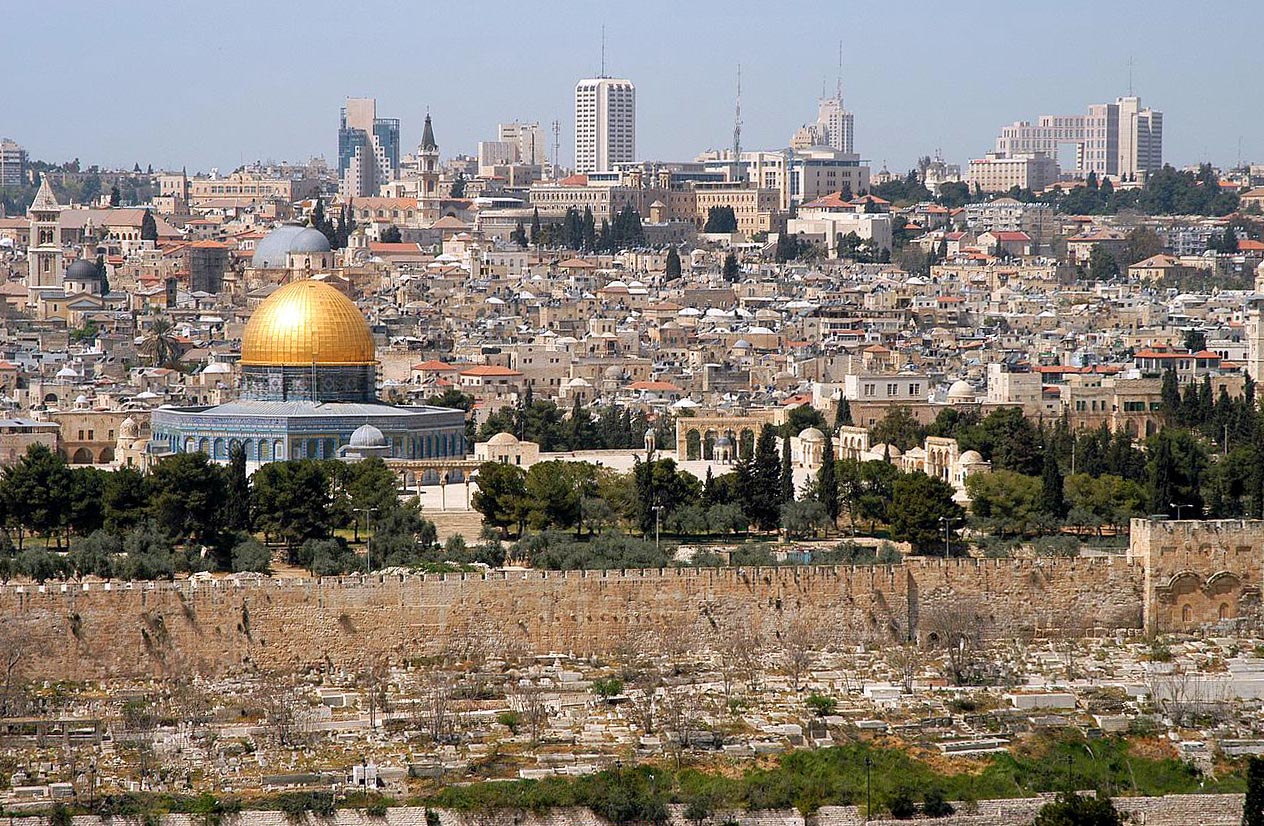
(ZENIT News / Jerusalem, 08.14.2025).- In streets of Jerusalem’s Old City, the newly formed Association of Hebrew Catholics has formally launched, offering Jewish converts to Catholicism a place to embrace their new faith without surrendering the heritage that shaped them.
The inaugural celebration took place on August 8, the eve of the feast of St. Edith Stein — the Carmelite nun of Jewish origin who became a patron saint for Hebrew Catholics. A liturgy was led by Syriac Catholic Archbishop Yaacoub Camil Afram Antoine in the Church of St. Thomas, a modest stone sanctuary tucked away from Jerusalem’s bustling markets.
Around thirty people attended, but the occasion carried the weight of something far larger. At the center stood Yarden Zelivansky, a Jewish-born Catholic serving in the Israel Defense Forces, whose vision has driven the project from its inception. His goal, he says, is not to blur lines but to create a bridge: a community where Jewish cultural life and Catholic spirituality can be lived side by side.
The association’s chosen local patron is St. Angelus of Jerusalem, a medieval Jewish convert and Carmelite missionary, emblematic of the deep Carmelite thread running through Hebrew Catholic history. Its roots trace back to the work of Father Elias Friedman, a fellow convert who made his home at Stella Maris Monastery on Mount Carmel and first conceived the idea of a worldwide network for Jews within the Catholic Church.
While the association will not establish parishes or administer sacraments — duties already handled by the Vicariate of St. James under the Latin Patriarchate — it intends to focus on cultural and spiritual formation. Plans include celebrating both the major feasts of the Church and the great festivals of Judaism, reinterpreted through what Zelivansky calls “the light of Christ” to highlight their messianic fulfillment. Programs will be multilingual, reflecting the diverse makeup of Hebrew Catholics, with activities in Hebrew, Russian, and other languages.
This initiative enjoys the blessing of senior church leaders, including Cardinal Pierbattista Pizzaballa, the Latin Patriarch of Jerusalem, who met personally with Zelivansky for what the founder describes as a “deep conversation on theology and the role of Jewish converts.” Yet Zelivansky is candid about the challenges ahead. He expects a muted reaction from secular Jews and possible resistance from more observant circles — not because of Catholic beliefs in general, but because of the sensitive reality of Jewish conversion.
For him, the project’s purpose is not proselytism but accompaniment: helping those already within the Church to live a faith that fully integrates their Jewish identity. In his view, the significance could be historic. “For centuries, many Jews rejected Christianity not only for its theology but because it demanded assimilation into an alien culture. Remaining fully Jewish while being fully Catholic — that is both the challenge and the gift,” he says.
Zelivansky draws parallels with the Church’s ability to inculturate the Gospel across continents and centuries, whether in the rituals of African Catholicism or the liturgical melodies of the Maronites. The difference, he suggests, is that Hebrew Catholics have often been denied this same dignity of integration.
In a city where faith identities are both sharply defined and deeply intertwined, the association is setting out to inhabit a rare space: a place where ancient Jewish customs and the Catholic creed do not cancel each other out but enrich one another. Its success will depend on whether it can offer a spiritual home that is both entirely Catholic and unmistakably Jewish — a delicate balance, but one its founders believe the Church is ready to embrace.
Thank you for reading our content. If you would like to receive ZENIT’s daily e-mail news, you can subscribe for free through this link.

Publicaciones relacionadas:
 Situation in Israel and Gaza raises fears of migration wave also in Iraq
 China: Guidelines Instruct Religions How to Implement the New Patriotic Education Law
 The Jewish State of Israel Bombs Catholic Church in Gaza: Parish Priest Wounded, Pope Leo XIV Speaks Out
 Photo gallery: This is how the traditional celebration of the Baptism of Christ in the Jordan River was held
