

(ZENIT News / Rome, 10.24.2025).- On October 28, exactly sixty years after the promulgation of Gravissimum Educationis, the Pope will release a new document on Catholic education, the Vatican confirmed through Cardinal José Tolentino de Mendonça, prefect of the Dicastery for Culture and Education. Speaking at a press briefing on October 22, the cardinal described the forthcoming text as both a commemoration and a renewal—a bridge between the Council’s vision and the challenges of an age defined by fragmentation, digital saturation, and moral uncertainty.
The release will coincide with the Jubilee of the World of Education, a global gathering in Rome from October 27 to November 1, which has already drawn registrations from over 20,000 participants representing 124 countries. The event is designed to celebrate the Catholic Church’s enduring commitment to education—from the parish classroom to the university lecture hall—and to rediscover the spiritual depth of learning in an era that often measures knowledge only by its utility.
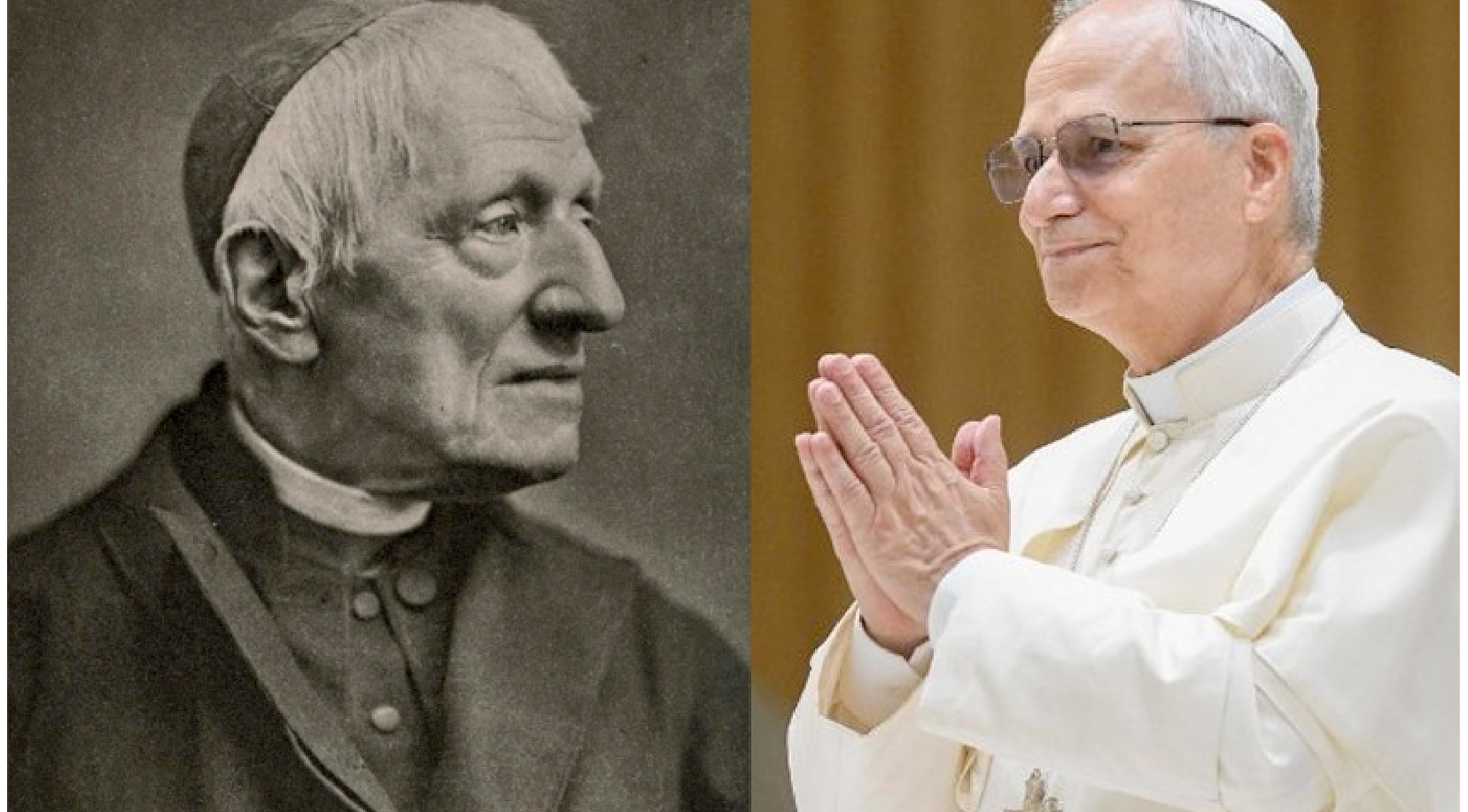
One of the most symbolic gestures accompanying this new phase is the Pope’s decision to name Saint John Henry Newman as co-patron of Catholic education, alongside Saint Thomas Aquinas. Newman, the 19th-century English theologian, philosopher, and convert, will also be declared a Doctor of the Church on November 1, joining a select group of figures whose thought has shaped the heart of Catholic intellectual life.
Cardinal Tolentino said the choice of Newman is no accident: his lifelong meditation on the unity of faith and reason—and his conviction that knowledge without conscience leads to emptiness—resonates profoundly in a world struggling to reconcile information with wisdom. “Newman understood that the university, like the Church itself, is not merely a factory of knowledge,” Tolentino explained, “but a community where truth becomes personal, relational, and transformative.”
Gravissimum Educationis, issued on October 28, 1965, was one of Vatican II’s shortest yet most forward-looking documents. It affirmed the universal right to education, defended parents’ freedom to choose the kind of schooling their children receive, and insisted that Catholic institutions must foster not indoctrination but integral human formation. Pope Leo’s forthcoming text, according to Tolentino, seeks to extend that vision into the 21st century, where education has become both more accessible and more precarious.
“The rapid and profound changes of our time,” the new document states, “expose children, adolescents, and young adults to unprecedented vulnerabilities. It is no longer enough to preserve what exists; we must relaunch.”
The Pope’s message, the cardinal suggested, will emphasize the idea of schools not merely as institutions but as “educational communities”—places where knowledge is reconnected with meaning, competence with responsibility, and faith with life. It is a call to move beyond sterile metrics and to rediscover the soul of education as a human and spiritual endeavor.
In a world where artificial intelligence can replicate information but not wisdom, and where education is increasingly commodified, Pope Leo’s initiative signals an insistence that Catholic education must remain a space of encounter—where students learn not only how to think, but why.
For the Vatican, the timing is deliberate. The Church’s educational network remains one of the largest in the world, with tens of millions of students across thousands of institutions. Yet many Catholic schools and universities face existential questions: how to maintain identity amid secular pressures, how to ensure inclusion without dilution, and how to speak credibly to generations shaped by distrust of institutions.
By revisiting the Council’s insights, the new document appears to seek a path of renewal grounded not in nostalgia but in courage. The cardinal summarized its spirit in one phrase: “The value of Gravissimum Educationis is not frozen in time—it remains a compass pointing the way forward.”
If Saint Thomas Aquinas once defined the foundations of Catholic thought and Newman traced its modern conscience, Pope Leo’s gesture suggests a desire to unite their legacies for today’s world: a synthesis of clarity and compassion, of intellect and faith.
Thank you for reading our content. If you would like to receive ZENIT’s daily e-mail news, you can subscribe for free through this link.

Publicaciones relacionadas:
 Mystical Phenomena and Holiness Explained by Pope Leo XIV
 Pope Leo XIV grants his first “doctorate”: this is the saint named the 38th Doctor of the Church
 A New Phase in the Leonine Pontificate: Pope Reshapes His Inner Circle with a Surprising Appointment
 Leo XIV perfects the mission of the Pontifical Academy for Life
