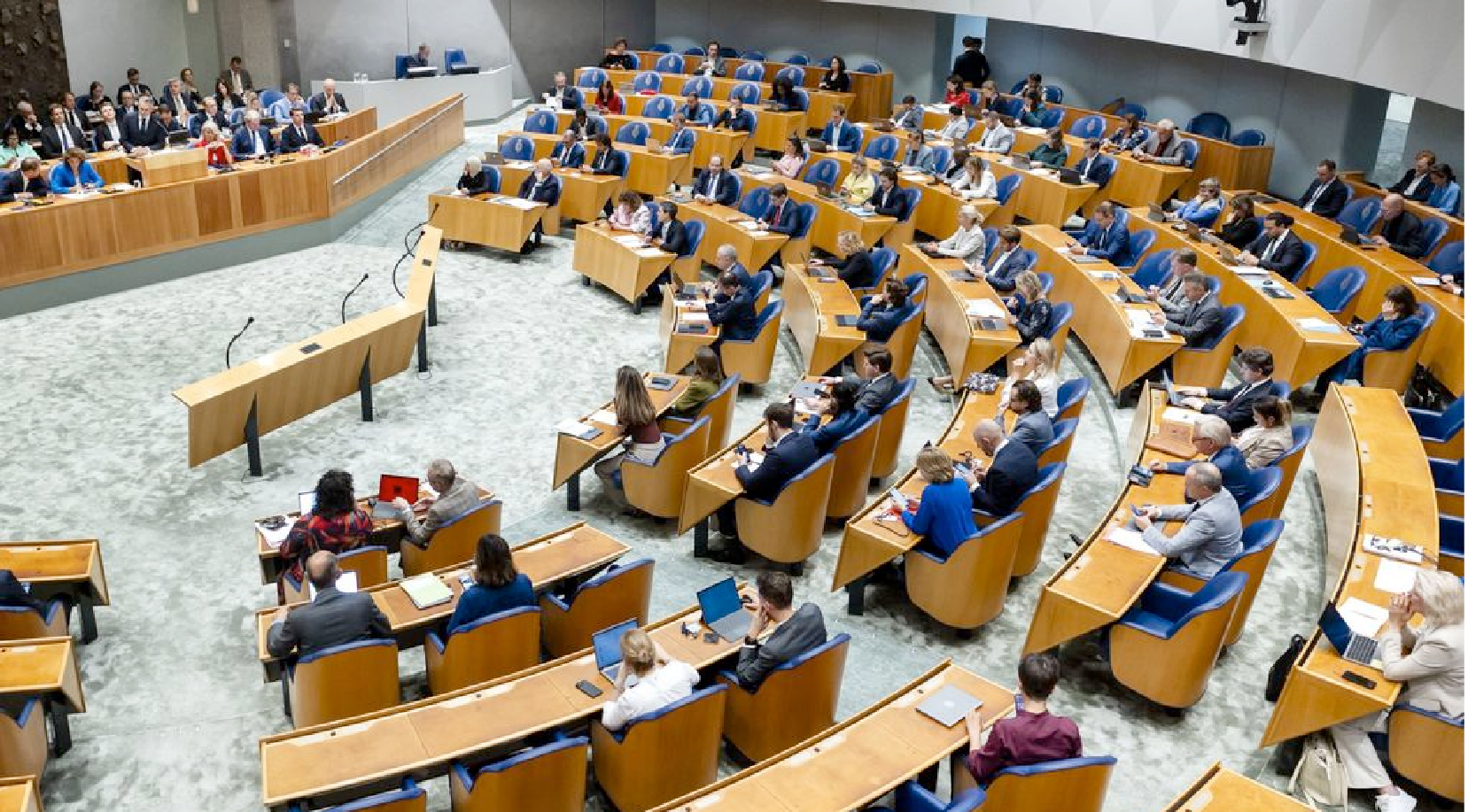
(ZENIT News / The Hague, 09.30.2025).- The Dutch House of Representatives has narrowly rejected a proposal that would have placed the Netherlands at the forefront of European efforts to enshrine abortion as a human right. The motion, tabled by members of the liberal D66 party, urged the government to work with like-minded states to secure the inclusion of abortion rights in the EU Charter of Fundamental Rights and the International Covenant on Civil and Political Rights.
Although the Dutch cabinet welcomed the initiative, the numbers fell short. Sixty-eight deputies—ranging from liberals to social democrats—voted in favor, but the resolution was ultimately defeated in the 150-seat chamber. For supporters, it was a missed chance to align national policy with the European Parliament, which in April 2024 endorsed recognition of abortion as a fundamental right, echoing France’s decision to add it to its Constitution.
Opposition parties with Christian roots played a decisive role. The Reformed Political Party (SGP), joined by the Christian Union and Forum for Democracy, argued that the proposal risked elevating abortion to a status that would silence conscience objections and weaken protections for unborn life. Their alternative motion, calling on the government to resist any EU push to codify abortion in international treaties, is expected to be voted on in the coming weeks and may gather stronger support.
Tuesday’s (septembre 23) debate highlighted the patchwork of Dutch political attitudes. While motions aimed at reducing the number of abortions or tightening the legal deadline were rejected, the chamber did approve a resolution requiring that victims of sexual violence receive access to emergency care, including abortion services. Only three parties—PVV, SGP, and CU—voted against it.
A separate development stirred ethical debate beyond the abortion question. In response to concerns raised by the UN Committee on the Rights of Persons with Disabilities, the House narrowly passed an SGP motion urging the government to address the stigmatizing impact of widespread prenatal testing. The committee warned last year that the routine use of non-invasive tests in the Netherlands fosters discriminatory attitudes toward people with disabilities by implicitly encouraging the termination of affected pregnancies. That motion, unlike the abortion resolution, carried by a majority of 76 votes.
The session exposed a paradox within Dutch politics: while the country is often cast as a vanguard of liberal social policy, it is also home to a robust Christian minority that resists further expansion of abortion rights. For some lawmakers, defending the unborn remains inseparable from defending human dignity itself. For others, safeguarding abortion as a right is viewed as essential to protecting women’s autonomy.
The coming vote on the counter-resolution will test whether the Netherlands charts a path closer to France and the European Parliament, or whether it joins the ranks of states insisting that Brussels has no mandate to define abortion as a fundamental human right. Either way, the debate underscores how deeply questions of life, faith, and sovereignty continue to divide not only the Netherlands, but Europe itself.
Thank you for reading our content. If you would like to receive ZENIT’s daily e-mail news, you can subscribe for free through this link.