

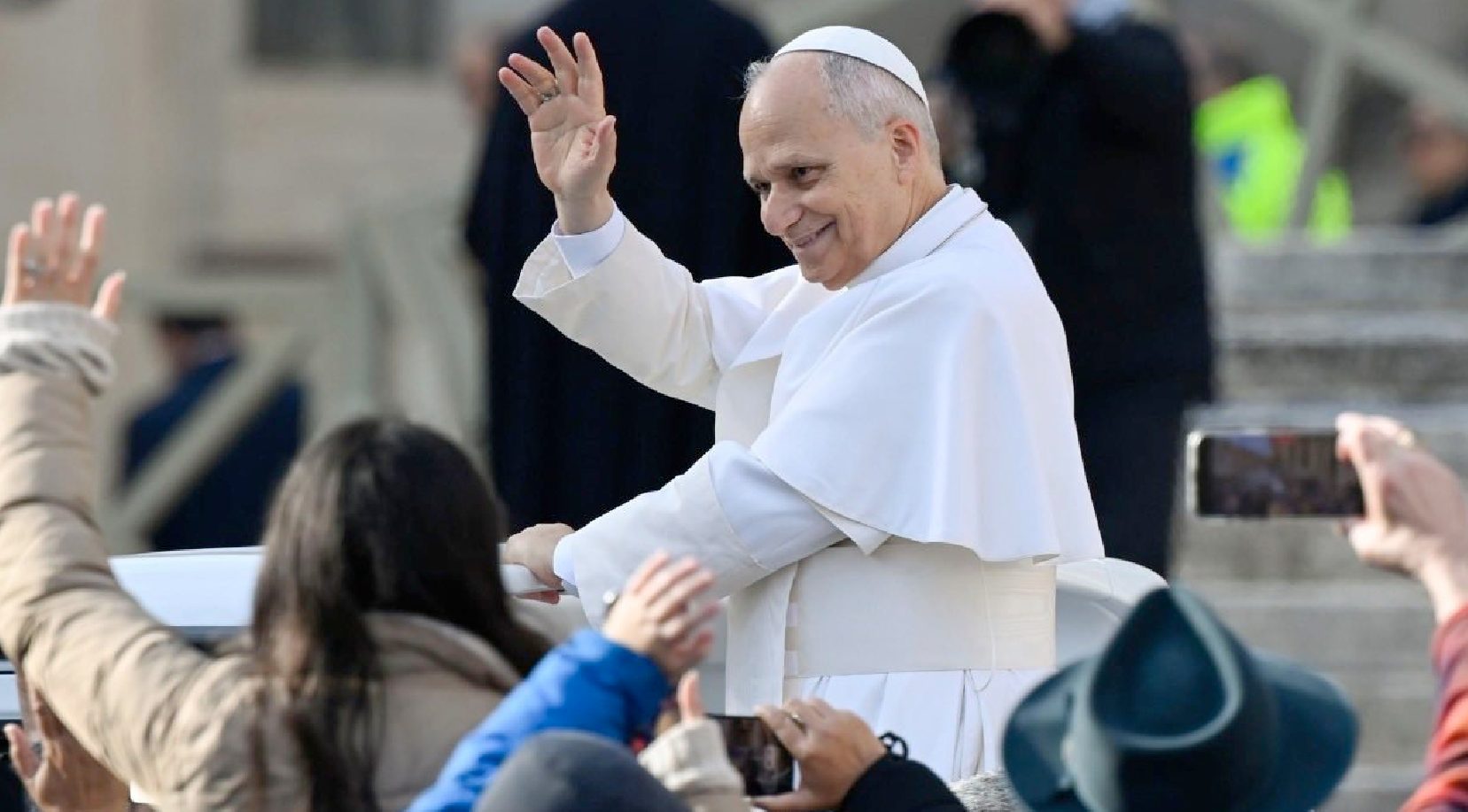
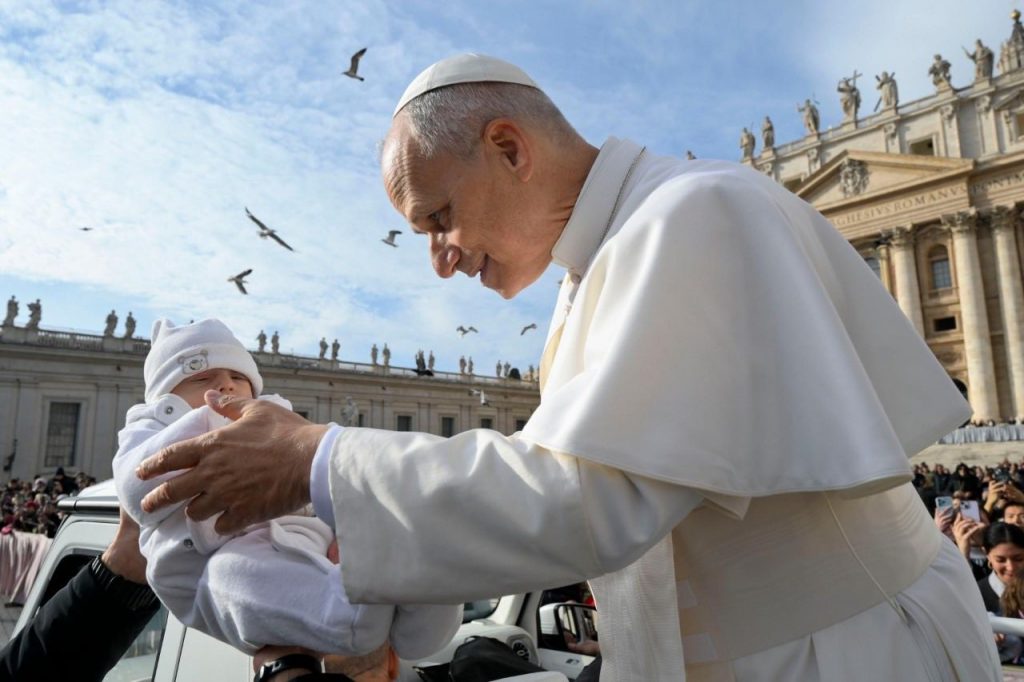
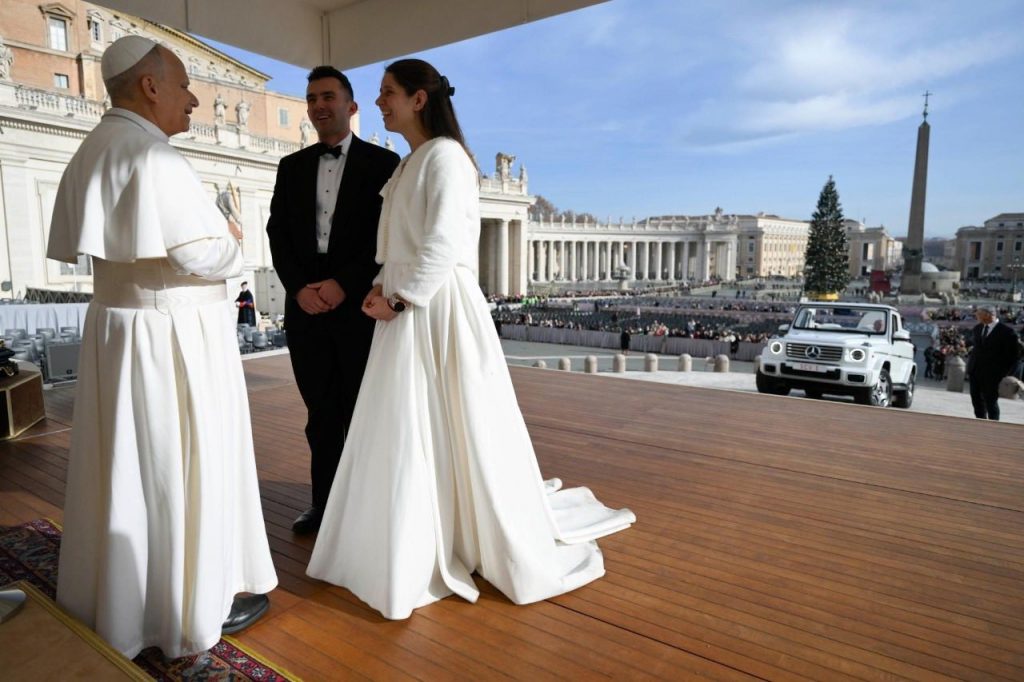
(ZENIT News / Vatican City, 12.20.2025).- On the morning of Saturday, December 20, Pope Leo XIV presided over the last jubilee audience of the holy year. We are referring to those that the Pope granted exceptionally on Saturdays during 2025, adding a second day to those he usually grants on Wednesdays. For the first time since Leo XIV began his ministry, St. Peter’s Square was not very crowded. This was possibly due to both the drop in temperature and the smaller number of pilgrims. We offer the English translation of the Holy Father’s catechesis:
***
Dear brothers and sisters, good morning and welcome!
When Christmas is upon us, we can say: the Lord is near! Without Jesus, this statement – the Lord is near – could sound almost like a threat. In Jesus, however, we discover that, as the prophets had intuited, God is a womb of mercy. The Child Jesus reveals to us that God has a heart of mercy, through which he always gives life. In him there is no threat, but forgiveness.
Dear friends, today is the last of the Saturday Jubilee audiences, initiated last January by Pope Francis. The Jubilee is coming to an end; however, the hope that this Year has given us does not finish: we will continue to be pilgrims of hope! We heard from Saint Paul: “For in this hope we were saved” (Rm 8:24). Without hope, we are dead; with hope, we come to the light. Hope is generative. Indeed, it is a theological virtue, that is, a strength of God, and as such it does not kill, but gives birth and rebirth. This is true strength. What threatens and kills is not strength: it is arrogance, it is aggressive fear, it is evil that does not generate anything. The strength of God gives birth. This is why I would like to say to you, finally: to hope is to generate.
Saint Paul writes to the Christians of Rome something that makes us think: “We know that the whole creation has been groaning in travail together until now” (Rm 8:22). It is a very powerful image. It helps us to listen to and bring to prayer the cry of the earth and the cry of the poor. “All together”, creation is a cry. But many powerful people do not hear this cry: the wealth of the earth is in the hands of a few, very few, increasingly concentrated – unjustly – in the hands of those who often do not want to hear the groaning of the earth and the poor. God destined all the goods of creation for everyone to share in them. Our task is to generate, not to steal. Yet, in faith, the pain of the earth and the poor is that of childbirth. God always generates, God still creates, and we can generate with Him, in hope. History is in the hands of God and those who hope in Him. There are not only those who steal, there are above all those who generate.
Sisters and brothers, if Christian prayer is so deeply Marian, it is because in Mary of Nazareth we see one of us who generates. God made her fruitful and came towards us with her features, just as every son resembles his mother. She is the Mother of God, and our Mother. “Out hope”, we say in the Salve Regina. She resembes the Son, and the Son resembles her. And we resemble this Mother who gave a face, a body, a voice to the Word of God. We resemble her, because we can generate the Word of God here below, transforming the cry we hear into a birth. Jesus wants to be born again: we can give him body and voice. This is the birth that creation awaits.
To hope is to generate. To hope is to see this world become God’s world: the world in which God, human beings and all creatures walk together again, in the garden city, the new Jerusalem. May Mary, our hope, always accompany our pilgrimage of faith and hope.
Thank you for reading our content. If you would like to receive ZENIT’s daily e-mail news, you can subscribe for free through this link.

Publicaciones relacionadas:
 Jesus’ Education of the Gaze and Keeping Opposites Together: Leo XIV’s Beautiful Catechesis for the Church
 Pope asks to define principles, norms, and guidelines for Latin rite priests accompanying Eastern rite Catholics arriving in the West
 How can Christ’s resurrection cure the sickness of sadness? Pope Leo XIV answers
 In what sense is the Bible the Word of God in human words? Pope Leo XIV responds
