

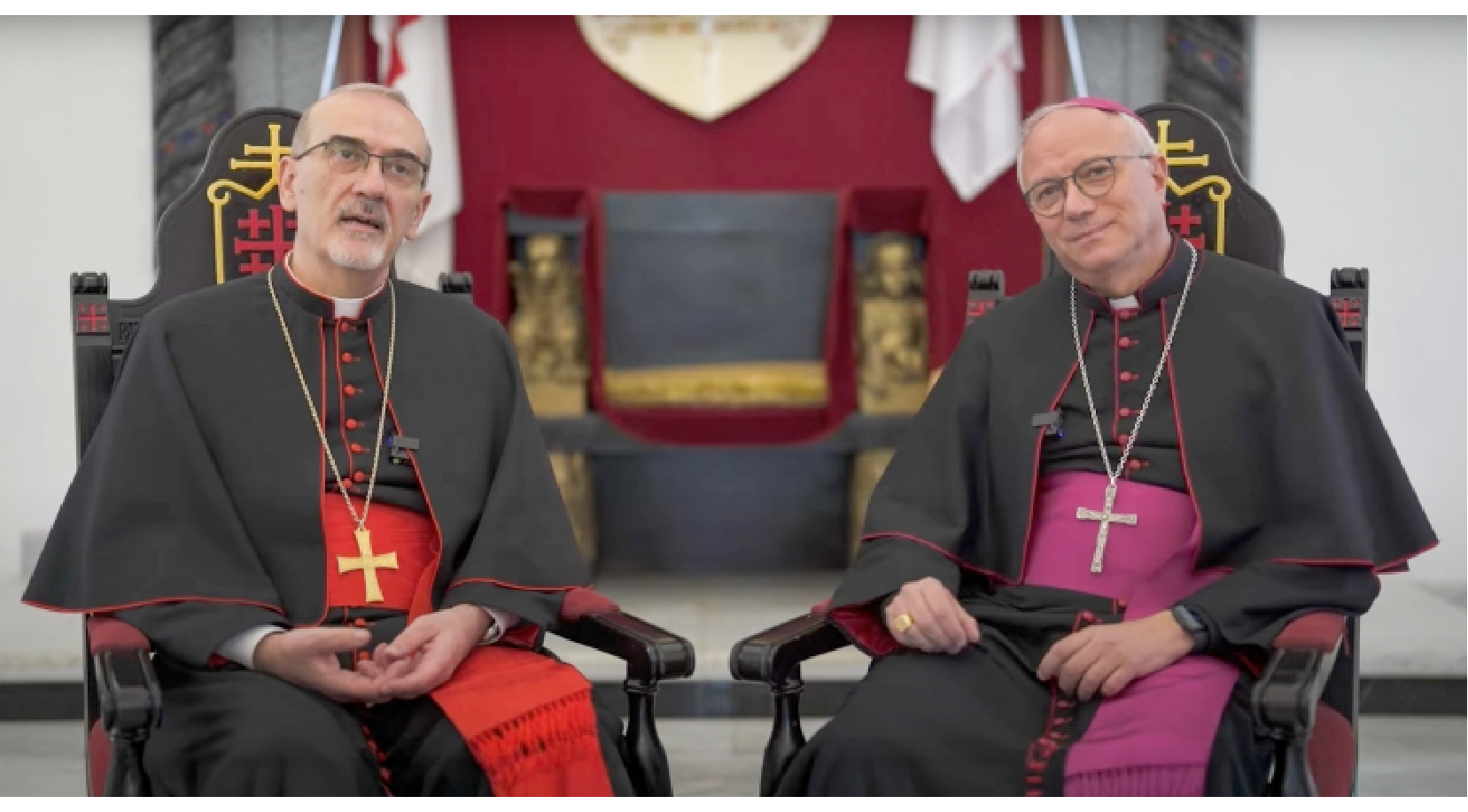
(ZENIT News / Jerusalem, 10.01.2025).- The Italian Episcopal Conference has taken a decisive step toward deepening its ties with the Church in the Holy Land, concluding a visit that carried both symbolic weight and tangible pledges of support. Monsignor Giuseppe Baturi, secretary general of the CEI, traveled to Jerusalem to meet with Cardinal Pierbattista Pizzaballa, the Latin Patriarch, in a gesture aimed at reassuring a community living under strain.
The encounter was not only a fraternal exchange but also the launchpad for a project with potentially transformative consequences: the opening of a new hospital in Gaza. The initiative, announced by Baturi, responds to what he described as “a very serious health emergency,” and is being undertaken jointly by the CEI and the Latin Patriarchate. “We want to shoulder this burden together,” he said, framing the effort as a mobilization of resources and goodwill across Italy’s dioceses.
The hospital represents only one dimension of a broader strategy of solidarity. Italian bishops committed to addressing pressing needs for families, parishes, and young people in the region, ranging from food and housing to employment and education. Baturi described these initiatives as an “energy of peace,” a term that underscored his conviction that such efforts can shape consciences and open a path to a future less defined by violence and deprivation.
The visit also carried a strong pastoral dimension. Responding to appeals from local priests, Baturi announced plans for a collective pilgrimage of Italian bishops to the Holy Land, alongside efforts to promote further pilgrimages for the faithful. The goal, he emphasized, is not merely devotional but relational: to build friendships with Christian communities in Judea, Galilee, and beyond. “This is a concrete form of closeness and solidarity,” he explained.
For his part, Cardinal Pizzaballa expressed gratitude for the presence and support of the Italian Church, stressing that gestures of empathy are particularly vital in times of isolation. He reminded those present that hope cannot be sustained by words alone. “Hope needs gestures, contexts where unity and community are built,” he said. “In the midst of suffering, the presence of someone who stands beside you is itself a sign of hope.”
The CEI delegation’s journey thus served as more than a diplomatic encounter. It was a deliberate attempt to link faith to action, devotion to responsibility, and the global Church to one of its most fragile outposts. By investing in health care, education, and pastoral solidarity, the Italian bishops sought to remind the communities of the Holy Land that they are neither forgotten nor alone.
Thank you for reading our content. If you would like to receive ZENIT’s daily e-mail news, you can subscribe for free through this link.

Publicaciones relacionadas:
 Mayor of Jerusalem hosts Catholic and Orthodox leaders: tax collection on the table
 Statement by the bishops of the Holy Land on “Christian Zionism”
 Young Hebrew-speaking Catholics aim to build a culture of respect and dialogue between communities
 Jerusalem: Holy Week Behind Closed Doors. A Statement from the Catholic Patriarch
