

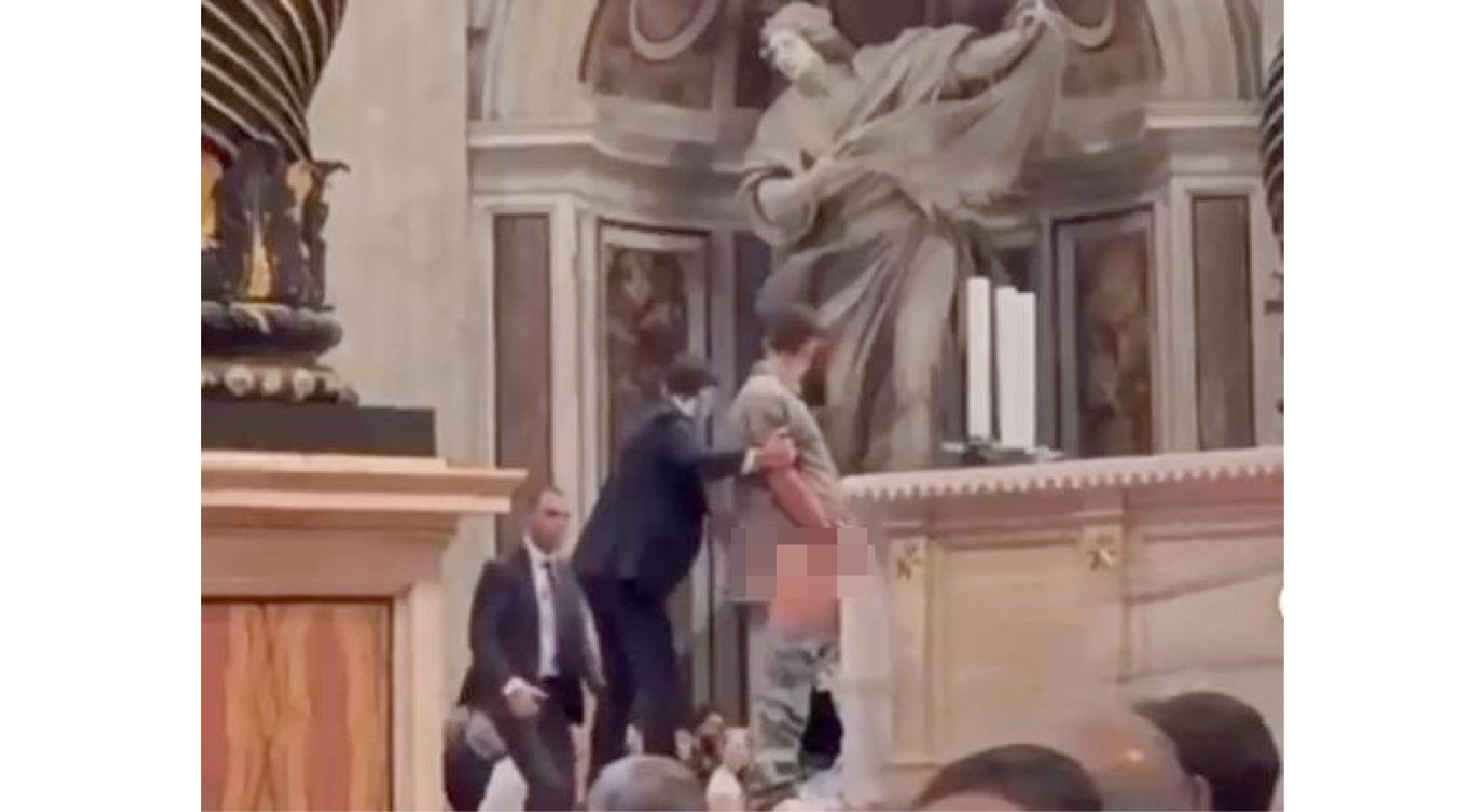
(ZENIT News / Vatican City, 10.14.2025).- The world’s most visited church, a place millions approach with reverence and awe, was shaken once again by an act of desecration that seemed almost unimaginable. On the evening of October 10, a man climbed onto the Altar of the Confession in St. Peter’s Basilica—the very heart of global Catholic worship—and urinated upon it as hundreds of visitors looked on in disbelief.
Security agents quickly intervened, detaining the man and escorting him out of the basilica. According to Vatican sources, the perpetrator appeared to be suffering from a serious mental disorder. Yet, the shock reverberated far beyond the St. Peter’s. The altar he defiled stands directly above the tomb of the Apostle Peter, the fisherman from Galilee whom Christ called the rock upon which his Church would be built.
In response, the basilica’s archpriest, Cardinal Mauro Gambetti, led a solemn rite of reparation on October 13. The ritual, which began with a penitential procession through the basilica, included prayers for forgiveness, the sprinkling of holy water, and the incensation of the desecrated altar. In silence and incense, the Church sought to restore what had been wounded.
According to canon law, when a sacred space is gravely violated, public worship must cease until a ritual of purification has been performed. In this case, the rite took on particular resonance. “We ask God to heal what has been profaned,” Gambetti prayed, his words echoing through the basilica as tourists and clergy alike stood in stillness.
🇻🇦⛪️ Orina en el altar principal del Vaticano: ¿respuesta? Rito penitencial cumplido
Por la mañana del lunes 13 de octubre el cardenal Mauro Gambetti realizó el rito penitencial para pedir perdón a Dios por la profanación sacrílega del altar principal de la basílica vaticana. El… pic.twitter.com/t0UPehQzwa
— P. Jorge Enrique Mújica, LC (@web_pastor) October 14, 2025
This is not the first time in recent years that St. Peter’s has been struck by acts of profanation. In February 2025, another man climbed the same altar and violently threw six ornate candlesticks to the floor. Two years earlier, in June 2023, a Polish activist stripped naked atop the altar, displaying the words “Save the children of Ukraine” scrawled across his back in protest of the war.
Each time, the Vatican has responded with penitential rites, gestures both of faith and of institutional resolve. Yet the recurrence of such acts—each one more audacious than the last—has prompted deeper reflection on the tension between the openness of holy spaces and the vulnerability that such openness entails.
St. Peter’s Basilica, unlike many historic landmarks, remains a living sanctuary. Its doors stay open to believers, pilgrims, and curious visitors alike. That openness, which embodies the Church’s universal invitation, also exposes it to moments of chaos, defiance, or despair that play out under the vast dome Michelangelo designed as a vision of heaven.
For Pope Leo XIV, who was reportedly “deeply distressed” by the incident, the profanation was not merely a security breach but a spiritual wound. Vatican insiders say he personally requested that the rite of reparation be performed swiftly, emphasizing that such gestures reaffirm not only faith in the sacred but faith in forgiveness.
Thank you for reading our content. If you would like to receive ZENIT’s daily e-mail news, you can subscribe for free through this link.

Publicaciones relacionadas:
 Synod 2023: Two Chinese Bishops In (with Government’s Permission), Cardinal Ladaria Out
 U.S. Undersecretary of Homeland Security visits the Vatican
 Jewish leader to Pope at Vatican: use your moral strength to free hostages
 Synod: Details of the Calendar for the Last Stage, Topics and Announcement of Letter to the People of God
