

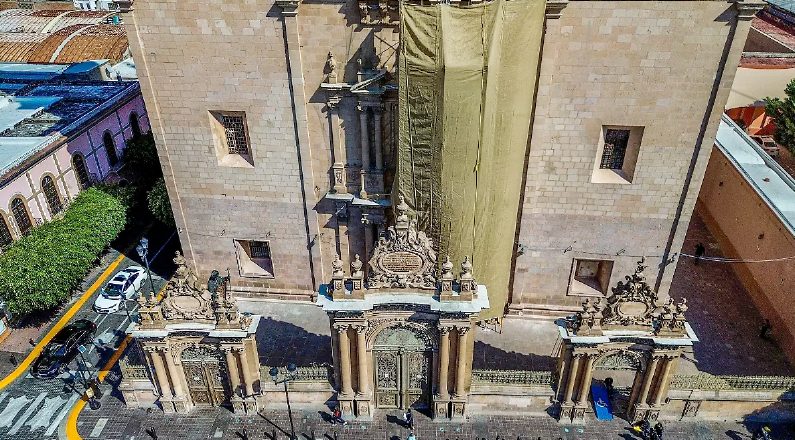
(ZENIT News / Roma, 02.08.2026).- In the heart of Guanajuato state, two emblematic Catholic temples are undergoing careful restoration processes that reveal how faith, public institutions and local communities collaboration when it comes to preserving religious heritage. In León and in the state capital, works currently underway are not spectacular in appearance, but they are decisive for the survival of buildings that have shaped local identity for centuries.
In León, the Cathedral-Basilica of the Most Holy Mother of Light — the spiritual home of the city’s patron saint — has been under rehabilitation since January 2026. The project is being financed primarily through the alms and donations of local faithful, a model that reflects both devotion and a strong sense of shared responsibility for sacred spaces.
According to Father Antonio Borja, rector of the cathedral, the current works are the result of technical assessments carried out several years ago. Around 2020, specialists from Mexico’s National Institute of Anthropology and History (INAH), together with representatives of the Archdiocese of León, conducted an inspection that identified two urgent priorities: the roofs and the electrical system. Moisture had been infiltrating the building both from above and through the ground, threatening the structure and interior finishes.
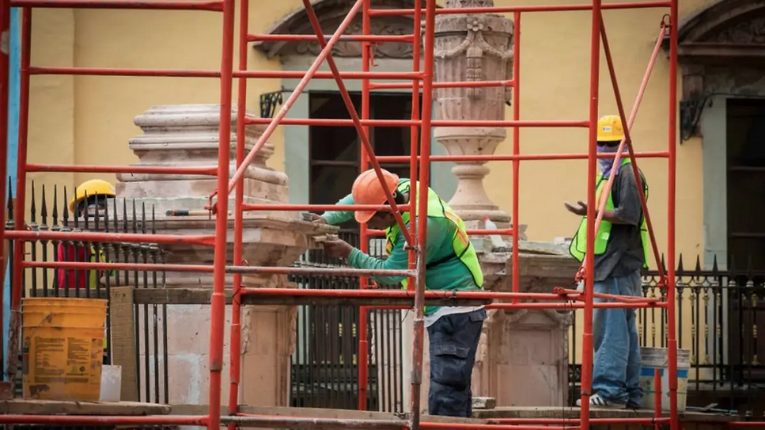
Addressing those problems required a complex intervention. The cathedral’s vast size, combined with its annexes and chapels, meant that the work went far beyond simple waterproofing. Once the roofs were fully restored and sealed, attention could finally turn to the exterior.
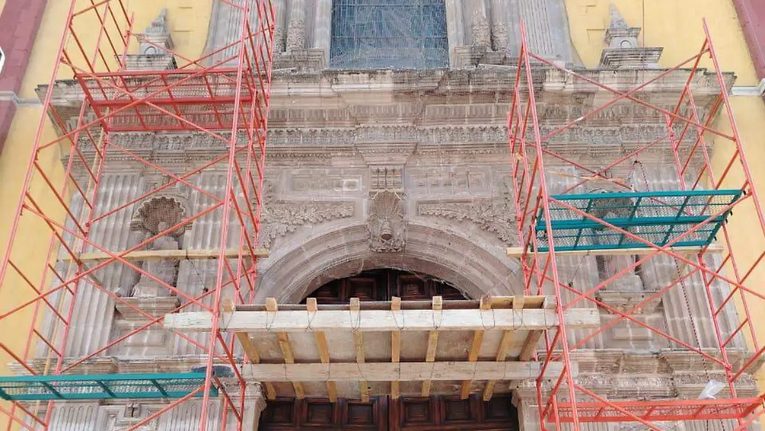
The current phase focuses on the main façade, a richly carved surface of cantera stone that has suffered from pollution, rain, biological growth and, above all, the corrosive effects of bird droppings. The project includes scaffolding, safety barriers and a systematic cleaning of the stone. Damaged wooden elements are being repaired, deteriorated tips filled, and anti-bird spikes installed to prevent pigeons from nesting and accelerating decay. The façade is divided into three sections; restoration began with the simpler lateral areas and has now reached the central section, the most elaborate and delicate. Father Borja estimates that this stage will take approximately three months.
Although the rector did not specify the total cost of the project, he emphasized that it has been made possible by the steady generosity of parishioners. Their contributions are safeguarding a building whose construction began in 1732, originally as the Templo de la Compañía Nueva, under the direction of the Jesuits. Work was interrupted for decades following their expulsion in 1767, resuming intermittently until the 19th century — a history that explains the visible differences in the stonework of the façade.
The church was elevated to cathedral status on 21 February 1864, when Pope Pius IX created the Diocese of León. Inside, it houses the image of the Most Holy Mother of Light, brought from Sicily and proclaimed patroness of the city in 1810. In parallel with the exterior works, the cathedral has seen significant interior improvements since 2020, including the removal of obsolete wiring, restoration of the floor in the Chapel of Saint Joseph and upgrades to the lighting system.
Roughly an hour away, in the city of Guanajuato, a parallel story is unfolding at the Basilica Collegiate of Our Lady of Guanajuato, a UNESCO World Heritage site. There, cleaning and restoration of the main façade began on January 8 and are scheduled to conclude on April 8. The project is supervised by architect Miguel Ángel Ibarra Álvarez, appointed by heritage authorities, and funded through resources managed by the state government.
Father Víctor Manuel González Guerrero, rector of the basilica, has stressed that ongoing maintenance is not optional for historic religious buildings. Exposure to pollution, humidity and biological agents makes continuous intervention essential if such monuments are to endure. The approval process for this latest round of funding took about a year, but the works were planned in a way that allows religious services and access for the faithful to continue without disruption.
The basilica’s recent restoration history has been extensive. One of the most sensitive tasks was the professional restoration of the image of the Virgin of Guanajuato itself. The wooden sculpture and its silver base had gone more than a century without specialized conservation. The work, which repaired cracks in the wood and restored the shine of the silver, cost approximately 389,000 pesos and was financed mainly through direct donations from the Catholic community.
Structural issues were also addressed at higher levels of the building. Sealing the dome and roofs to stop persistent leaks required an investment of about 1.68 million pesos, with funding split between the state government (741,000 pesos), the municipal government (741,000 pesos) and citizen contributions of nearly 200,000 pesos. Once the building was protected from water infiltration, attention shifted to interior and decorative elements. One of the most striking moments for locals was the lowering and meticulous cleaning of the massive central chandelier, restored piece by piece to its former brilliance.
Outside, restoration focused on the atrium wall, where time had reduced sections of the cantera stone to fragments. Replacing those elements restored dignity to the basilica’s main entrance. In June 2024, the state government announced an additional investment package of 2.1 million pesos specifically for the basilica, allocated to replacing damaged stone, restoring the main chandelier and rehabilitating the interior surfaces of the vaults.
Throughout 2025 and into the early months of 2026, work has continued on polishing the façade and ensuring that drainage systems function properly, preventing future water damage. With total investment exceeding 4 million pesos, the basilica now stands not only more visually refined, but structurally prepared to endure for decades.
In both León and Guanajuato, these projects highlight a less visible but crucial aspect of church life: the slow, technical and often unglamorous labor of conservation. Stone by stone, cable by cable, these interventions ensure that places of worship remain both living religious spaces and witnesses to history — sustained by a combination of public responsibility and private faith.
Thank you for reading our content. If you would like to receive ZENIT’s daily e-mail news, you can subscribe for free through this link.

Publicaciones relacionadas:
 A Lesson on Ecclesiology: Benedict XVI’s Full Letter to Franciscan University in Ohio
 These Are the “Numbers” Pope Francis Will Find in Bahrain: Vocations, Priests, Catholics, etc.
 New «forward» from Dicastery Doctrine of the Faith for an Italian’s views on the Holy Trinity
 Europe pledges aid to Nigeria in exchange for ideological colonization: Church and Islam speak out
