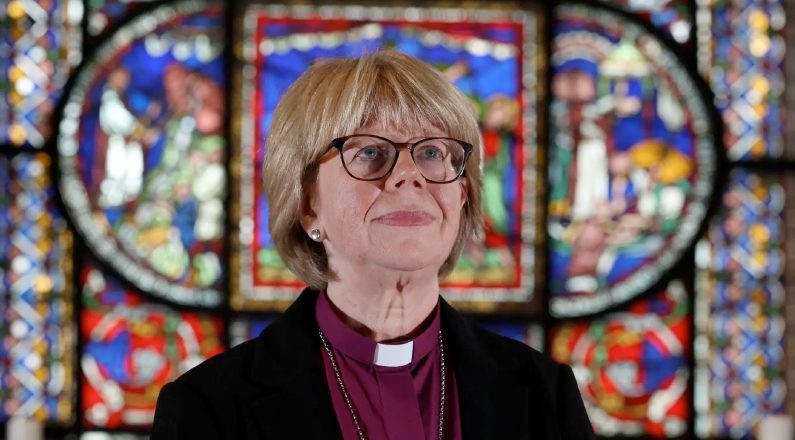
(ZENIT News / London, 12.16.2025).- The Church of England’s attempt to signal a new beginning is facing an early and uncomfortable test. Sarah Mullally, only weeks away from formally becoming the first woman Archbishop of Canterbury, is now under renewed scrutiny over her handling of an abuse complaint during her tenure as Bishop of London. The case has reopened questions not only about individual responsibility, but about whether the Anglican Communion is capable of breaking with a culture of procedural failure that has repeatedly undermined its moral authority.
The allegation centers on a complaint raised in 2020 by a survivor of clerical abuse, identified publicly only as “N.” According to statements from Lambeth Palace, the complaint was not advanced or properly followed up due to administrative failures and an incorrect assumption about the wishes of the complainant. Officials have acknowledged that the matter should have been processed at the time and was not, an admission that places Mullally’s record under an unflattering light precisely as she is preparing to assume the church’s highest office.
Mullally has publicly stated that the survivor was “let down by the processes of the Church of England,” emphasizing that the original allegation against the priest was thoroughly addressed. However, she also conceded that a subsequent complaint lodged against her personally was mishandled. That acknowledgment has done little to quiet criticism, particularly given the nature of the accusation: the complainant alleges that Mullally contacted the accused priest directly after learning of the abuse claim, a step that would constitute a breach of Anglican disciplinary protocols designed to protect complainants and preserve the integrity of investigations.
Lambeth Palace has confirmed that the provincial registrar has apologized to those involved and that urgent steps are being taken to ensure the complaint is now examined through the appropriate canonical process. Depending on the outcome, the matter could lead to formal disciplinary proceedings, with possible sanctions ranging from a reprimand to permanent prohibition from ministry. For a leader presented as a symbol of reform and renewal, the optics are deeply damaging.
The timing could hardly be worse. Mullally’s appointment was framed as a response to the crisis that forced the resignation of her predecessor, Justin Welby, following a devastating report into the Church of England’s handling of abuse linked to John Smyth. That case exposed decades of silence, institutional protection, and catastrophic failures in safeguarding, leaving the church struggling to persuade victims and the wider public that meaningful change had taken root.
This latest controversy risks reinforcing the perception that, despite changes in leadership and rhetoric, structural weaknesses remain intact. Critics argue that the problem is no longer confined to isolated errors but reflects a systemic inability to prioritize survivors over institutional self-protection. Mullally’s admission that the system failed under her watch has been interpreted by some not as transparency, but as confirmation of that deeper malaise.
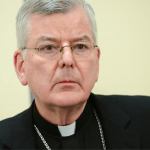
The crisis is not confined to England. Across the Atlantic, the Anglican Church in North America is confronting its own reckoning. Archbishop Stephen Wood, the denomination’s highest-ranking leader, is facing a full ecclesiastical trial after an investigative board found probable cause for formal charges, including abuse of power and sexual immorality. Wood has been suspended from ministry and denies all allegations.
The charges stem from complaints filed in October and relate to alleged misconduct predating his election as archbishop. According to reporting by The Washington Post, the allegations include sexual misconduct, intimidation of staff, and plagiarism of sermons. A second woman has since come forward with a formal accusation of sexual harassment. While the investigative board did not publish details of the charges, it identified violations of ordination vows, conduct giving rise to scandal, and abuse of ecclesiastical authority.
During Wood’s suspension, his duties are being assumed by Bishop Julian Dobbs, while the Diocese of the Carolinas, where Wood serves as bishop, is under interim leadership. Wood has also stepped down as rector of his parish in South Carolina. If found guilty, potential penalties range from censure to removal from ministry.
Taken together, the cases in England and North America point to a troubling continuity across Anglican structures that differ theologically and culturally but appear similarly vulnerable to failures of accountability. The Anglican Church in North America was founded in 2009 by conservatives who broke away from more liberal provinces, claiming doctrinal fidelity and moral clarity. Yet it now finds itself grappling with allegations that mirror the very abuses it once cited as evidence of decay elsewhere.
For the global Anglican Communion, these parallel crises underscore a harsh reality. Leadership transitions, symbolic milestones, and institutional rebranding offer little protection if safeguarding mechanisms remain inconsistent and trust remains fragile. As Mullally prepares to take office in Canterbury and Wood awaits judgment, the question confronting Anglicanism is no longer whether it acknowledges past failures, but whether it can finally demonstrate that its structures are capable of preventing their repetition.
Thank you for reading our content. If you would like to receive ZENIT’s daily e-mail news, you can subscribe for free through this link.