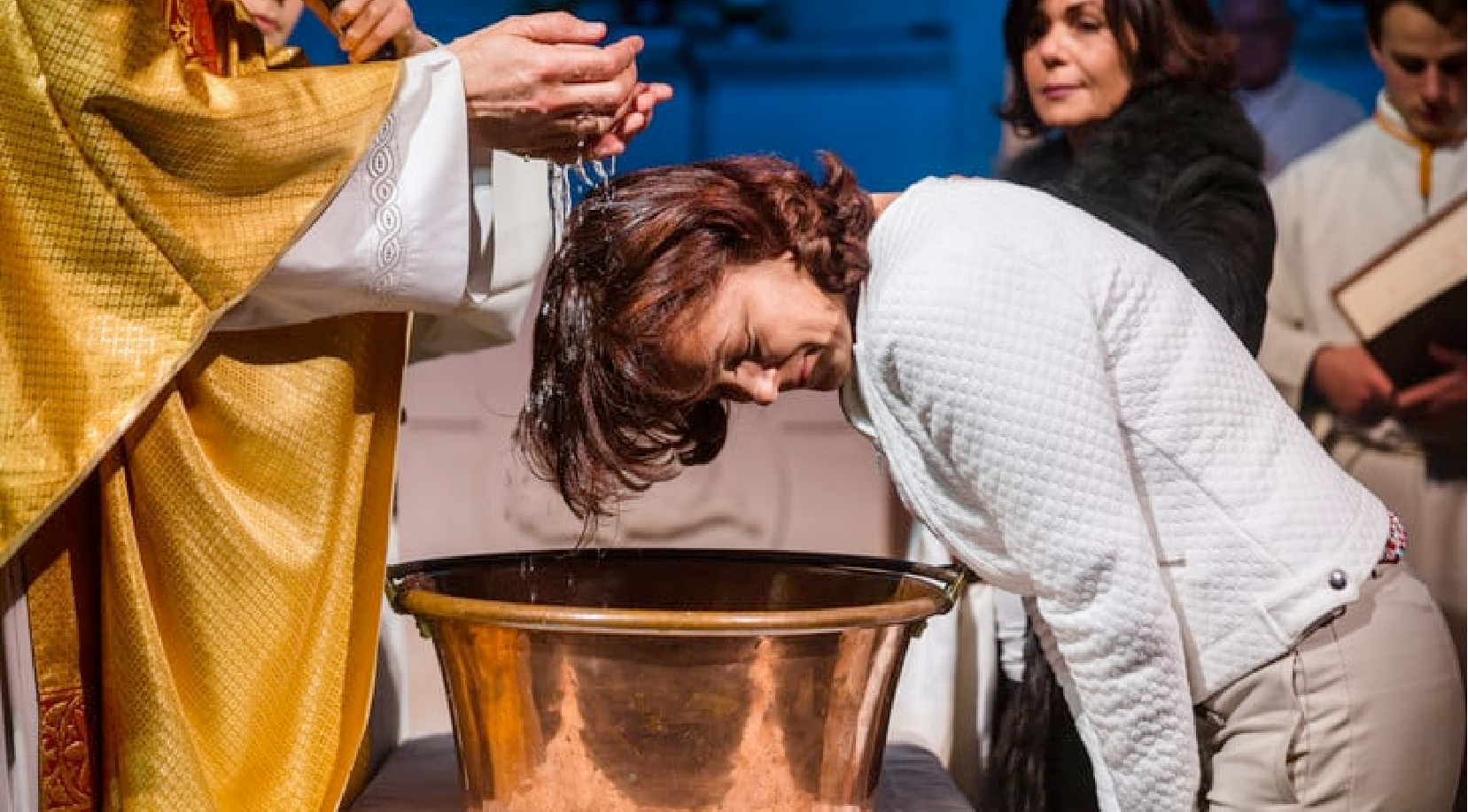
(ZENIT News / Brussels, 02.20.2026).- For decades, Belgium has been cited as a textbook case of European secularization: emptying pews, declining sacramental practice, and a steady erosion of what was once a deeply rooted Catholic culture. Yet new figures released on February 18 suggest a quieter, more personal religious shift is underway — one measured not in childhood rituals, but in adult decisions.
The Catholic Church in Belgium announced that 689 adults are preparing for baptism in 2026, up from 534 in 2025. A decade ago, in 2016, the number stood at just 229. The trajectory is unmistakable: after gradual increases over several years, the curve steepened sharply in 2024 and has continued upward since.
In a country of nearly 12 million people — roughly half of whom are baptized Catholics — these numbers do not reverse the long-term decline of institutional practice. But they do complicate the narrative of inexorable religious collapse.
Belgium’s religious landscape has been changing for generations. Since the 1960s, Sunday Mass attendance has fallen dramatically. By 2024, only about 173,000 people were regularly present at Sunday liturgies nationwide. Infant baptisms, once nearly universal, have also declined steadily, dropping from 51,000 in 2017 to 30,000 in 2024. In parts of northern Flanders, just 10 percent of newborns are baptized.
The rise in adult baptisms does not compensate numerically for the disappearance of infant baptisms. But it signals something qualitatively different: a shift from what sociologists call “cultural Christianity” — inherited, assumed, woven into the social fabric — to a form of faith that is consciously chosen.
Belgium’s linguistic fault lines provide further texture to the story. The country is divided between Dutch-speaking Flanders in the north and French-speaking Wallonia in the south, with bilingual Brussels at its center. These divisions extend into ecclesial structures: dioceses are largely aligned along linguistic lines.
In 2026, the French-speaking dioceses of Liège, Namur and Tournai reported notably high numbers of adult catechumens. Observers suggest that the surge may be particularly pronounced in francophone contexts, perhaps influenced by parallel developments across the border in France.
Yet the phenomenon is not confined to one cultural sphere. The Flemish dioceses of Antwerp and Ghent are also registering substantial numbers of adult candidates this year. Commentators have pointed out striking contrasts between dioceses. Brussels and Tournai, for example, show the highest figures. These are areas with a long history of secularization — but also, evidently, fertile ground for new religious initiatives.
The Archdiocese of Mechelen-Brussels, the most populous diocese in the country, illustrates the complexity. It is bilingual and structured into three vicariates: Flemish Brabant and Mechelen; Brussels; and Walloon Brabant. Brussels alone — the second most populous vicariate after Flemish Brabant and Mechelen — accounts for 152 adult baptisms in 2026. By comparison, Flemish Brabant and Mechelen report 53.
In rural Flanders, where infant baptism remains more common than in urban centers, many who later engage more deeply with Church life do not appear in adult baptism statistics because they were already baptized as children. Some pastoral observers describe them not as converts, but as “returnees” or “newcomers” rediscovering a dormant inheritance.
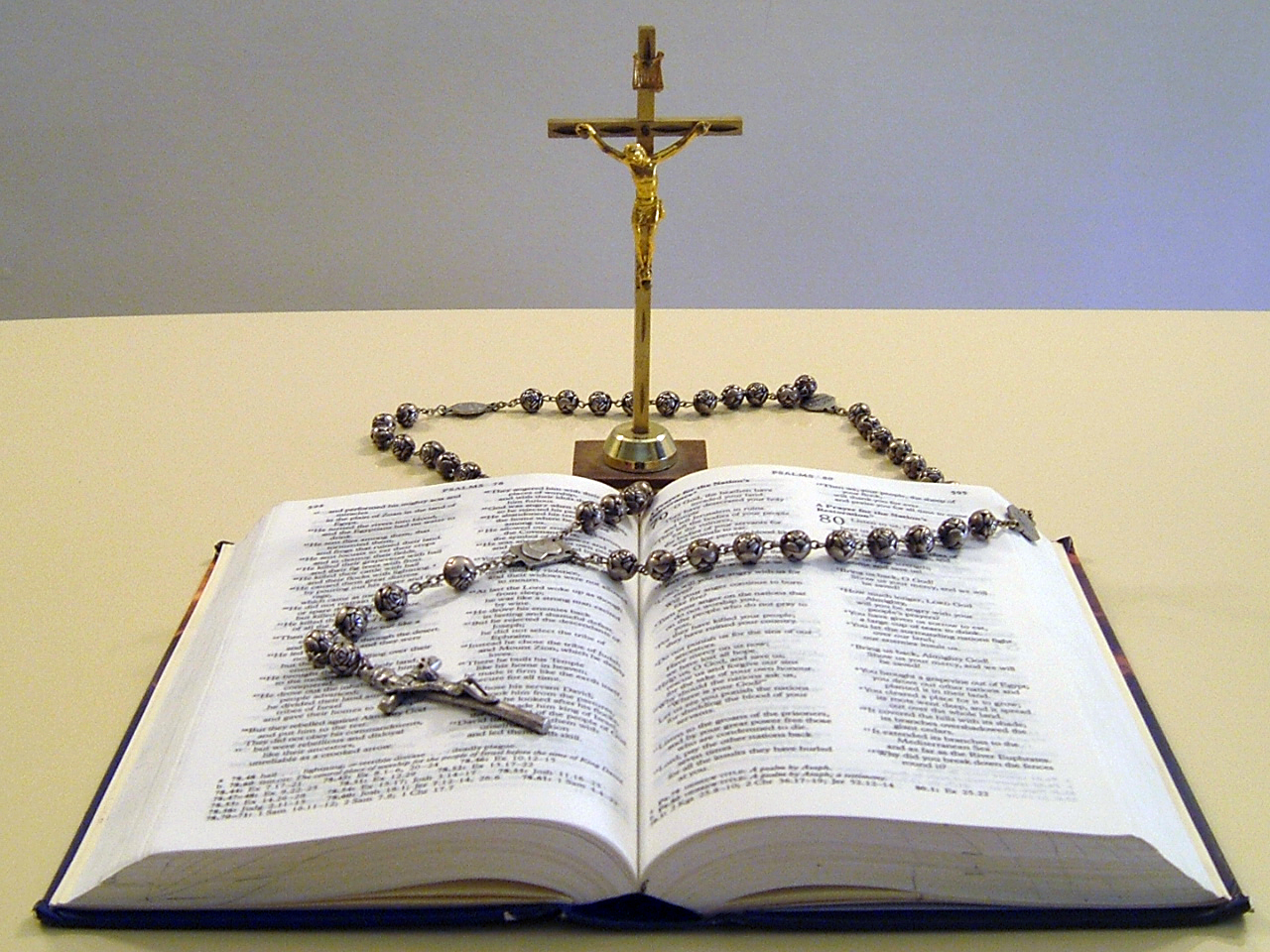
The 689 adult candidates — known in the Church’s terminology as catechumens — will take a decisive public step on Sunday, February 22, during the Rite of Election, formally expressing their intention to receive baptism. They will be baptized at the Easter Vigil on April 4, the liturgy traditionally associated with initiation into the Christian faith.
Belgium’s development mirrors a broader pattern in neighboring France. According to figures reported on February 18, the Archdiocese of Paris expects 786 adult baptisms at Easter this year, up from 671 in 2025 and 522 in 2024. The western Diocese of Nantes anticipates 226 adult baptisms, compared with 170 the previous year. Nationwide, more than 10,000 adults were baptized in France in 2025 — a 45 percent increase over the previous year.
Such figures suggest that Western Europe’s religious trajectory may be less linear than once assumed. While institutional Catholicism continues to contract in many measurable ways, a smaller but more intentional community appears to be taking shape.
The Belgian Church itself has framed the moment with cautious optimism. Headlines in both francophone and Flemish Catholic media have noted that religion may not be as moribund as often portrayed. Still, the structural reality remains: the decline in infant baptism signals the erosion of Catholicism as a default identity.
What is emerging instead is a Church composed increasingly of adults who seek baptism after reflection, catechesis, and often significant personal searching. It is a transformation that alters not only statistics but ecclesial culture. A Church once sustained by habit is becoming, at least in part, a Church of explicit conviction.
Whether this marks the beginning of a durable renewal or a temporary spike remains to be seen. But in a nation long considered emblematic of Europe’s secular age, 689 adults preparing for baptism this Easter represent more than a number. They embody a shift in how faith is transmitted — no longer primarily by birth, but by choice.
Thank you for reading our content. If you would like to receive ZENIT’s daily e-mail news, you can subscribe for free through this link.