

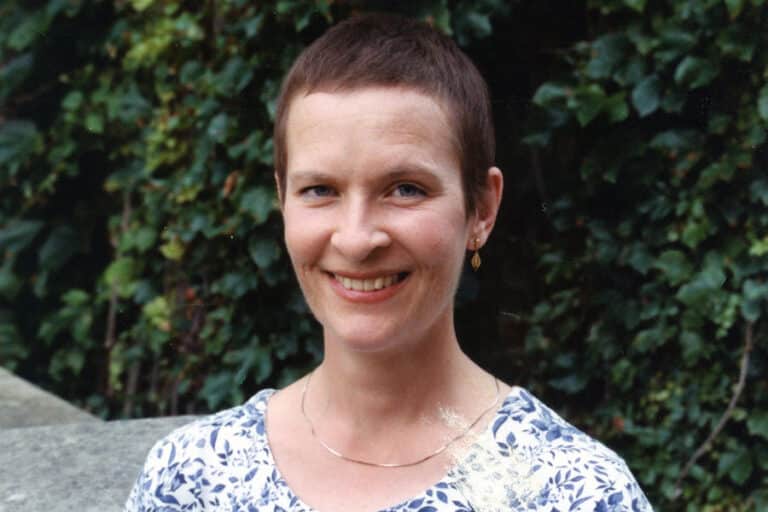
(ZENIT News / Rome, November 30, 2025) – The Vatican has given the green light to begin the process that could lead to the recognition of the holiness of Ruth V. K. Pakaluk.
The Holy See issued a nihil obstat — «nothing prevents» — allowing the Diocese of Worcester, Massachusetts, to begin a local investigation into the life and virtues of this American laywoman. With this step, Pakaluk can be officially called a «Servant of God,» the first formal stage of the process.
Ruth was born in 1957 in New Jersey. She was raised Presbyterian and excelled as a student. However, she entered Harvard University as an atheist (or almost an atheist, as her husband notes) and held pro-abortion views. Her future husband also considered himself an atheist when they met, though they both shared a sincere desire to seek the truth and a feeling that they should take Christianity more seriously. Thus, they began reading the Bible together, praying, and examining their daily actions. By the end of that year, they decided to join a Christian group at the University.
In her youth, Ruth excelled in music, played hockey, and participated in cultural activities. Her time at Harvard also marked the beginning of her intellectual and moral commitment to the faith.
Before embracing Catholicism, the InterVarsity Christian Community — to which they belonged — organized a debate between a well-known apologist from their community and a recently converted philosophy professor from Boston University. At the end, both Ruth and Michael were convinced they should become Catholic. That Boston professor was Peter Kreeft, now one of the most prominent Catholic apologists.
After her conversion, Ruth dedicated herself to the Christian life as a committed laywoman, combining raising her family with social activism. In Worcester, she became known as «the neighbourhood mom»: she cared for her neighbours, led mothers’ groups, and brought faith into everyday life, demonstrating a discreet and practical style of holiness.
In the public sphere, Pakaluk was an active pro-life advocate. She founded and led pro-life groups at the university and regional levels — she was President of Massachusetts Citizens for Life — and organized campaigns, conferences, and training programs for young people. Her writings and speeches made her a leading figure in the New England pro-life movement.
As a wife and mother, she lived her faith with daily radicalism. She married Michael Pakaluk when they were both students, and together they had seven children (one of whom died in infancy). Even after receiving her cancer diagnosis, and throughout her long illness, she remained steadfastly devoted to her family and those around her, bearing witness to serenity and hope in the face of suffering.
Her social commitment was equally concrete. Although she died in 1998 at the age of 41, her inspiration led to the creation of projects such as Visitation House, a home for vulnerable pregnant women in Worcester, which since 2005 has assisted hundreds of mothers and children. This institutional legacy is also a relevant element in the reputation for sainthood being studied in her Cause.
Regarding the Bishop’s opinion: the nihil obstat was communicated in a letter from the Prefect of the Dicastery for the Causes of Saints to the Bishop of Worcester. The diocese has already taken the first administrative steps. Bishop Mark J. McManus authorized the appointment of a Postulator (Atty. Dwight Duncan) and will issue the corresponding diocesan decrees to organize the local investigation. In practice, the Bishopric has facilitated the formal initiation of the Cause without issuing definitive judgments on sainthood until the investigation progresses.
What comes next? The diocesan process will gather writings, testimonies, and evidence about Ruth’s life. Historians and theologians will review her work and conduct, and a diocesan tribunal will prepare a dossier to be sent to the Vatican Dicastery for the Causes of Saints. If the Vatican recognizes that she lived a life of heroic virtue, she will be declared «Venerable.» Beatification would follow (generally after the verification of a miracle attributed to her intercession), and subsequently, Canonization (after a second miracle).
The opening of the Cause has stirred reactions among those who knew her. Her husband and several collaborators have expressed their joy and emphasized that they are not seeking to rush to conclusions, but simply to allow the Church to investigate. At the same time, the organizations and awards founded in her memory — pro-life prizes, youth initiatives, and the aforementioned Visitation House — reflect the social impact she had and explain why many are calling for her life to be examined as a possible Christian model.

Publicaciones relacionadas:
 Argentina: Carmelite Nun of the Beautiful Smile Who Died of Cancer, Begins Her Path to the Altars
 Sister Clare: the young Irish actress who became a nun goes to the altars
 Vincent, the boy alive thanks to a miracle attributed to Cardinal George Pell
 First Woman with Dwarfism on the Path to Canonization Thanks to Leo XIV
