

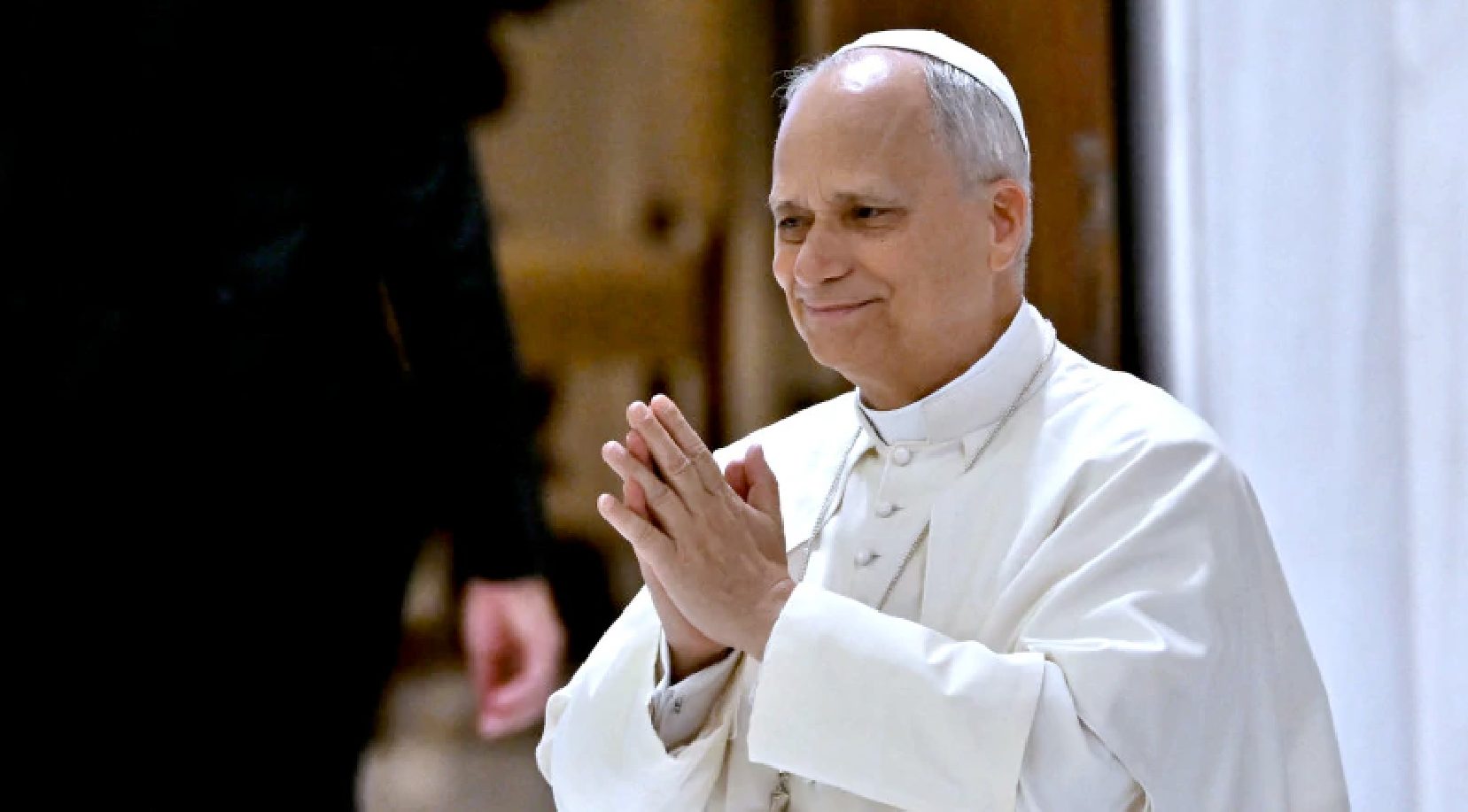
(ZENIT News / Berlin, 12.24.2025).- Public confidence in the papacy has quietly regained ground in Germany, according to a new nationwide survey, offering a nuanced snapshot of how religious authority is currently perceived in one of Europe’s most secularized societies. The figures suggest neither a sweeping religious revival nor simple nostalgia, but rather a cautious reassessment of leadership at the top of the Catholic Church.
Data released from a representative Forsa poll indicate that 28 percent of Germans now say they place high or very high trust in the Pope. That marks a notable jump of twelve percentage points compared with the previous year, placing the pontiff on par with the Evangelical Church in terms of public confidence. Among both religious and secular institutions measured, no individual figure attracted broader trust than the Pope himself.
The Catholic Church as an institution also benefited from this upward movement, though to a lesser extent. Fourteen percent of respondents said they trust the Church, a three-point increase over 2024 and a modest recovery from the historic low of eight percent recorded in 2022. While still far from robust, the improvement suggests that the Church’s standing may have stabilized after years of erosion linked to abuse scandals, internal conflict, and declining membership.
Whether the renewed confidence can be attributed to Pope Leo XIV personally remains an open question. The survey does not establish a direct causal link, and comparisons with previous pontificates invite caution. Pope Francis, at the height of his popularity in 2015, reached a confidence score equivalent to 60 out of 100 possible points, a level that remains unmatched. Leo XIV’s current standing, while improved, does not approach that earlier peak. Even so, the reversal of a downward trend is striking in a context where institutional trust has been broadly fragile.
The broader religious landscape captured by the survey highlights significant contrasts. The Central Council of Jews continues to command the highest confidence rating at 35 percent, reinforcing its role as one of the most respected moral voices in German public life. The Evangelical Church follows with 28 percent, roughly matching the Pope’s personal rating, though its institutional trust remains near a historic low.
Islam registers the lowest level of confidence overall, at seven percent. Yet generational differences complicate the picture. Among Germans aged 18 to 29, trust in Islam rises to 17 percent, surpassing confidence in the Catholic Church within the same age group, which stands at 13 percent. This divergence underscores how religious perception in Germany is increasingly shaped by age, cultural exposure, and differing expectations of institutional authority.
The survey, conducted between December 3 and 12, 2025, involved approximately 4,000 respondents and was commissioned by Stern, RTL, and ntv. Its findings suggest that trust in religious leadership is no longer driven primarily by institutional loyalty, but by perceived credibility, moral clarity, and distance from internal controversies.
For the Catholic Church, the results offer cautious encouragement rather than vindication. Confidence in the Pope appears to be functioning as a kind of symbolic proxy, signaling openness to spiritual leadership even as skepticism toward institutions persists. Whether this renewed goodwill can translate into deeper engagement with the Church itself remains uncertain.
In a society where religious affiliation continues to decline, the modest rebound in trust may matter less as a numerical gain than as an indication of possibility. The papacy, at least for now, seems to have recovered a measure of moral attention in Germany. The challenge ahead will be to determine whether that attention can be sustained—or whether it will once again prove fleeting.
Thank you for reading our content. If you would like to receive ZENIT’s daily e-mail news, you can subscribe for free through this link.

Publicaciones relacionadas:
 How Rome transformed the death of a pope and the election of a new pope into an economic engine worth millions of euros
 Pope Leo XIV reverses Pope Francis’ decision regarding the organization of the Diocese of Rome
 From Conclave to Clickstream: How Two Popes Dominated Global Curiosity on the Web in 2025
 PHOTO GALLERY: Pope Leo XIV revives childhood tradition: mass blessing of “baby Jesus” figures at the Vatican
