

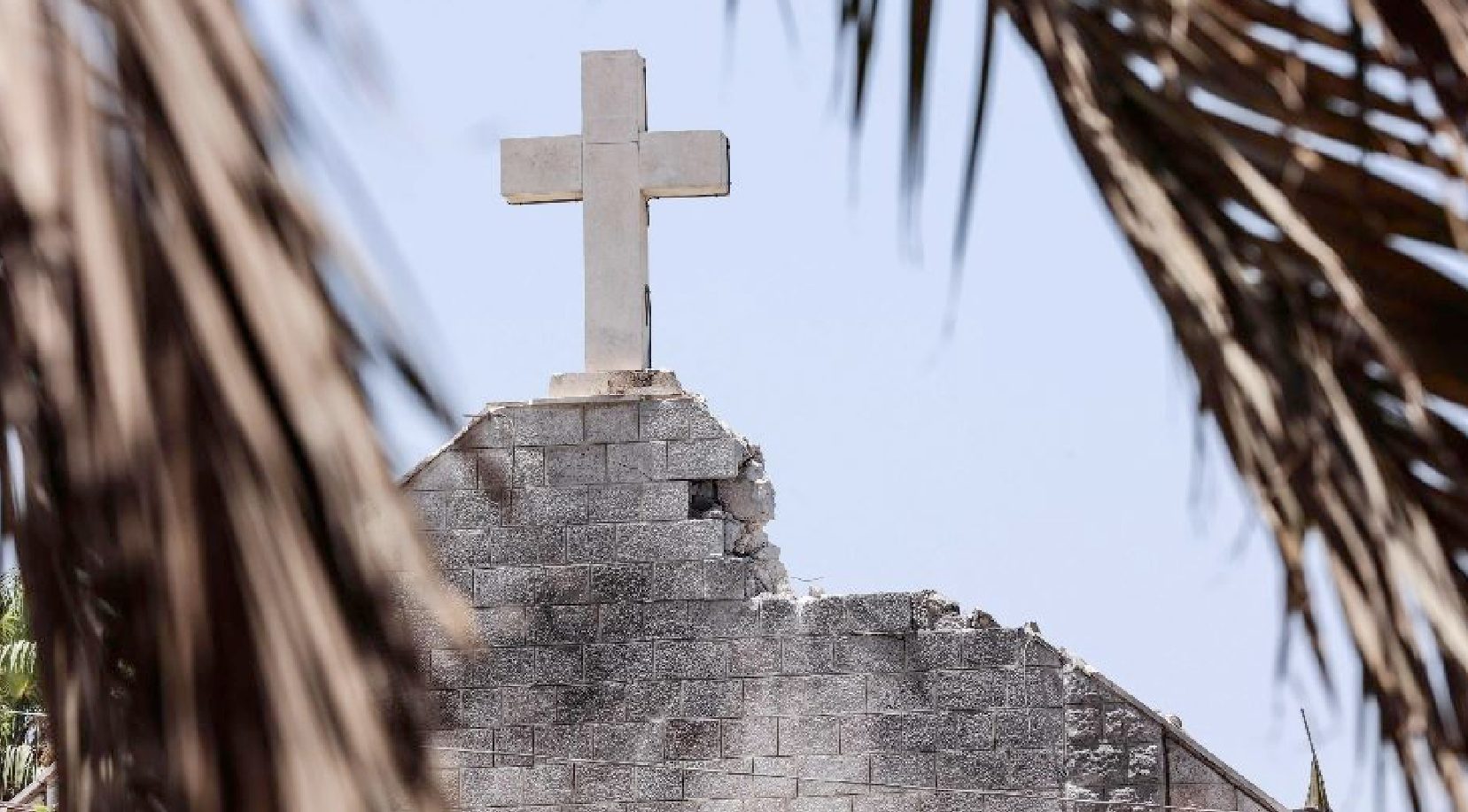
(ZENIT News / Gaza City, Occupied Palestine, 07.17.2025) – A broken cross. Remains of a roof scattered on the ground. Screams, wounds, death. At 10:20 a.m. on July 17, the Holy Family parish complex in Gaza — the only Catholic church in the Strip — was once again struck by the violence of a war that makes no distinction between the sacred and the profane. A projectile fired by the army of the Jewish State of Israel hit the roof of the building, near the cross, fragmenting it and leaving a provisional toll of three dead and at least nine wounded, including the parish priest himself, the Argentine Father Gabriel Romanelli, who reported minor injuries.
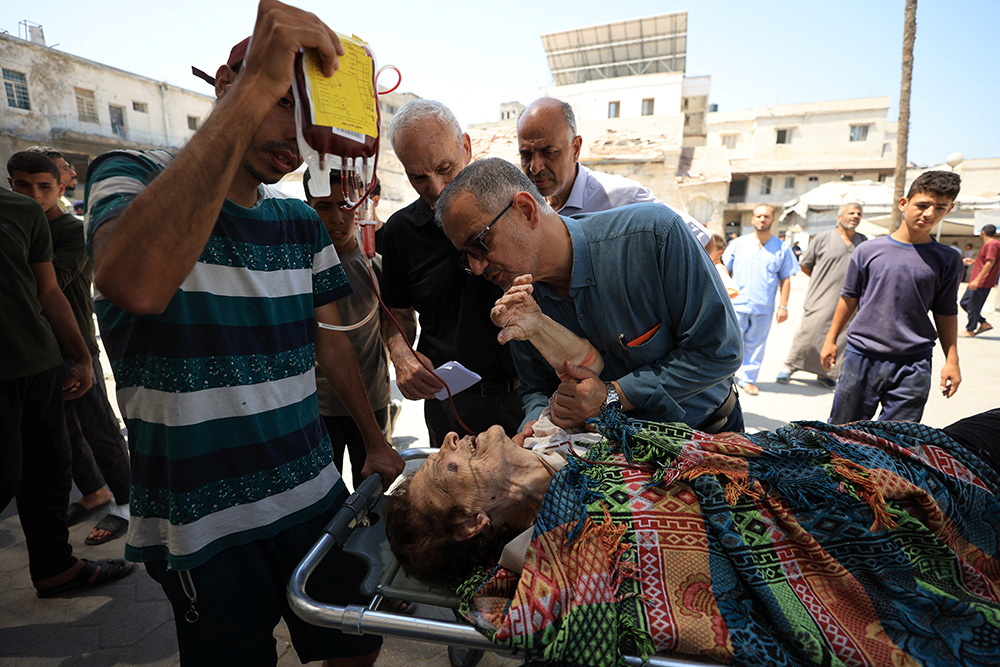
The victims weren’t combatants. They weren’t even passers-by. They were people taking refuge in a compound they thought was safe. Elderly people sitting in a Caritas Jerusalem psychosocial support tent, young people in the inner courtyard, entire families who, after losing their homes, had found a last refuge in the Church. For weeks, Father Romanelli had been asking them not to leave their rooms: «If I hadn’t insisted they stay inside, we would be talking about a massacre today,» said a Caritas volunteer.
The attack has unleashed indignation and consternation in every corner of the Christian world. Pope Leo XIV sent a telegram expressing his sorrow, his spiritual closeness to the community, and his renewed call for an immediate ceasefire. «There is no moral justification for this terror,» Cardinal Pietro Parolin stated on behalf of the Pontiff. From Jerusalem, Latin Patriarch Pierbattista Pizzaballa went further with this statement: «This attack is no more serious than others that have devastated Gaza, but it reminds us that barbarism has reached even the spaces where life should have been defended.»
The Holy Family parish is no stranger to tragedy. In December 2023, a Jewish sniper killed a mother and her daughter inside the same compound. Then, as now, the Catholic community responded with prayer, resistance, and denunciation. «God breaks the bows and shatters the spears,» Pope Francis recalled at the time, emphasizing that there were no combatants inside the parish complex, but rather children, sick people, nuns, and innocent families.
But the projectiles returned. And with them, the feeling that nowhere is safe. Italian Prime Minister Giorgia Meloni condemned the attack as «unacceptable» and accused Israel of acting with a brutal disproportion that «no military strategy can justify.» The Italian Bishops’ Conference joined the criticism, recalling that «war has no future if it destroys all hope for humanity.»

Israel, for its part, issued two statements in a cold and defensive tone: the Foreign Ministry spokesman lamented the deaths, denied deliberate attacks, and promised an investigation. The Israeli Defense Forces stated that they «regret any damage to religious structures,» while repeating that Hamas operates from civilian areas. This is nothing new. Nor is the lack of concrete answers following the investigations.
Meanwhile, Gaza continues to burn. On the same day as the attack on the church, an offensive against two schools housing displaced persons in the Al-Bureij camp left another person dead and 17 injured. Hospitals are overwhelmed, electricity is intermittent, and water is scarce. The Al-Ahli Hospital, near the Catholic church, has been bombed several times in the last week.
Amidst the devastation, every night at 8:00 p.m., the bells of the Church of the Holy Family ring. It is «the Pope’s hour,» a tradition born after the Pope’s constant telephone contacts with Father Romanelli. It’s a way of keeping hope alive, of telling the world — and God –,that there is still faith beneath the rubble.
Only about a thousand Christians are enduring in Gaza. Their number has dwindled, but their witness has grown. With each bombing, their cross grows heavier, but also more visible. In the words of the Orthodox Patriarch of Jerusalem: «Attacking a sacred place is an attack on human dignity. It doesn’t just tear down walls; it wounds the soul of a people.»
How long? How many more times must the bell of a wounded church ring before silence comes not from fear, but from peace?

Publicaciones relacionadas:
 Nicaraguan Dictatorship Expropriates Two Universities of the Church and Sanctions Caritas Harshly
 Nicaragua: Ortega’s Police Raze Nuns’ House and Expels Them
 Burundi: Church promoting peace to prevent another genocide
 Statement by Christian leaders on the latest attack by Jewish settlers against Christians in the Holy Land
