

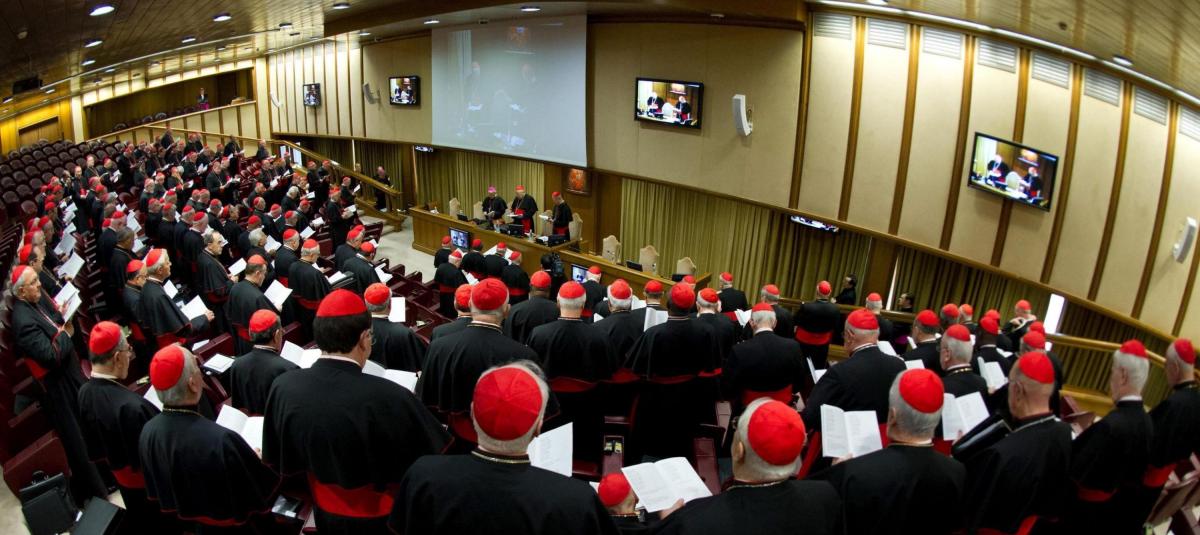
(ZENIT News / Rome, 30.04.2025).- Following is Part II of the series of articles about the profile of the next Pope from public statements expressed by Cardinals.
* * *
To evaluate the Cardinals’ statements, it is important to consider that they are human beings, with strengths and weaknesses, and their opinions should therefore be heard as individual judgments. However, they are also well prepared individuals who, having held positions of great responsibility, draw on that experience to reinforce the validity of their comments. ZENIT offers various statements to gain a broader view of the approaches that will be addressed at the Conclave.
Cardenal John Atcherley Dew, 77, is Archbishop of Wellington, the capital of New Zealand. On April 27, in a written statement, he addressed the enduring legacy of Pope Francis: «I think for me there was a profound gratitude for what Pope Francis did for the Church and for the world in the 12 years that he was Pontiff.»
He stated that the College of Cardinals would dedicate the days leading up to the Conclave to «prayer and conversation» to prepare for the election of the next Pontiff. «There will be opportunities for conversation, for people to describe the type of person they believe would be appropriate to lead the Church, the qualities that are needed.» He also said they would discuss among themselves «what the Church needs today and what the world needs today.»
Cardinal Raymond Burke was born in Wisconsin, USA, and was Prefect of the Vatican’s Supreme Tribunal. He is one of the names most mentioned for this Conclave.
In an April 25 statement to the National Catholic Register, Cardinal Burke stressed the importance of «asking for the intercession of Our Lady of Good Counsel. This is especially important given the crucial decisions that will be made in the coming days and weeks for the well-being of the Church and the entire world.»
Burke launched a novena of prayer to the Virgin Mary, planned months in advance, to pray in face of «the darkness and sin that increasingly envelop the world and threaten the Church,» as well as in face of «the pressing crises of our time.»
He added an invitation to offer supplications these days «for the members of the Sacred College of Cardinals who, in the next Conclave, will elect the Successor of Saint Peter as Vicar of Christ on Earth, Shepherd of the universal Church.”
It’s appropriate to frame these actions by Cardinal Burke in the context of his vision for the Church, which distances itself from some of Pope Francis’s positions regarding the «rights» of LGBTQ groups, divisiveness, and the role of women. The Cardinal left his position in the Apostolic Signatura due to disagreements regarding the details of the Apostolic Exhortation Amoris Laetitia about love in the family.
Burke expressed his support for Benedict XVI’s «hermeneutics of continuity,» a concept that proposes Church reforms in continuity with Tradition, without contradicting it. In the United States, Cardinal Burke is seen as the next Pope.
For his part, Italian Cardinal Pietro Parolin said in a homily during Mass in St. Peter’s Square on April 27, that «It is important to welcome as a precious treasure this principle on which Pope Francis so insisted.» Parolin emphasized that Pope Francis’s overwhelming love should not be a flash of momentary emotion, but that his legacy of mercy should be welcomed and lived out in the Church and in the world.
Cardinal Parolin served as Vatican Secretary of State for almost the entirety of Francis’s papacy. He was born in Vicenza, northern Italy, and served in the Nunciatures of Nigeria and Mexico before holding positions in the Vatican Secretariat of State. He later served as Nuncio to Venezuela, until being appointed Secretary of State by Pope Francis. In his homily on April 27, he emphasized that «only mercy heals and creates a new world, extinguishing the fires of mistrust, hatred, and violence: this is the great teaching of Pope Francis.» It is important to note that Cardinal Parolin will preside over the voting at the Conclave.
The Archbishop of Montevideo, Cardinal Daniel Sturla, declared on YouTube on April 26 that «the Church with open doors and putting the poor at the center of pastoral attention are part of Pope Francis’ legacy and will remain.» He spoke at the Vatican with Johan Ramírez, DW’s special correspondent, commenting that ambiguity must be avoided: the next Pope will be the Successor of Peter, not Francis. And that each Pope tries to do his best with his contributions to the progress of the Church, so Pope Francis’s emphases will continue, while others will change.
He also emphasized that the focus of world politics does not have much weight in the election of the new Pope, as the goal is to elect someone with great faith, a great life’s work, and experience in leading the Church. Furthermore, someone is chosen according to the guidance of the Spirit.
On June 12, 2023, Pope Francis appointed José Cobo as Archbishop of Madrid and Cardinal months later. In an April 25 interview posted on YouTube, he said about the Conclave that «we learn to see the Church through the eyes of the new Pope.»
Regarding the election of the new Pontiff, he stated that «there are no great leaps, no rupture.» Each Pope builds on the previous one, and the great processes instigated by Pope Francis take time to be implemented. He assumed the task of giving impetus to the vision of the late Pope.
When asked if there would be a major change, he responded: «I don’t think so.» And he warned that the Church is living in a changing era, with profound global, economic, and social challenges. He pointed out that there is a situation of violence, inequality, and economic differences, in the face of which the Church offers hope. He noted that «in the Conclave there is no confrontation, but differences.»
Thank you for reading our content. If you would like to receive ZENIT’s daily e-mail news, you can subscribe for free through this link.

Publicaciones relacionadas:
 Ten Surprising Facts About New Cardinals Chosen by Pope Francis
 Is There a Pre-Conclave Atmosphere in the Vatican? Cardinals From Around the World Break the Silence Given the Pope’s Health
 Francis’ Successor According to Cardinals’ Statements (Part III)
 Cardinals, the first consistory of Leo XIV, and Cardinal Zen’s public objections
