

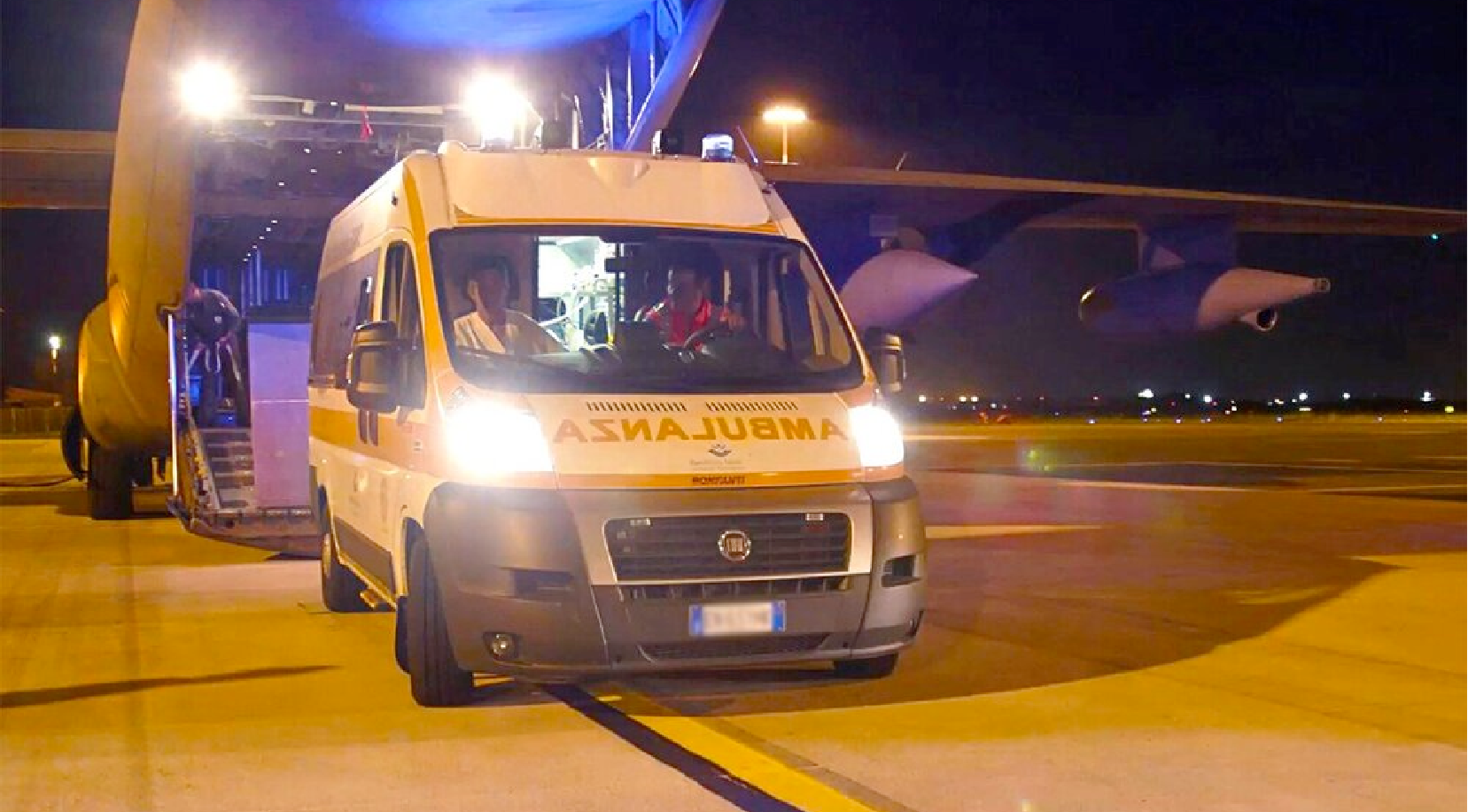
(ZENIT News / Rome, 08.19.2025).- Late on the night of August 13, a military transport plane touched down at Rome’s Ciampino airport carrying a fragile cargo: three children from Gaza, each bearing the scars of war. They were accompanied by their families, and within hours they were taken to the Vatican-owned Bambino Gesù Pediatric Hospital, where doctors immediately began assessing their conditions.
The cases are harrowing. A six-month-old infant, already subjected to an amputation before arrival, was admitted to general surgery. A 13-year-old boy, suffering from a traumatic brain injury, was transferred to the neurology department. A two-year-old girl, weakened by malnutrition linked to untreated celiac disease, was received in general pediatrics. All three now join a growing group of young patients who have made their way from the ruins of Gaza to a Roman hospital that has become an unexpected front line in a humanitarian effort.
With their arrival, the number of Gazan children treated at Bambino Gesù since the war’s outbreak in October 2023 has risen to twenty. Their ailments tell a story that statistics alone cannot: shattered limbs, burns, cancers left untreated, congenital heart defects without the possibility of surgery, infectious diseases spreading in overcrowded shelters, metabolic and neurological disorders aggravated by the collapse of Gaza’s health system. Each child represents not only a medical emergency but also the weight of a geopolitical crisis written onto the human body.
Behind their transfer lies a complex web of diplomacy and faith. Early evacuations, beginning in January 2024, were made possible through delicate negotiations involving the governments of Italy, Israel, Palestine, and Egypt, with the Franciscan Custody of the Holy Land often acting as intermediary. These flights are not simply medical evacuations; they are a fragile sign of cooperation across borders that rarely agree on anything else.
Tiziano Onesti, president of the Bambino Gesù Hospital, framed the mission in terms that reach beyond medicine. “Every time we welcome children from war zones, we encounter fragile lives that carry both pain and hope,” he said. He echoed recent words of Pope Leo XIV, who has insisted that compassion must be more than sentiment: it must become action. For Onesti, this means not only providing advanced pediatric care but also offering families a space where, even briefly, they can breathe in peace.
The Vatican has long described Bambino Gesù as its “little embassy of mercy,” and in recent months that description has taken on new resonance. Within its wards, the Catholic Church is exercising a form of diplomacy that bypasses speeches and communiqués. Instead, it is carried out through surgical interventions, night vigils at hospital bedsides, and the quiet assurance to parents that their children will not face their ordeal alone.
For the families who arrived in Rome, the path ahead remains uncertain. Rehabilitation will be long; some conditions may leave permanent marks. Yet the presence of a community willing to walk with them signals that their suffering is neither invisible nor forgotten. In a conflict where politics continues to harden, the arrival of these children in Rome is a reminder that mercy can still open corridors where diplomacy stalls.
And so, in the halls of a Vatican hospital, the tragedy of Gaza finds a paradoxical counterpoint: lives broken by war, yet sustained by care that insists even amid devastation, hope can be treated, too.
Thank you for reading our content. If you would like to receive ZENIT’s daily e-mail news, you can subscribe for free through this link.

Publicaciones relacionadas:
 Three nuns receive English recognition for their fight against human trafficking
 [Photo Gallery] Poignant: Eight Children Make Their First Communion in War-Torn Gaza
 Saint Peter’s Basilica in the Vatican Becomes a Minecraft Game Thanks to Microsoft
 PilgriMaps Is Born: An Online Magazine to Promote Pilgrimage Routes
