

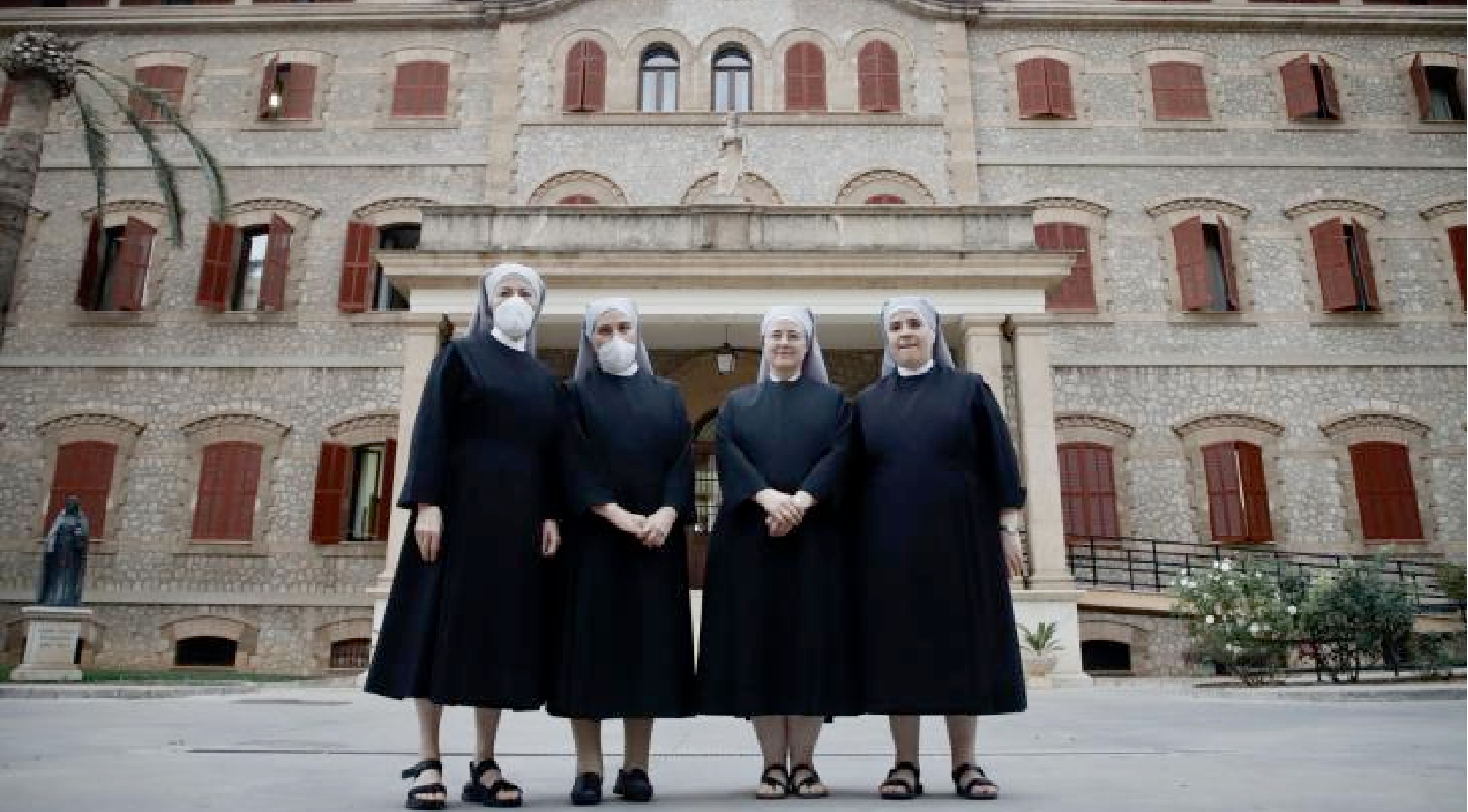
(ZENIT News / Washington, 08.20.2025).- The Little Sisters of the Poor, a Catholic order devoted to the care of the elderly poor, find themselves once again at the center of America’s long-running battle over contraception mandates. A federal district court in Pennsylvania has struck down the religious exemptions that once shielded the sisters from government requirements, reopening a legal saga that many thought had been settled by the U.S. Supreme Court just four years ago.
The ruling, issued on August 13 by the U.S. District Court for the Eastern District of Pennsylvania, sided with the states of New Jersey and Pennsylvania. At issue was whether the Trump administration had properly followed federal procedure when granting broad religious and moral exemptions from the Affordable Care Act’s contraceptive coverage mandate. The court determined that those exemptions were “arbitrary and capricious,” violating the Administrative Procedure Act, and therefore invalidated them nationwide.
The decision is a striking reversal for the Little Sisters, who in 2020 won what appeared to be a decisive Supreme Court victory affirming the legality of such exemptions. That earlier ruling was hailed as the end of a decade-long legal ordeal that had forced the sisters, whose mission is entirely focused on running homes for the elderly poor, to fight repeatedly in federal courts to avoid involvement in contraception coverage.
Yet Pennsylvania and New Jersey revived narrower procedural arguments, insisting that the exemptions were issued improperly, even if they were substantively permissible. This time, the district court embraced that line of reasoning. Legal advocates for the sisters called it an attempt to find loopholes in the Supreme Court’s decision.
“The court is trying to carve out a technical backdoor around what the justices already decided,” said Diana Thomson, senior counsel at Becket, the law firm representing the sisters. She dismissed the arguments as “low-impact claims” that the states had deliberately avoided raising before the Supreme Court, only to reintroduce them at the district level years later.
Mark Rienzi, Becket’s president and lead attorney for the sisters, called the ruling “quite bad” not only for religious institutions but for the integrity of the legal process. “It is absurd to think that the Little Sisters should have to return to the Supreme Court after more than twelve years of litigation on the same question,” he said. “But we will go as far as needed to secure their right to serve the elderly in peace.”
The sisters are already preparing an appeal, which could once again propel the dispute toward the nation’s highest court. Observers note that such a development would underscore how deeply entrenched the contraception mandate controversy remains in American legal and political life.
For the Little Sisters themselves, the renewed fight is less about legal technicalities than about their ability to carry out their vocation without interference. Founded in 19th-century France and now present worldwide, the order has insisted consistently that it cannot in good conscience take part in health plans that provide contraception. For them, the issue is not merely institutional but spiritual, bound up with the freedom to live out Catholic teaching in the service of society’s most vulnerable.
Whether the courts will allow that freedom to stand once more, or whether the sisters face yet another chapter in an exhausting legal battle, remains uncertain. What is clear is that, more than a decade since the mandate was first introduced, the question of how far religious exemptions should extend in a pluralistic democracy is far from settled.
Thank you for reading our content. If you would like to receive ZENIT’s daily e-mail news, you can subscribe for free through this link.

Publicaciones relacionadas:
 Sweden denies asylum to 84-year-old Iraqi Christian. Dies on repatriation flight
 JPMorgan Chase’s strides to protect Americans from financial discrimination highlight third year of ADF Business Index
 Pope “Defends” Russian Orthodox Against the Feelings of Ukrainian Catholics
 New UN report details Nicaragua’s ongoing human rights crisis
