

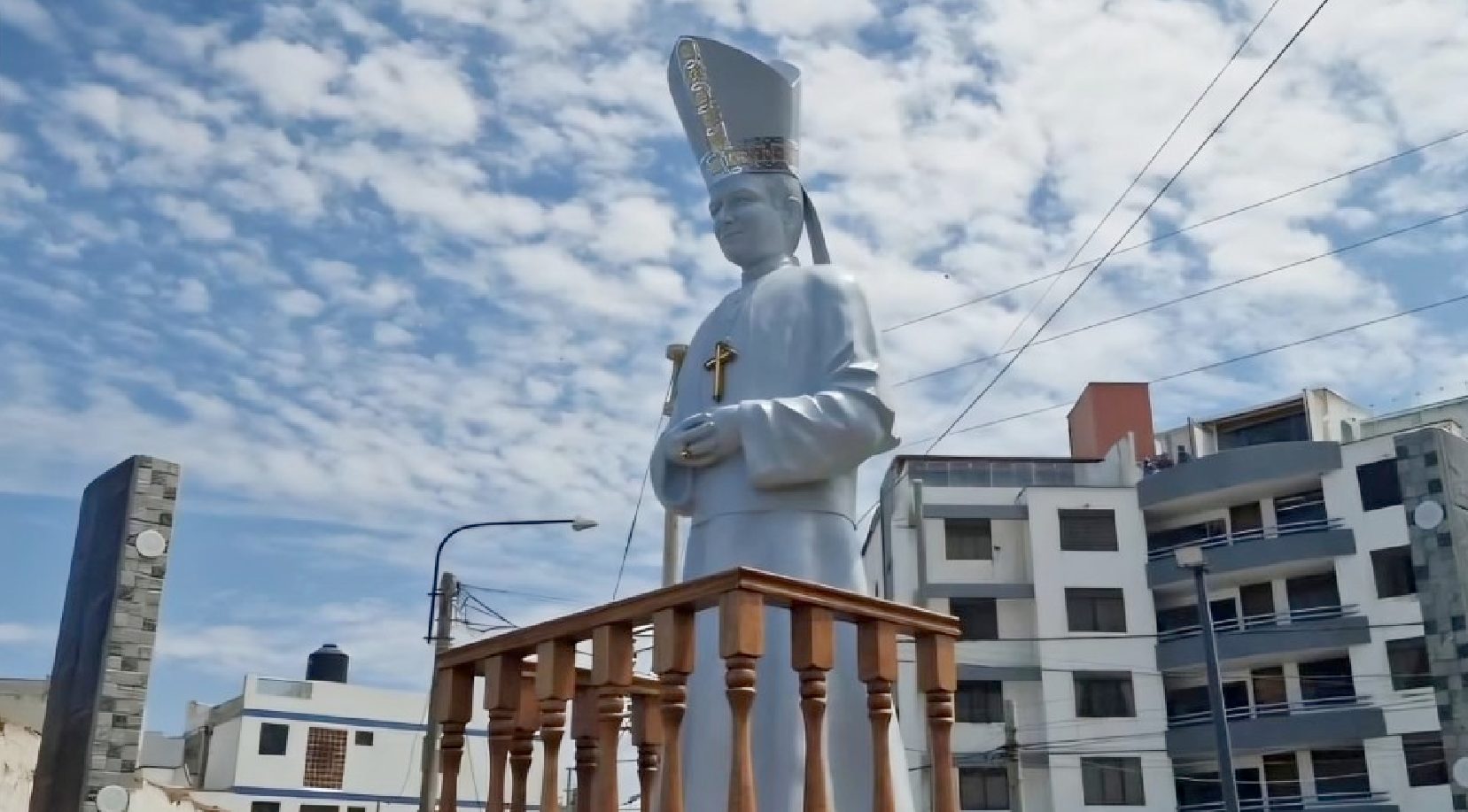
(ZENIT News / Chiclayo, Perú, 11.05.2025).- The city of Chiclayo readies itself for an event unlike any other in its recent history: the unveiling of a monumental five-meter statue honoring Pope Leo XIV, the first large-scale sculpture dedicated to the pontiff whose pastoral journey once intertwined deeply with this very land.
The statue, towering and radiant under the Lambayeque sun, captures the Pope in a gesture of blessing — right hand extended, a serene smile illuminating his face. For many in Chiclayo, this image transcends artistry. It is a gesture of gratitude. “This monument expresses the love and appreciation of the people of Lambayeque for a pastor who walked among them long before he became the Bishop of Rome,” said Félix Mío Sánchez, regional head of Tourism and Foreign Trade. “With his open smile, Pope Leo XIV will welcome travelers who come to discover our culture, our cuisine, and the spirit of our people.”
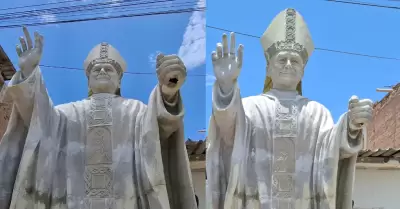
The sculpture, crafted entirely from fiberglass and resin to withstand the region’s coastal climate, weighs over half a ton and rises from a two-meter pedestal at one of the city’s main entrances. It will serve as the centerpiece of the newly conceived “Papal Walk,” a thematic corridor combining sacred art, local culture, and family spaces — a unique fusion of faith and civic identity that aims to place Chiclayo more firmly on Peru’s cultural and spiritual map.
Its creator, Juan Carlos Ñañake, a respected local sculptor known for his ability to blend religious symbolism with contemporary aesthetics, led a team of six artists through months of design and construction. “It has been one of the greatest challenges of my career,” Ñañake said. “To portray not just the physical image of the Holy Father but the humility and humanity he represents. We wanted the people of Chiclayo to see themselves reflected in his expression.”
The statue’s location is not accidental. Before being called to Rome by Pope Francis to head the Dicastery for Bishops — a role he held before his election as Leo XIV — Robert Prevost spent more than two decades serving in northern Peru, first as an Augustinian missionary, later as bishop of Chiclayo. His pastoral warmth and simple manner left an enduring mark on local Catholics, many of whom now speak of their “own” pope with affection and pride.
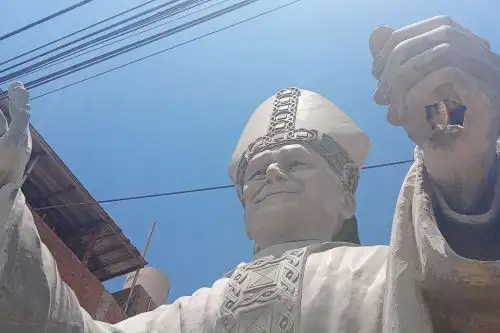
“Chiclayo has become his spiritual birthplace,” said Mío Sánchez. “When the world sees this monument, they’ll understand that his papal story began here — in our parishes, our streets, among our people.”
The “Papal Walk” project envisions two additional sculptures along a planned devotional route connecting Chiclayo with other regions linked to the Pope’s ministry — Piura, La Libertad, and the port city of Callao. Together, these locations trace what local tourism officials have dubbed “The Paths of Pope Leo XIV,” a circuit celebrating not only his ecclesiastical journey but also the enduring dialogue between faith and the Peruvian landscape.
For the residents of Lambayeque, the monument stands as both an act of homage and a promise. It reflects a bond that has outlasted titles and geography — the memory of a shepherd who once shared their daily struggles, now elevated to lead the global Church. As Ñañake’s sculpture nears its unveiling, local families gather to watch workers polish the statue’s final details, its tranquil face beginning to gleam in the afternoon light.
Soon, the new Pope’s likeness will greet all who enter Chiclayo — pilgrims, tourists, or passersby — offering not only a blessing of peace but a reminder that greatness often begins in quiet service, far from the marble halls of Rome.
Thank you for reading our content. If you would like to receive ZENIT’s daily e-mail news, you can subscribe for free through this link.

Publicaciones relacionadas:
 Pope confirms new Custos of the Catholic Church for the Holy Places in the Holy Land
 Pope Leo XIV to bishops of the Amazon: no to the worship of nature
 Pope Leo XIV scores 8 out of 10 in US approval poll: here are the results
 The largest statue of Jesus in the entire Middle East is being built in Lebanon, and here’s how it’s coming along
