

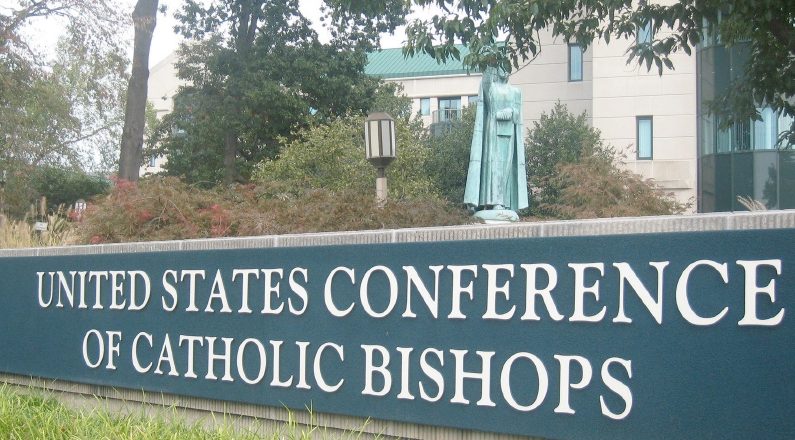
(ZENIT News / Baltimore, 11.14.2025).- At their autumn assembly in Baltimore, the Catholic bishops of the United States drew a decisive boundary for the nation’s vast network of Catholic hospitals and clinics, approving a set of directives that firmly exclude medical interventions aimed at altering a patient’s sexual characteristics. The vote, taken on 12 November, was anything but close: an overwhelming majority endorsed the revised Ethical and Religious Directives, a document that shapes clinical practice for thousands of Catholic health-care providers across the country.
The significance of the decision extends beyond its procedural clarity. Catholic health care is not a minor niche in the American landscape; it is a major presence. With more than two thousand institutions under its umbrella—from major urban hospitals to long-term care facilities—its policies inevitably influence the medical options available to millions. One in seven patients in the United States is treated in a Catholic hospital on any given day. Any shift in norms, therefore, sends ripples far beyond the ecclesial sphere.
The updated directives reiterate a long-standing Catholic conviction: that medical practice should work with the body’s inherent order rather than seek to modify it in ways the Church deems incompatible with human nature. In this newly formalized version, Catholic institutions are instructed not to provide surgical, hormonal, or genetic procedures whose goal is to change sexual characteristics rather than to address an underlying pathology. The document situates these limits within the Church’s broader mission of caring for vulnerable persons, emphasizing that compassion for those experiencing gender incongruence must be expressed through means that, in the bishops’ view, uphold the integrity of the human body.
During the public debate preceding the vote, several bishops underscored what they see as the cultural and pastoral stakes of the moment. Bishop Robert Barron of Winona-Rochester spoke with particular urgency, framing the revisions as part of a wider response to contemporary views of the body and identity. He recalled earlier remarks by Pope Francis encouraging prelates to resist what the pontiff has often described as gender ideology. Barron argued that Catholic health care should stand as a counterweight to conceptions of the self that treat the body as malleable material subject to personal choice rather than a fundamental aspect of human identity.
The measure’s approval also marked the conclusion of a collaborative process with leaders of the Catholic Health Association, one of the country’s most influential networks of health-care professionals. The CHA welcomed the revised directives, noting that many of its recommendations were incorporated throughout the review. In its response, the association stressed that the new edition codifies practices already standard in Catholic medicine, where treatments that alter sexual characteristics are not offered unless addressing a severe underlying condition. At the same time, the association affirmed that individuals who identify as transgender will continue to receive care, respect, and advocacy within Catholic facilities, particularly when facing marginalization or barriers to quality medical services.
Yet the decision has not gone unchallenged. Advocacy groups that work with LGBTQ+ Catholics expressed alarm, arguing that the directives fail to reflect the lived realities of transgender individuals and may exacerbate existing vulnerabilities. New Ways Ministry, long active in this field, criticized the document as harmful rather than protective. Its leaders contend that Catholic ethical teaching, at its best, seeks to promote human well-being, and they fear that restricting gender-related treatments may undermine that mission for those who rely on Catholic institutions for accessible care.
This latest edition of the directives also builds on a doctrinal note issued in 2023 by the USCCB’s Committee on Doctrine. That earlier document urged providers to accompany patients sensitively while insisting that any clinical response must honor what the bishops describe as the fundamental order of the human body. It called for continued research and pastoral outreach but warned against therapeutic paths that the Church sees as incompatible with its moral framework.
The newly approved text now gives that doctrinal note the weight of formal policy, transforming years of discussion into concrete expectations for Catholic institutions nationwide. While implementation will vary across dioceses, bishops indicated that the directives would soon be available to local church authorities with instructions for adoption.
As the debate surrounding gender, identity, and medical ethics intensifies across American society, the bishops’ decision signals a clear direction for Catholic health care: one rooted.
The newly approved text now gives that doctrinal note the weight of formal policy, transforming years of discussion into concrete expectations for Catholic institutions nationwide. While implementation will vary across dioceses, bishops indicated that the directives would soon be available to local church authorities with instructions for adoption.
Thank you for reading our content. If you would like to receive ZENIT’s daily e-mail news, you can subscribe for free through this link.

Publicaciones relacionadas:
 USA: Health Care that Truly Heals Must be Grounded in Truth, says Bishop Rhoades
 Germany: bishop responsible for queer ministry calls for changes in Church doctrine
 Can a transgender person enter religious life? U.S. bishops to respond in new document
 Europe pledges aid to Nigeria in exchange for ideological colonization: Church and Islam speak out
