

(ZENIT News / Rome, 11.09.2026).- A controversy over the teaching of Islam in Italian schools has exposed a deeper disagreement within the Catholic Church in Italy: how far can interreligious dialogue reshape the country’s Catholic religious education without weakening the distinctive identity of the subject? At the centre of the dispute is Cardinal Matteo Zuppi, president of the Italian Bishops’ Conference (CEI), whose promotion of educational materials on Islam has prompted criticism not only of the initiative itself but also of the direction in which the bishops intend to take religious instruction.
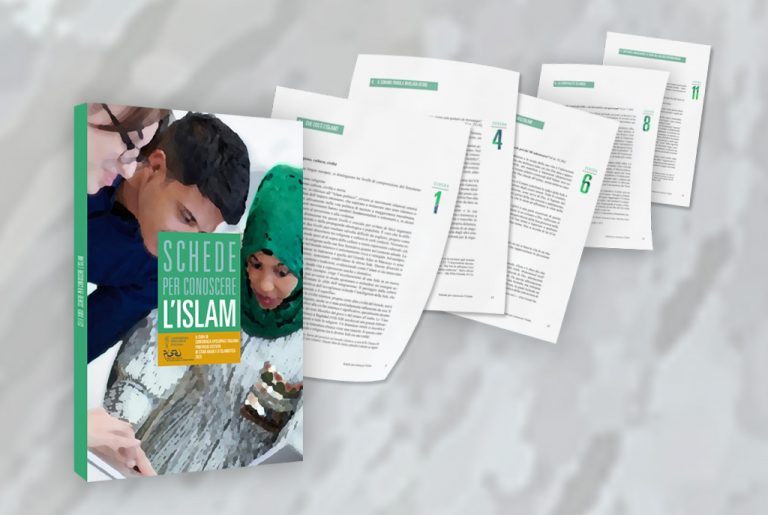
The controversy intensified following an October 21 presentation at Palazzo Borromeo, the Italian Embassy to the Holy See in Rome, where Zuppi introduced an educational project entitled Information Sheets for Understanding Islam. Developed jointly by the CEI and the Pontifical Institute for Arabic and Islamic Studies (PISAI), with the involvement of Italian Muslim organizations, the initiative consists of eleven modules covering Islamic history, theology, the Quran, worship, spirituality, the Muslim religious community and interreligious dialogue.
The cardinal described the materials as an answer to widespread ignorance about Islam and an alternative to what he called a clash of civilizations. Drawing on his seven years as a teacher of Catholic religion, he argued that school religious education should not be reduced to catechesis but should function as a «laboratory of culture and dialogue». He also warned that certain newspaper headlines risk encouraging Islamophobia.
Yet the presentation triggered criticism over the place these materials should occupy in a subject whose institutional identity remains explicitly Catholic. The debate became particularly contentious after reports suggested that the Italian bishops were promoting the teaching of Islam in public schools. The CEI subsequently rejected that interpretation, insisting that the materials were intended to provide reliable sources for publishers preparing Catholic religious education textbooks, not to establish Islamic instruction as a separate school subject.
Vincenzo Corrado, director of the bishops’ communications office, dismissed the allegations as fake news. He explained that the initiative followed a similar project on Judaism, presented in 2023, and would eventually be complemented by materials on Hinduism and Buddhism. The eleven Islamic modules, first published in November 2025, had already been cited in the CEI’s December 2025 pastoral guidelines on Catholic religious education as resources for textbook preparation and teacher training.
There is an important distinction here. Catholic religious education in Italian state schools is not simply a comparative study of religions, nor is it identical to parish catechesis. Its educational framework is established through national regulations adopted by presidential decree, following an agreement between the Ministry of Education and the CEI, which is responsible for ensuring conformity with Catholic doctrine. The subject is intended to provide cultural and ethical formation while retaining the Catholic faith as its point of reference.
The bishops therefore maintain that studying other religious traditions does not undermine the Catholic character of the subject. Indeed, the materials themselves acknowledge significant theological differences. Their presentation invokes the Second Vatican Council’s declaration Nostra aetate, which recognizes the relationship between Christianity and Islam while making clear that Muslims do not recognize Jesus as God. One of the eleven modules specifically examines points of convergence and divergence, while another addresses the historical expansion of Arab rule, including the spread of Muslim power into North Africa and Spain and the taxation imposed on Christian populations.
Nevertheless, the criticism raises questions that cannot be dismissed simply by invoking dialogue or accusing opponents of prejudice. The issue is not whether students should learn about Islam. In a country shaped by Christianity and increasingly marked by religious diversity, understanding the beliefs and history of Muslim communities is a legitimate educational objective. The more consequential question is how that knowledge is presented, what theological distinctions are preserved and whether sufficient attention is given to the historical and contemporary difficulties surrounding religious coexistence.
One particular point deserves attention: the materials describe the Quran as the revealed Word of God. This is an accurate account of what Muslims believe about their sacred book, but it should not be confused with a Catholic affirmation of Islamic revelation. Presenting another religion’s convictions fairly requires explaining them in their own terms, while making equally clear that describing a belief is not the same as endorsing it. The distinction is fundamental, especially in a subject intended to deepen understanding of the Catholic tradition.
There are also concerns about whether the controversy reflects a broader project to transform religious education in Italy. These questions have acquired greater significance following revelations that the CEI financed research into possible changes to the existing model. According to Filippo Benini, one of the researchers involved, the bishops provided funding in 2024 for a research initiative entitled Towards a New Teaching of Religion at School. During the 2024–2025 academic year, a group of approximately ten specialists, including historians of religion, theologians, educational experts and religion teachers, examined the current system and explored possible alternatives. Their final report was submitted to the CEI in November 2025.
The project was also discussed at a conference held at Rome’s Sapienza University on October 6, 2026, under the same general theme of renewing religious education. These developments do not, in themselves, establish that the bishops have decided to replace Catholic religious instruction with a general course on religions. They do, however, demonstrate that the future of the subject is under active consideration and that the debate surrounding the Islamic materials cannot be entirely separated from this wider discussion.
Another dimension deserves consideration in any serious treatment of Christian-Muslim relations: religious freedom and the unequal conditions under which believers can sometimes change or profess their faith. Dialogue must take account not only of opportunities for cooperation but also of situations in which Christians face discrimination, intimidation or persecution in predominantly Muslim societies. The persecution of Christians by Islamist extremist groups, particularly in parts of Africa, is a documented and serious reality. At the same time, it would be inaccurate to identify Muslim communities as a whole with extremist movements or to treat every Muslim-majority society as having the same record on religious freedom.
The same principle of intellectual honesty should apply to questions of conversion. Freedom of conscience must protect Christians who wish to embrace Islam just as it must protect Muslims who freely choose Christianity. Where converts face threats or violence, their situation deserves particular attention. Genuine interreligious dialogue cannot be built on silence about religious persecution or on a selective defense of freedom.
The CEI’s initiative has therefore opened a debate larger than the eleven educational modules themselves. Zuppi sees the project as an opportunity to overcome ignorance and prepare young people for peaceful coexistence. His critics fear that an excessive emphasis on interreligious dialogue could gradually displace the specifically Catholic foundations of religious education. Both the educational value of understanding other faiths and the responsibility to preserve the integrity of Catholic teaching deserve serious consideration.
The challenge for the Italian bishops is to demonstrate that these objectives are not contradictory. A genuinely Catholic education should not fear explaining Islam accurately, just as it should not obscure the profound differences between the two faiths. Dialogue is meaningful precisely because distinct religious identities exist; it does not require pretending that theological disagreements are insignificant. Ultimately, the credibility of the initiative will depend not on its declarations of openness, but on whether it helps students understand other religions without leaving them less equipped to understand their own.
Thank you for reading our content. If you would like to receive ZENIT’s daily e-mail news, you can subscribe for free through this link.

Publicaciones relacionadas:
 First Fruit of Pope Francis’ Visit to Indonesia: Cardinal Ignatius Hardiatmodjo Inaugurates a Parish Church After 33 Years of Islamist Opposition
 1 in 7 Muslims open to becoming Christian; 1 in 4 Catholics will leave the Church
 Controversial Antwerp bishop expands on his idea of ordaining married men and shares his thoughts on women
 An African Detective Story: Who Killed Bishop Osório Citora Afonso?
