

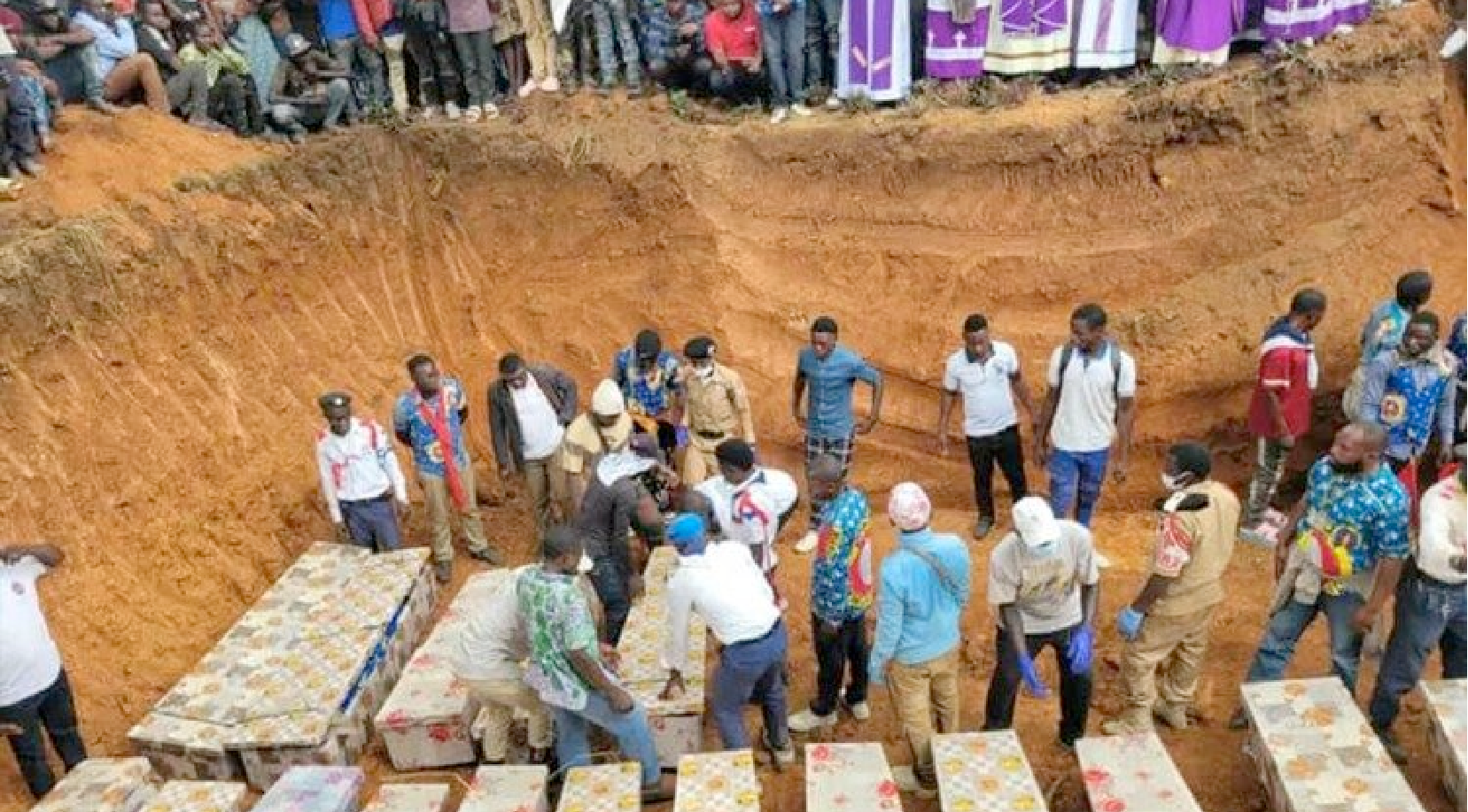
(ZENIT News / Kinshasa, 08.13.2025).- The quiet Sunday rhythms of the village parish of Blessed Anuarite were shattered on July 27 when militants stormed the church during worship. Armed with machetes and fire, they left behind not just burned walls and desecrated pews, but the bodies of more than 43 worshippers—nine of them children. Others were abducted, homes and shops in the area reduced to ash.
The attackers were members of the Allied Democratic Forces (ADF), an Islamist militia aligned with the so-called Islamic State. For residents of the Democratic Republic of Congo’s eastern provinces, this is not an isolated nightmare. It is part of a relentless cycle of massacres, abductions, and displacement that has continued despite the region’s prolonged “state of siege.”
In the days following the attack, the country’s Catholic bishops issued a statement that was both grief-stricken and accusatory. The National Episcopal Conference of Congo (CENCO) demanded answers—not only about the attack itself, but about the absence of protection for the population. “Security forces were nearby,” said Bishop Dieudonné Uringi of Bunia, “but they did not act in time. They should have intervened more quickly to protect the people.”
CENCO’s communiqué was even more pointed: “This massacre is one of many in a province under military control for years. Killings and kidnappings happen repeatedly, and no credible explanation has been offered to reassure the people. Who are these serial killers serving? Who benefits from these crimes against peaceful citizens?”
The aftermath is visible not only in the charred remains of the church but in the swelling numbers of displaced people. Many survivors fled to Bunia, where the diocese is struggling to house and feed them. “We welcome them, but we have no means to sustain them,” Bishop Uringi said, appealing for continued aid from international partners like the pontifical foundation Aid to the Church in Need.
Despite the danger, the bishop refuses to retreat from his pastoral duties. “This afternoon, I must travel over 60 kilometers into a mining zone in the jungle, just as I did in June and July. I make the journey every month to administer confirmation.” His resolve mirrors that of countless clergy and religious who have chosen to remain with their communities in one of the world’s most dangerous regions for Christians.
According to the 2025 Red List from Global Christian Relief, the DRC is now the second-deadliest country for Christians, surpassed only by Nigeria. Between November 2022 and 2024, at least 390 Christians were killed, many at the hands of Islamist militant groups like the ADF.
Beyond the numbers, the toll is human and deeply personal. Among those seeking safety are the Angelic Sisters of St. Paul, themselves uprooted by the violence but still serving others. They are part of a vast tide—nearly six million people displaced in the DRC by armed conflict. Catholic organizations worldwide are now mobilizing donations to help them not merely survive, but continue ministering to those left destitute by war.
Thank you for reading our content. If you would like to receive ZENIT’s daily e-mail news, you can subscribe for free through this link.

Publicaciones relacionadas:
 Sudan: Christians facing choice between fleeing and hardship
 Hindu persecution of Christians in India leaves 50,000 displaced, 150 killed
 Father Sirico continues his battle in Rome for media mogul Jimmy Lai’s liberation
 Ortega Regime Seizes Matagalpa Diocese Headquarters in Latest Attack on Nicaragua’s Catholic Church
