

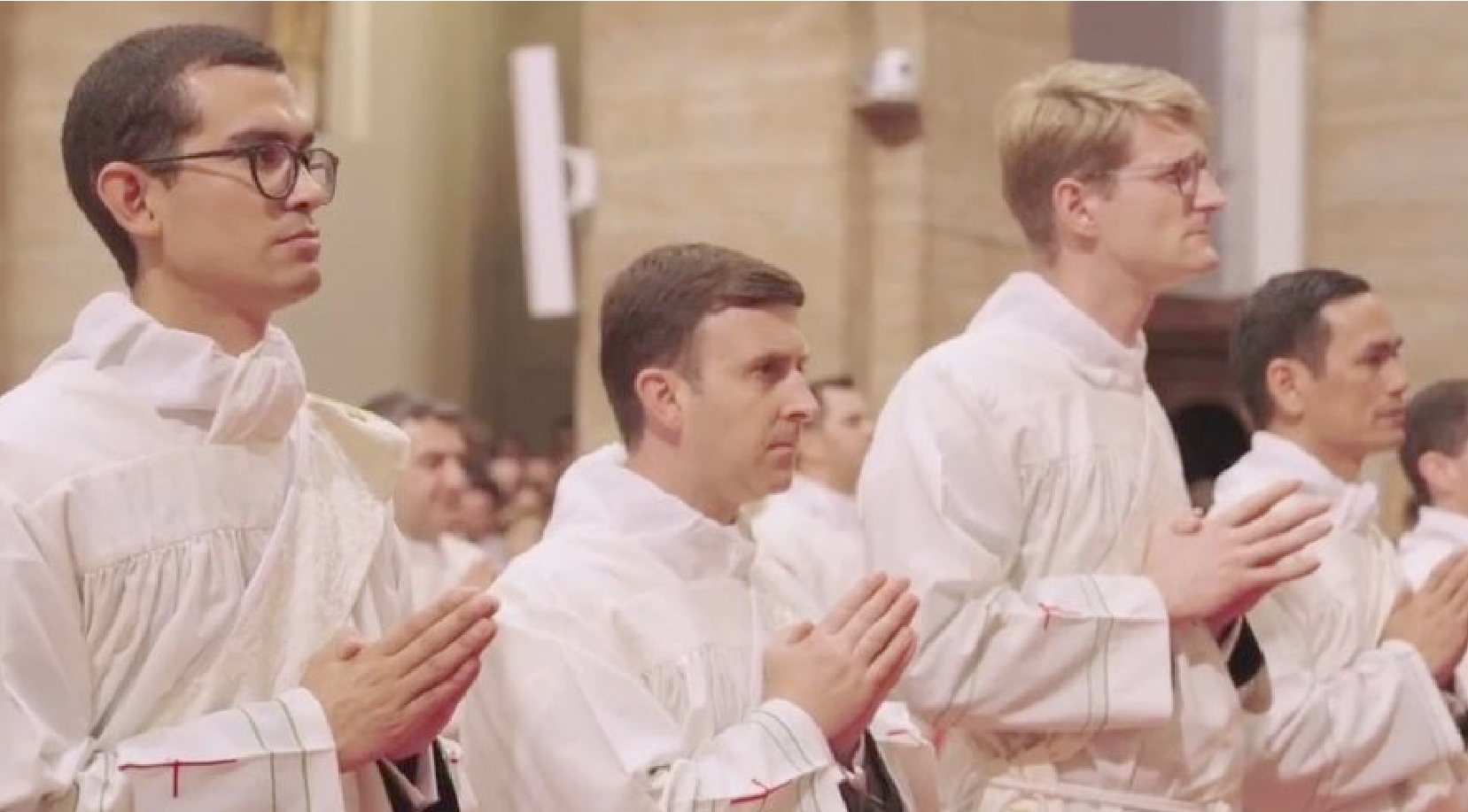
(ZENIT News / Rome, 09.28.2025).- Poland, long regarded as Europe’s most fertile ground for priestly vocations, finds itself at a crossroads. The numbers remain comparatively strong—208 men will be ordained in 2025—but the downward trend is unmistakable. Just a decade ago, Poland could celebrate more than 400 new priests in a single year. Today, fewer than half that number will take on the mantle of pastoral ministry.
This year’s class is made up of 141 diocesan priests and 67 men from religious orders. Tarnów again leads the nation, with 13 ordinations, a figure that in most European dioceses would be unthinkable. Yet the list of dioceses with no new priests at all is lengthening, and the vitality once taken for granted in places like Kraków has softened noticeably.
The decline is not unique to Poland. Across the continent, vocations have plummeted to the point that many local Churches depend on clergy from Africa or Asia. By contrast, Poland still produces more new priests than any other European country, a fact that both reassures Catholic leaders and raises uncomfortable questions. How long can the country sustain its reputation as Europe’s spiritual reservoir?
Some Polish bishops argue that the Church has entered a stage of stabilization rather than free fall. Bishop Andrzej Przybylski, who coordinates vocational ministry nationwide, insists that the key is accompaniment rather than numbers. “God continues to call,” he said, “but our task is to create spaces where young people can discover that call, to be present in their lives, and to help them discern.” His language echoes that of the late Pope Francis, who often warned against treating vocations as a matter of statistics rather than of personal encounter.
Observers point to cultural as well as spiritual roots for Poland’s relative resilience. In Tarnów, where ordinations remain consistently high, the tradition can be traced back to the early 20th century, when Marian devotion and the missionary energy of the Redemptorists shaped a generation of clergy. Annual pilgrimages to Tuchów still draw thousands, reinforcing a sense of priestly identity tied to place and history.
Yet the broader landscape is shifting. Poland’s Catholic life remains robust compared with much of Western Europe—71 percent still identify as Catholic, and nearly a third attend Mass weekly. But political polarization and generational change have complicated the picture. In the same year that the nation welcomes over 200 new priests, leading bishops have called for a “conversion of language” after inflammatory remarks about migration stirred outrage. The Church that produces more vocations than any other in Europe is also a Church navigating the same cultural storms seen in Italy, Germany, or France.
The trajectory of religious orders is telling. Salesians, Dominicans, Franciscans, Paulines, and Missionary Fathers continue to add young priests, but the total—67 this year—is down from 83 a year ago. As Father Dariusz Bartocha, a Salesian leader, notes, some of the men ordained in Poland will not serve there, but will return to their home countries or be assigned abroad. Poland’s contribution to the world Church, then, is increasingly international.
The questions that haunt European Catholicism are present here too: Will the next generation hear the call? Can a culture once so deeply intertwined with Catholicism continue to sustain vocations at the same pace? Poland remains an outlier in Europe, but one whose numbers, like those of its neighbors, are bending downward.
Thank you for reading our content. If you would like to receive ZENIT’s daily e-mail news, you can subscribe for free through this link.

Publicaciones relacionadas:
 Ireland starts new 2024 – 2025 school year with 21 new seminarians
 How Many Legionaries of Christ Are There in 2025? Most Recent Statistics Are Published
 1 in 20 new priests by 2025 in the U.S. come from the military. Research reveals surprising facts
 The health (physical, mental, and spiritual) of Australian clergy in 2025: What interesting research reveals
